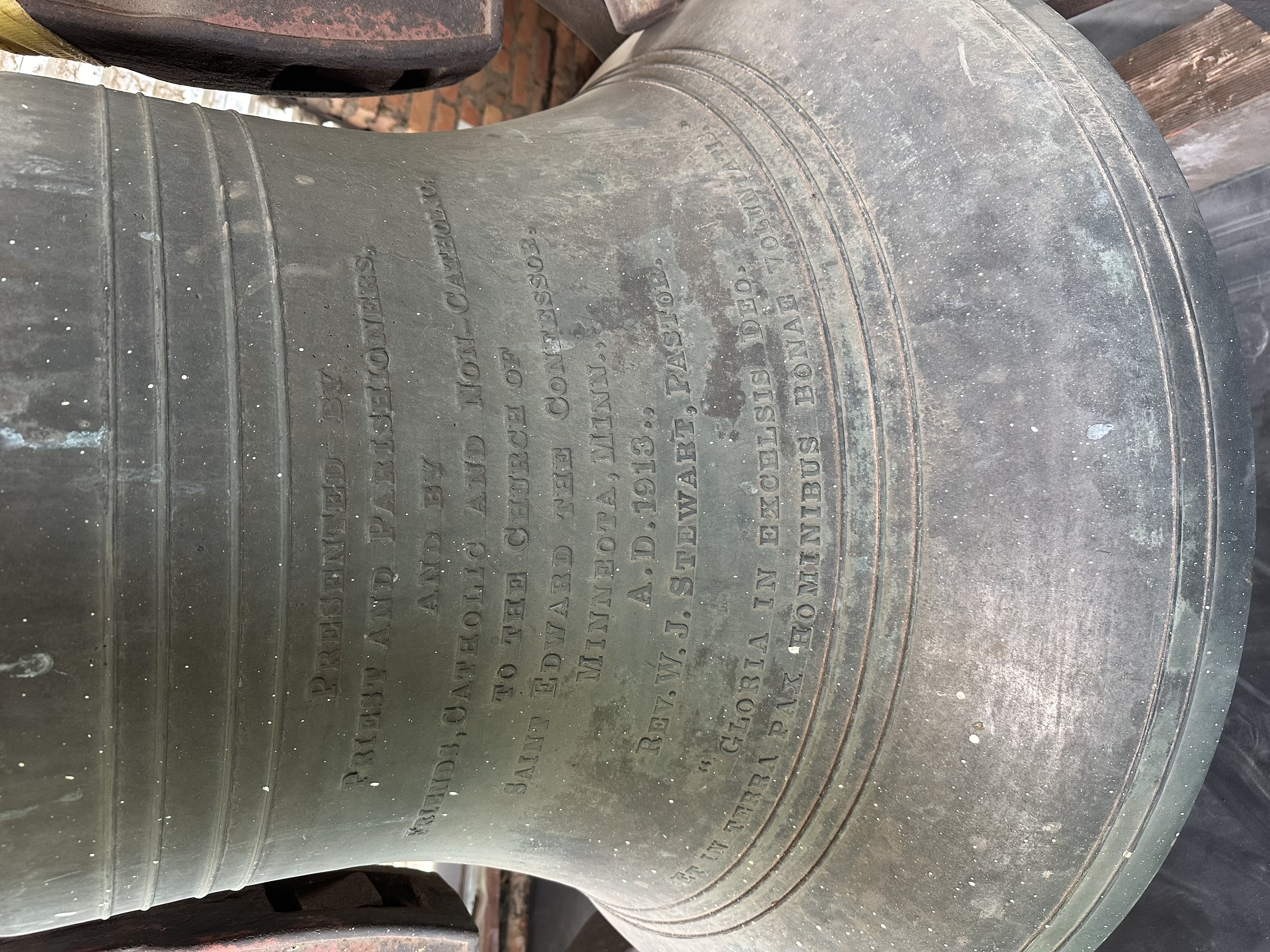
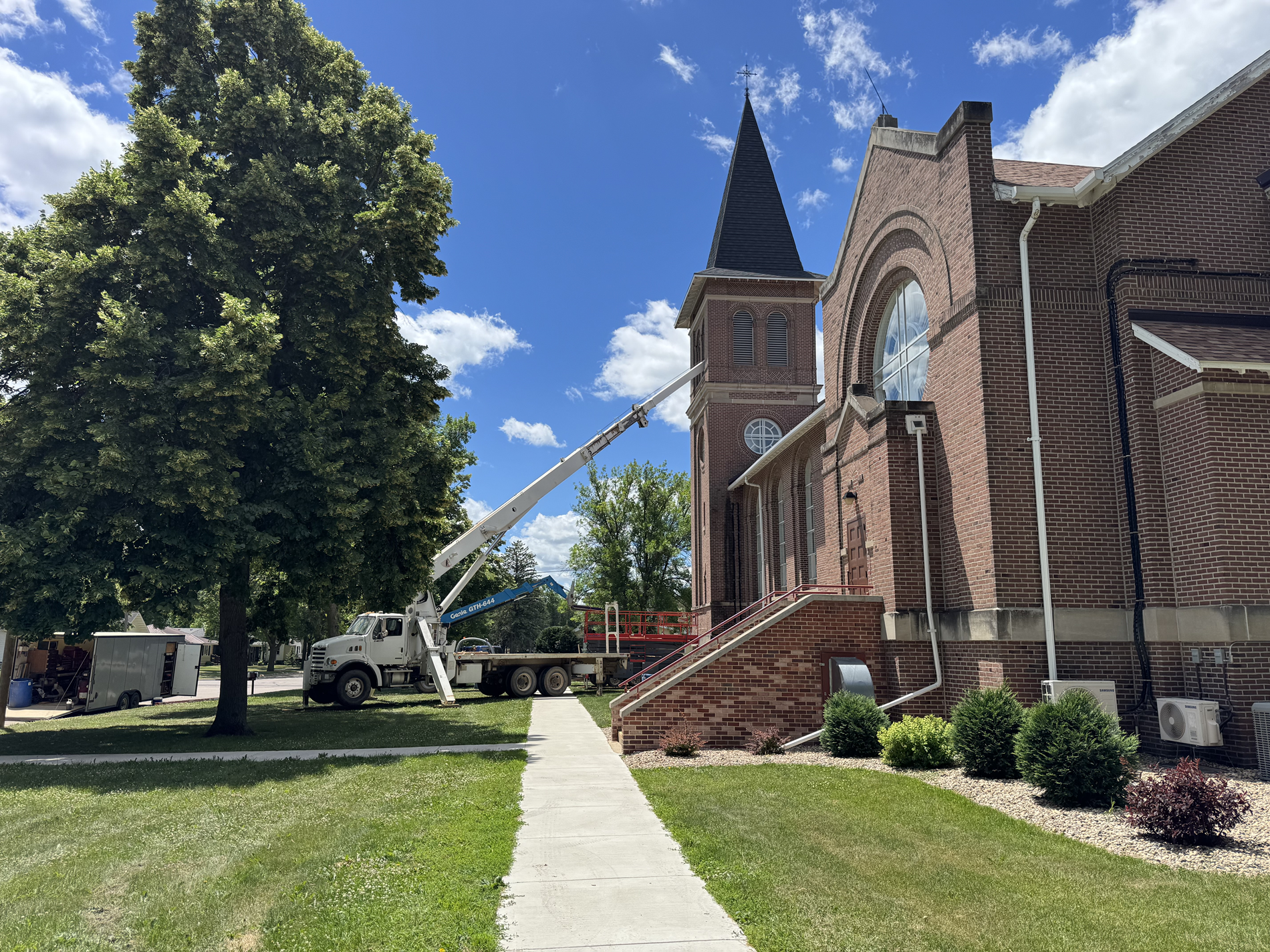
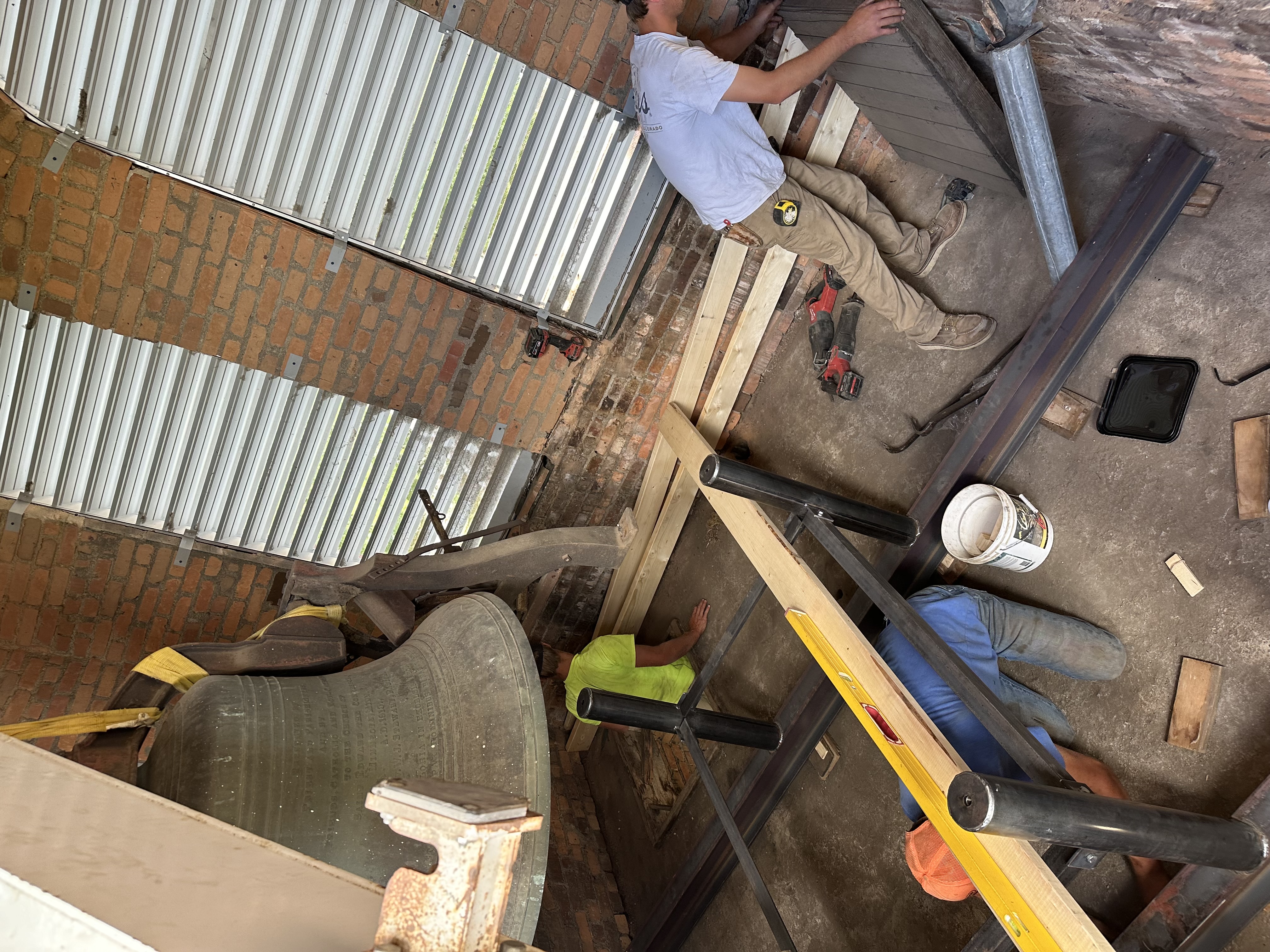
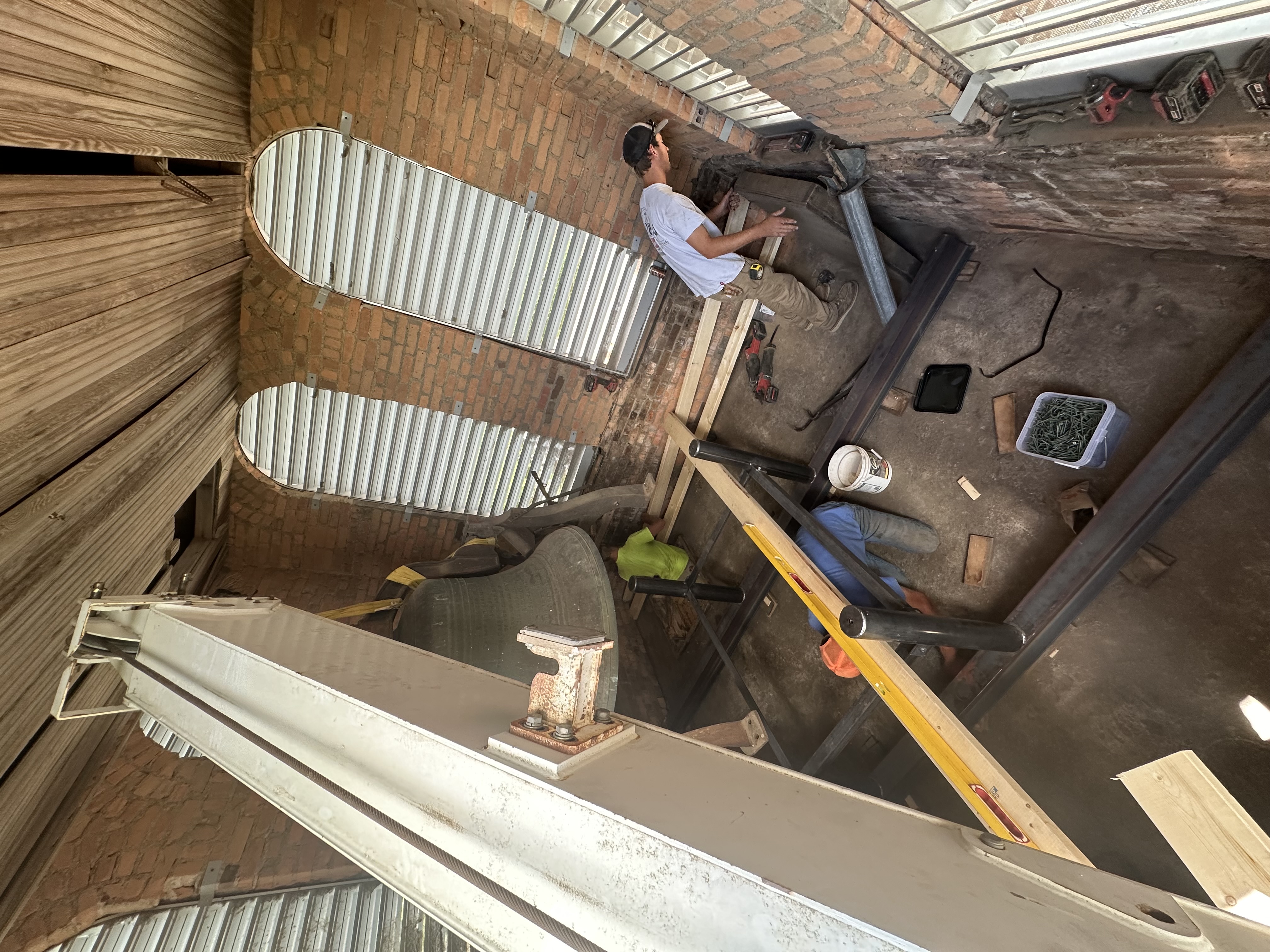
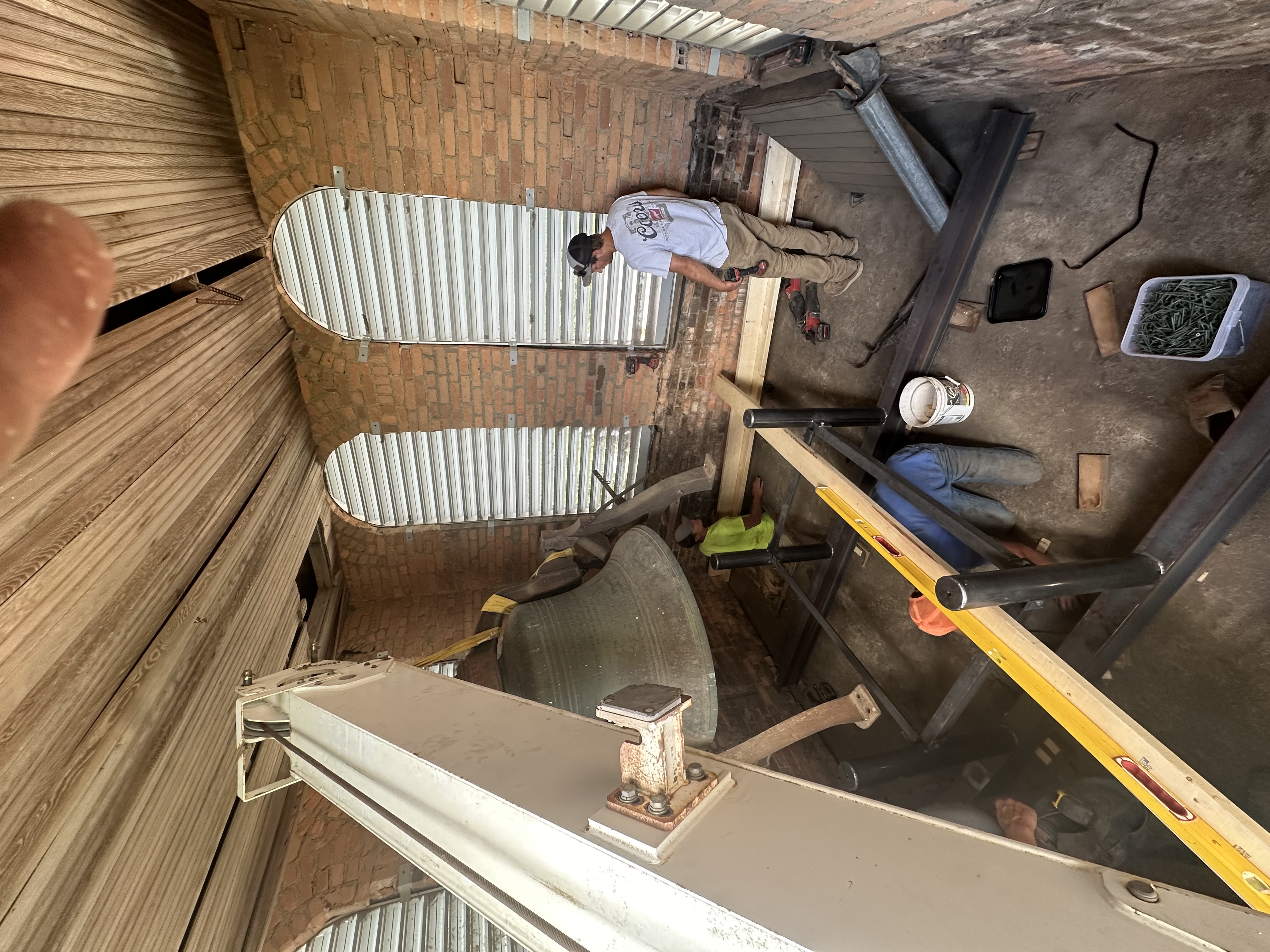
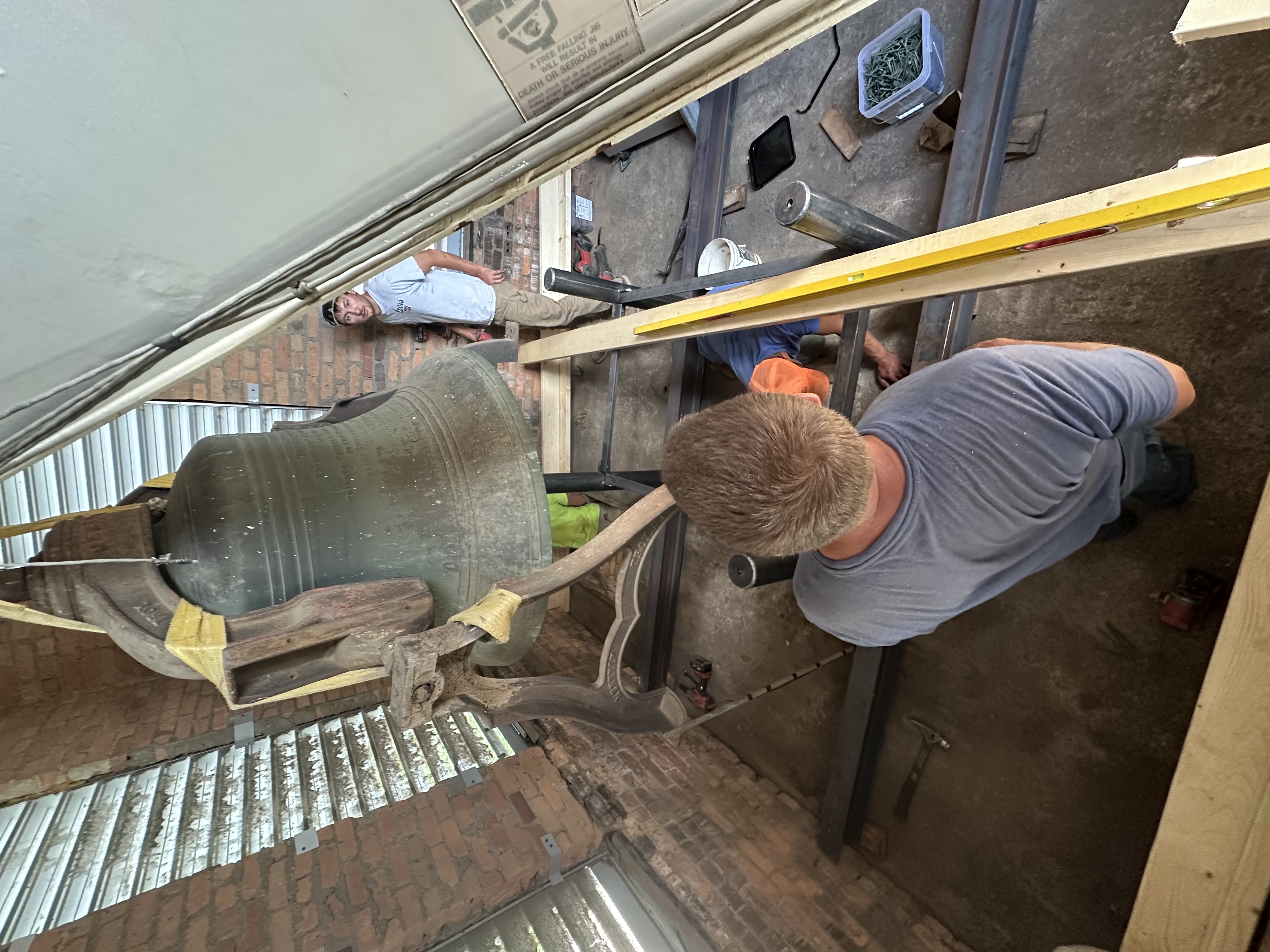
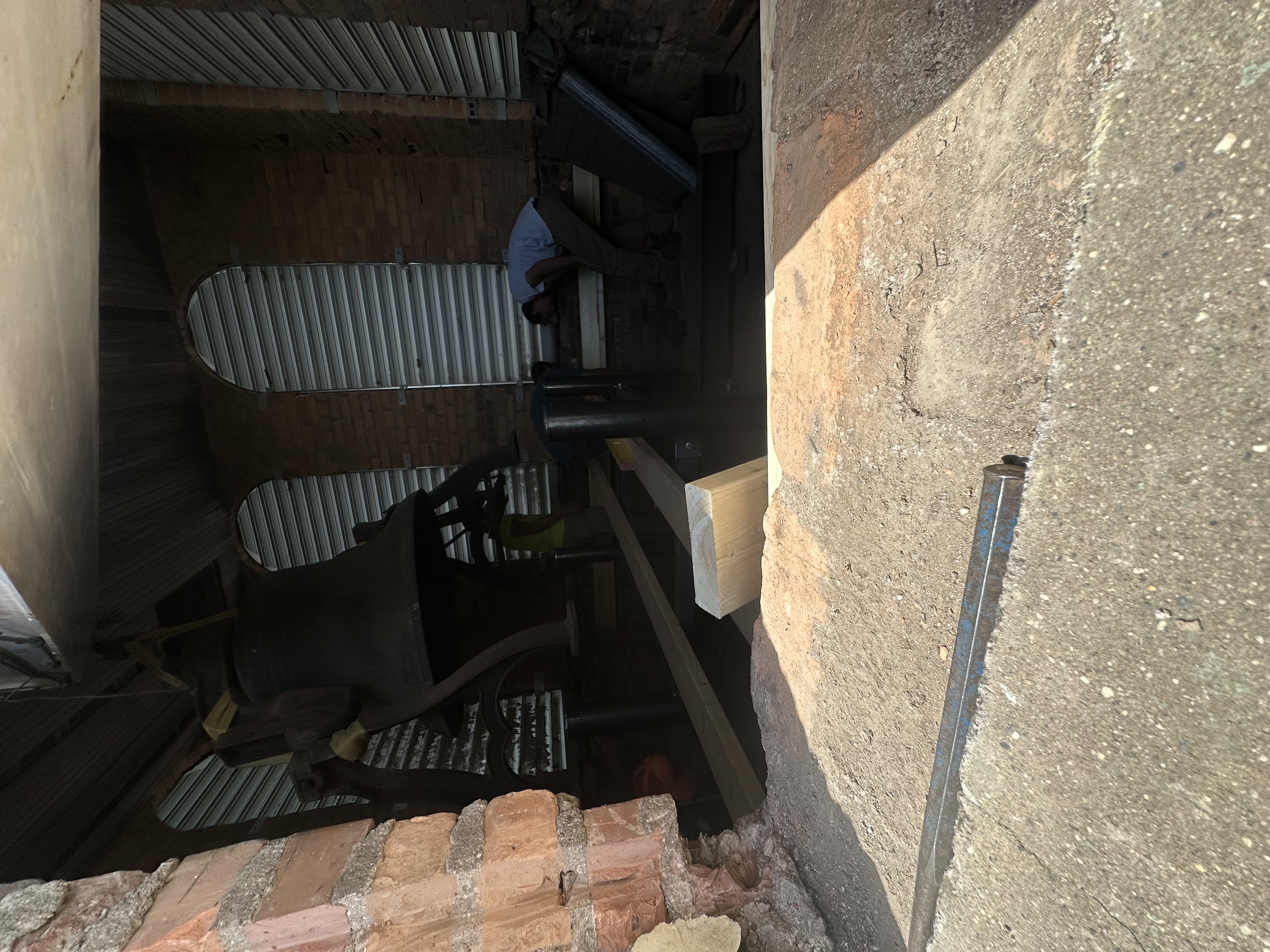
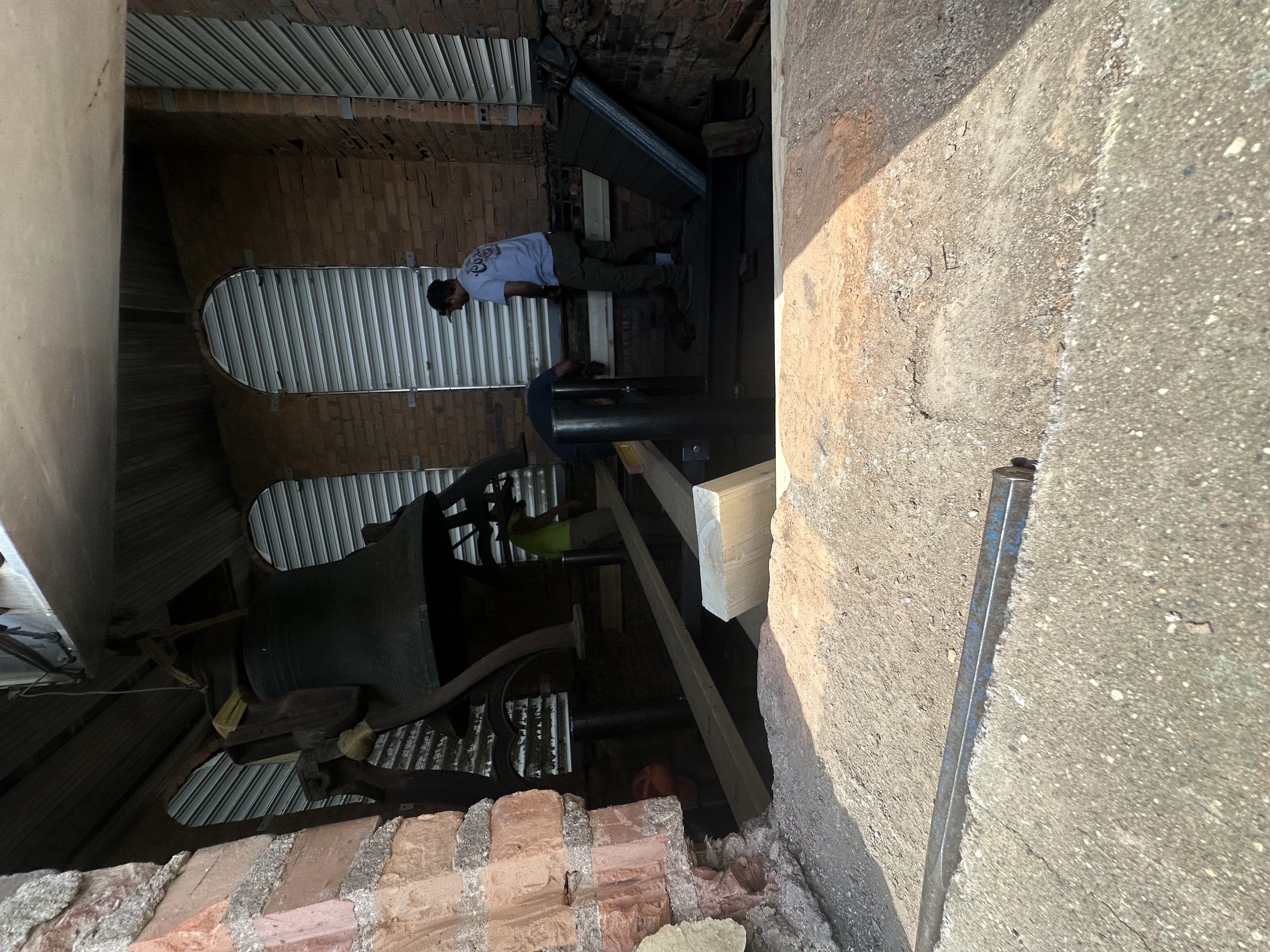
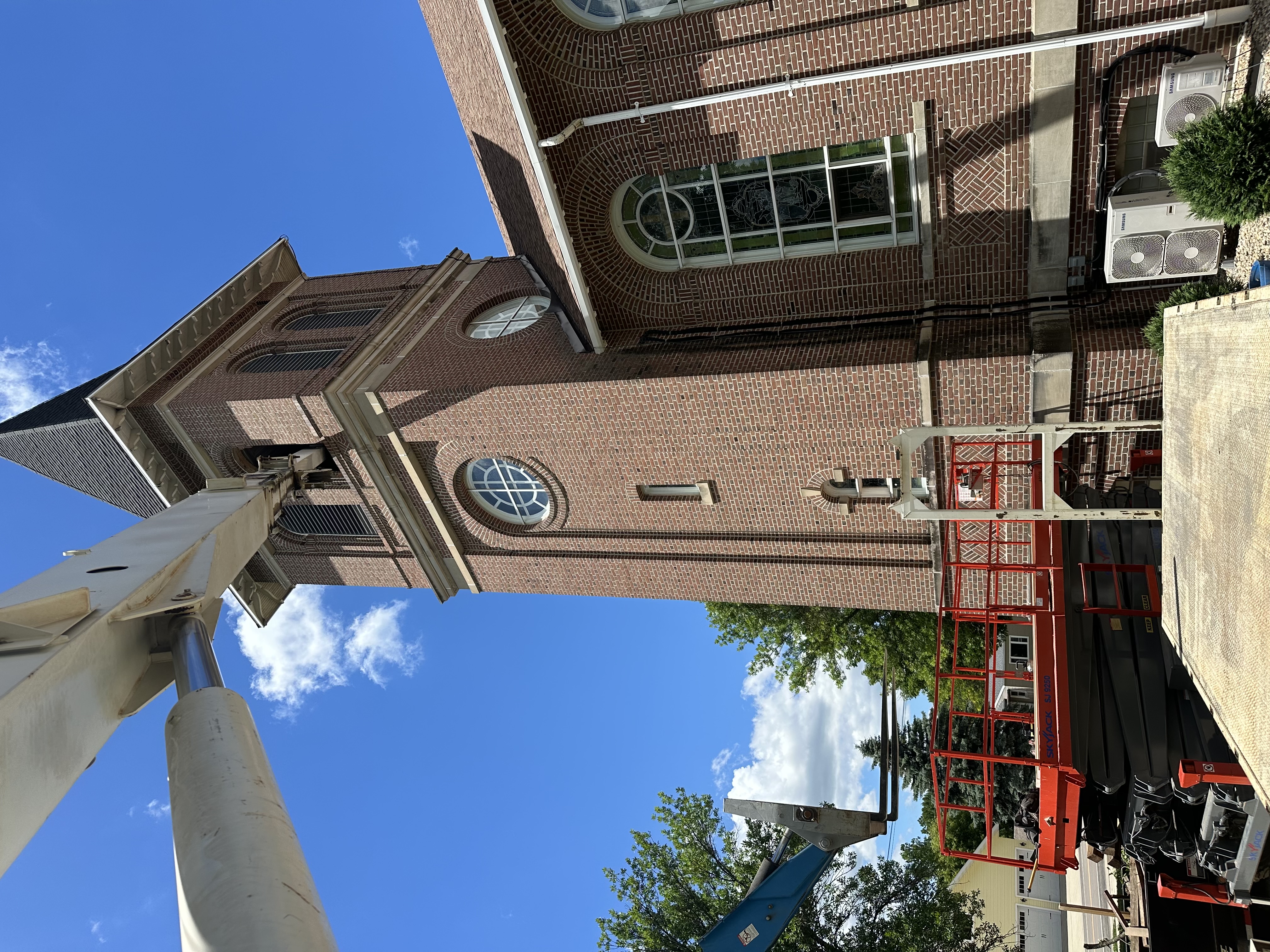
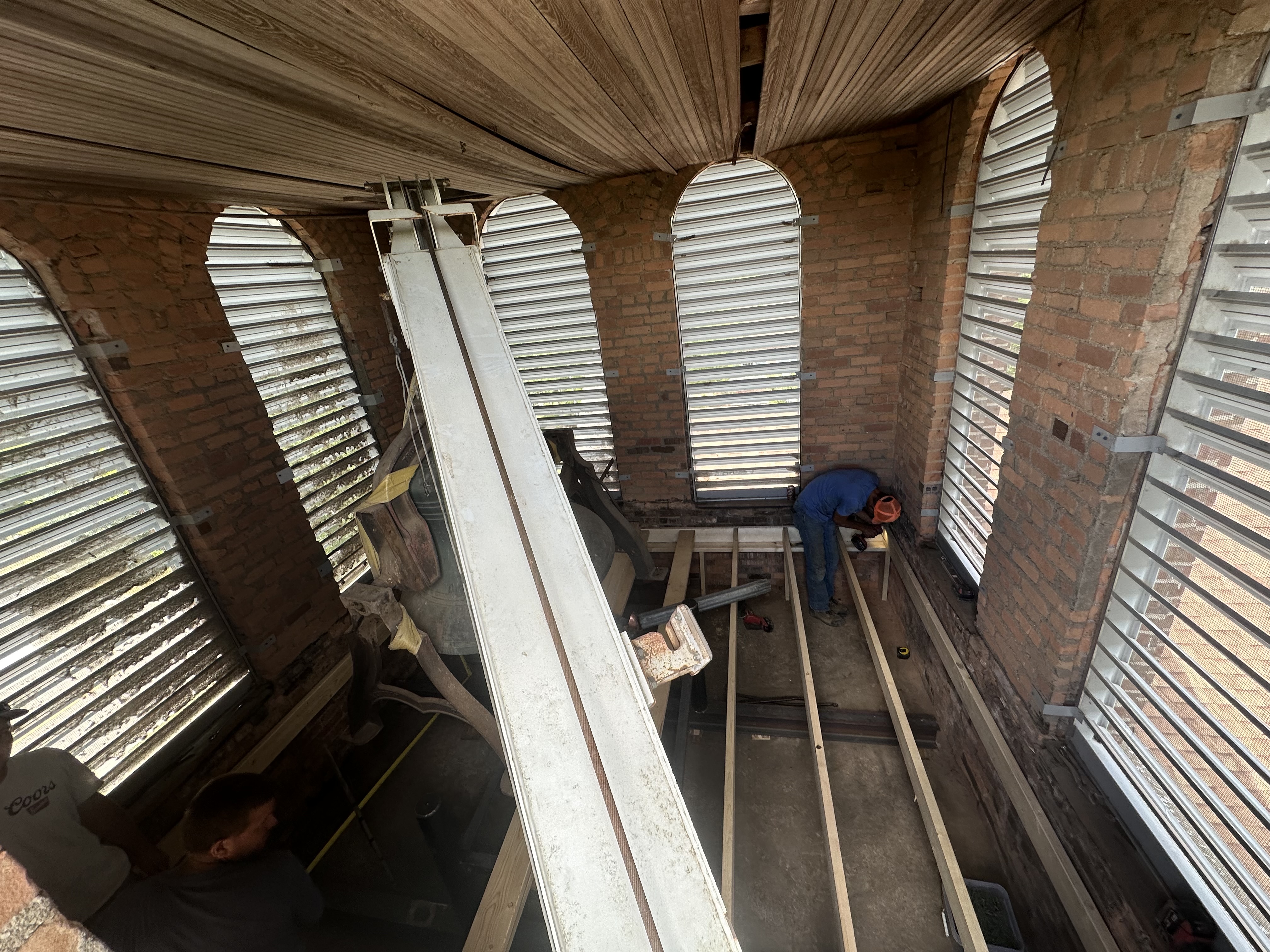
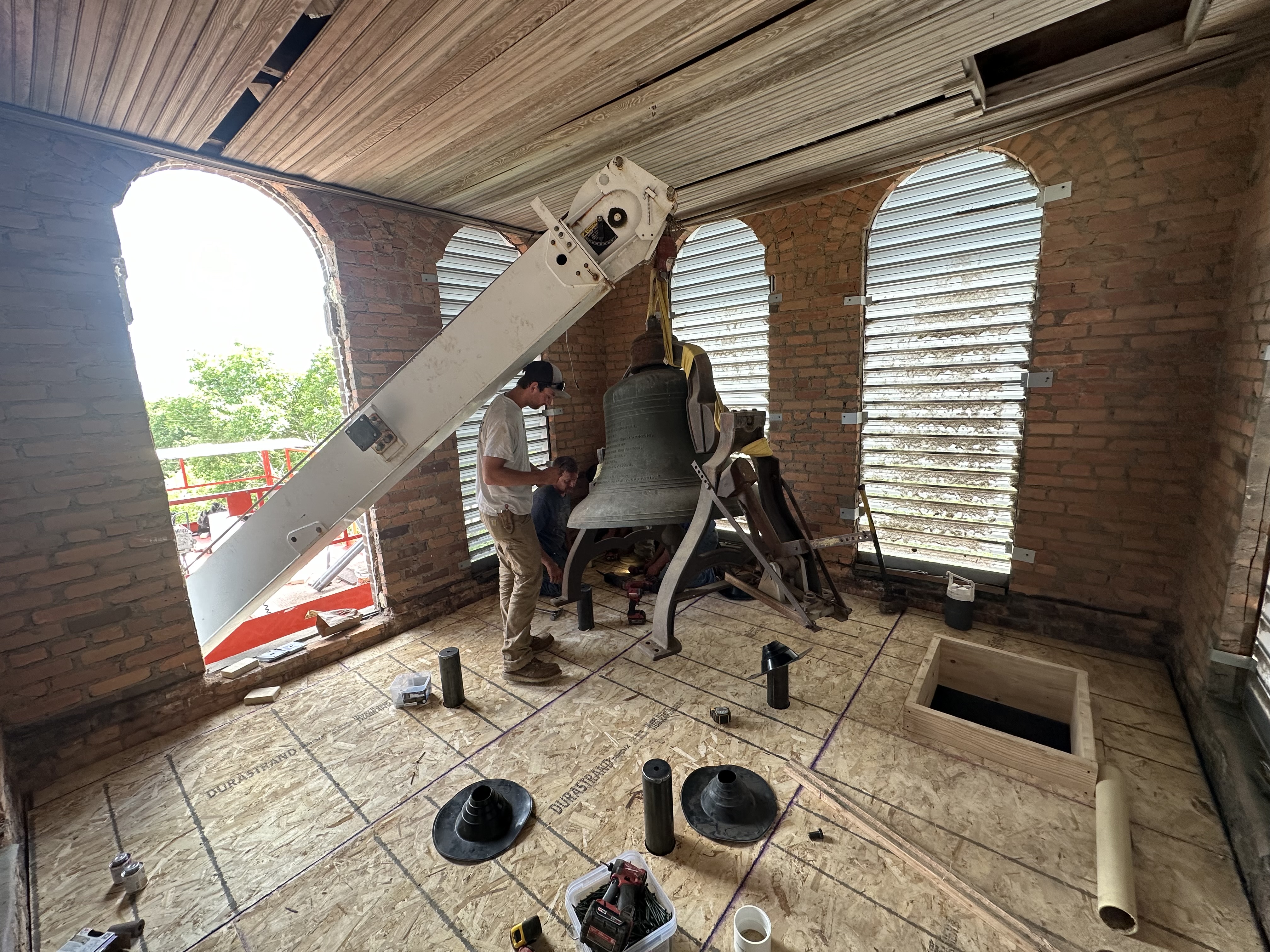
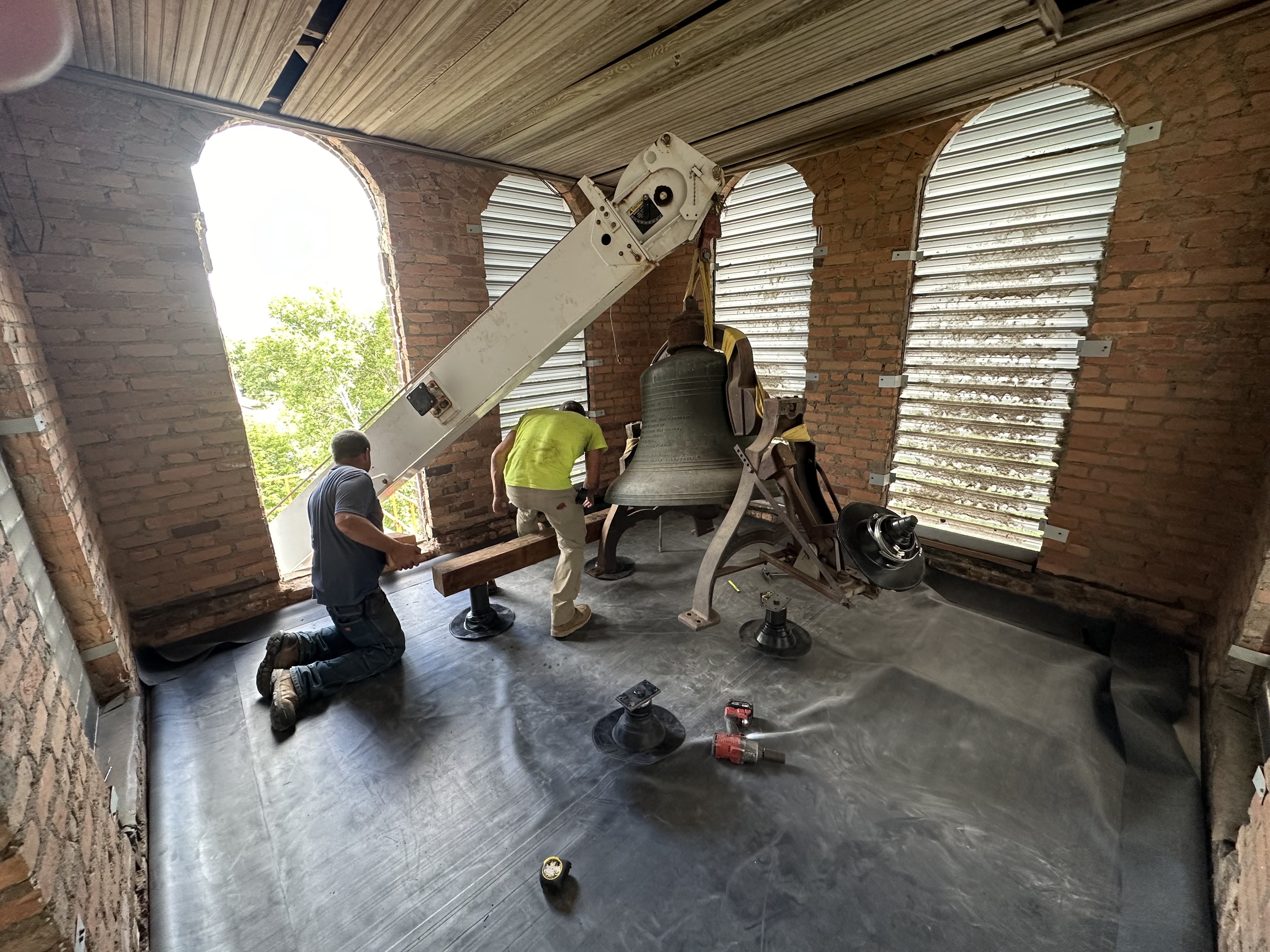
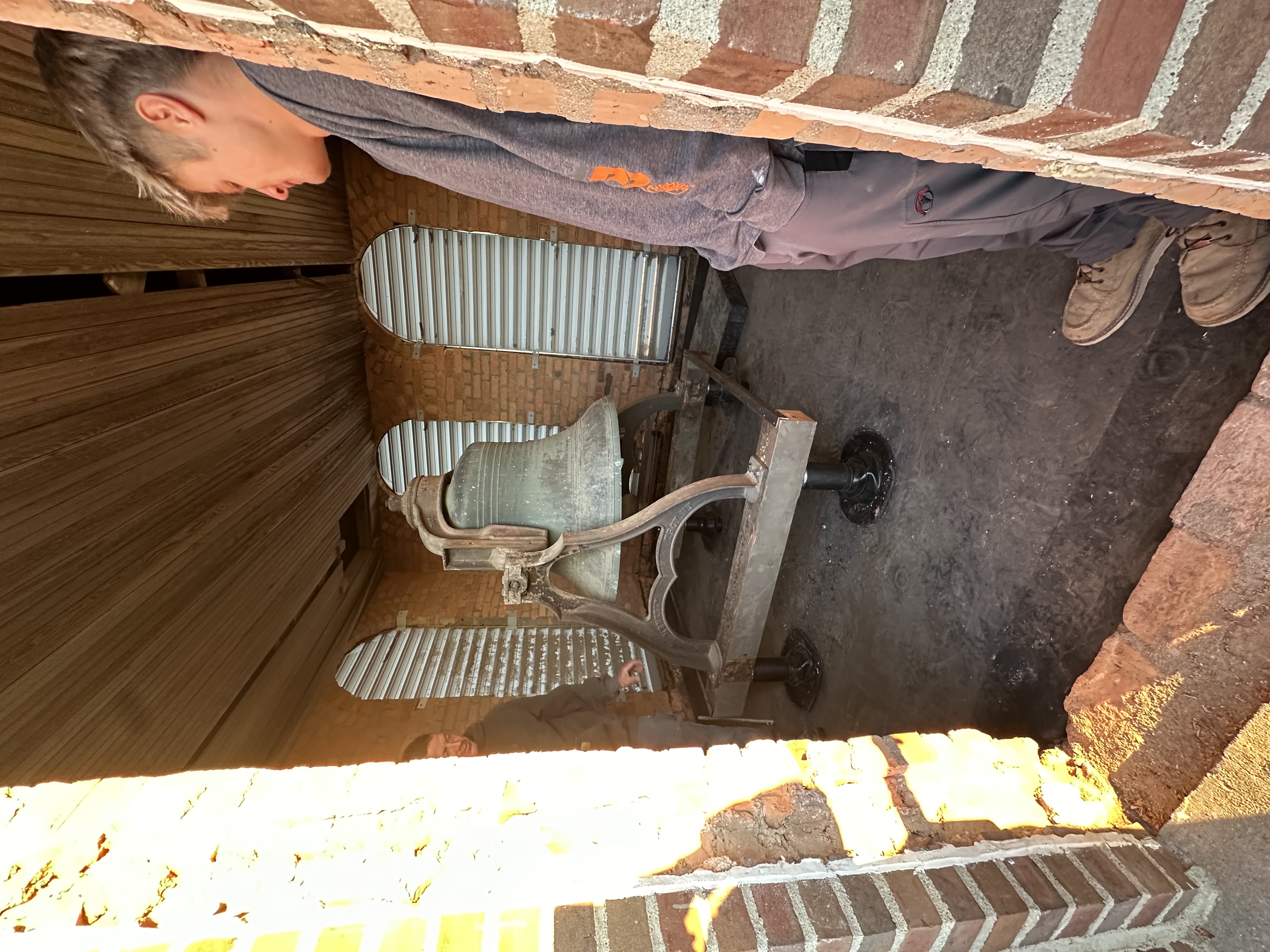
Installed on September 12, 1913, St. Edward's 2,300-pound Meneely bell has called generations of the faithful to worship. Cast by the renowned Meneely Bell Foundry of New York, one of America's most respected bell makers, it bears an inscription recording that it was presented not only by the priest and parishioners, but also by "friends, Catholic and non-Catholic," reflecting the generous support of the entire Minneota community. Parish history records that John Finnegan, Frank Bortosh, Archille DeSutter, and Mike Ahern led the successful campaign to raise the $860 needed for its purchase. Encircling the bell is the angelic hymn from Luke 2:14: "Gloria in excelsis Deo, et in terra pax hominibus bonae voluntatis" - Glory to God in the highest, and on earth peace to people of good will." Installed just months before the parish completed its stained-glass windows and Stations of the Cross, the bell stands as one of the earliest and most enduring symbols of St. Edward Parish's commitment to the glory of God and the life of the community.
The Full inscription is:
PRESENTED BY
PRIEST AND PARISHIONERS
AND BY
FRIENDS, CATHOLIC AND NON-CATHOLIC
TO THE CHURCH OF
SAINT EDWARD THE CONFESSOR
MINNEOTA, MINN.
A.D. 1913
REV. W. J. STEWART, PASTOR
"GLORIA IN EXCELSIS DEO,
ET IN TERRA PAX HOMINIBUS BONAE VOLUNTATIS."
The last lines are translated:
"Glory to God in the highest, and on earth peace to men of good will." from Luke 2:14.
What the Inscription and Our History Book tell us
1. It was a community project—not simply a parish one
Many bells simply state they were donated by the parish. Our bell intentionally acknowledges that Protestants and other members of the Minneota community also contributed financially.
That says a great deal about the respect St. Edward's enjoyed in 1913 and the importance of church bells to the whole town. Before widespread telephones and radios, bells belonged as much to the civic landscape as the religious one.
2. The history book confirms how the fundraising happened.
Interestingly, $860 in 1913 represented a very substantial amount of money. Adjusted for inflation alone, that is roughly $28,000–$30,000 today, although the purchasing power for cast bronze bells and skilled foundry work may have been even greater.
3. A 2,300-pound Meneely bell was a significant investment.
A bell of 2,300 pounds is large enough to produce a deep, resonant tone that could easily be heard across the entire town.
Meneely Foundry bells were among the finest American bells ever produced. They were cast of high-quality bell bronze (approximately 78% copper and 22% tin), carefully tuned, and intended to last centuries.
Many Meneely bells are still rung daily more than a century later.
4. The installation date shows it was installed early, perhaps even before completion of the Church.
Because of the size of the bell versus the size of the internal access to the bell platform, the bell was most likely placed in the tower before the tower's completion. This suggests that the bell was not an afterthought, but part of a well thought out plan. It reflects a parish reaching maturity and investing in permanent works of art and worship.
5. The significance of Rev. W. J. Stewart
Including the pastor’s name was customary.
It permanently records the pastor under whom this milestone occurred. Father Stewart oversaw one of the most important periods in St. Edward's early history.
About The Meneely Foundry
Knowing it is a Meneely bell is significant.
The Meneely family was America's premier bell-founding dynasty.
There were actually two related foundries:
- Meneely Bell Company (West Troy/Watervliet, New York)
- Meneely & Kimberly (Troy, New York)
Between them they cast well over 100,000 bells during the nineteenth and early twentieth centuries.
Catholic dioceses throughout Minnesota—including New Ulm, St. Paul, Winona, and Duluth—purchased Meneely bells because of their reputation for beautiful tone and durability.