
Liturgical Furniture - New and Old
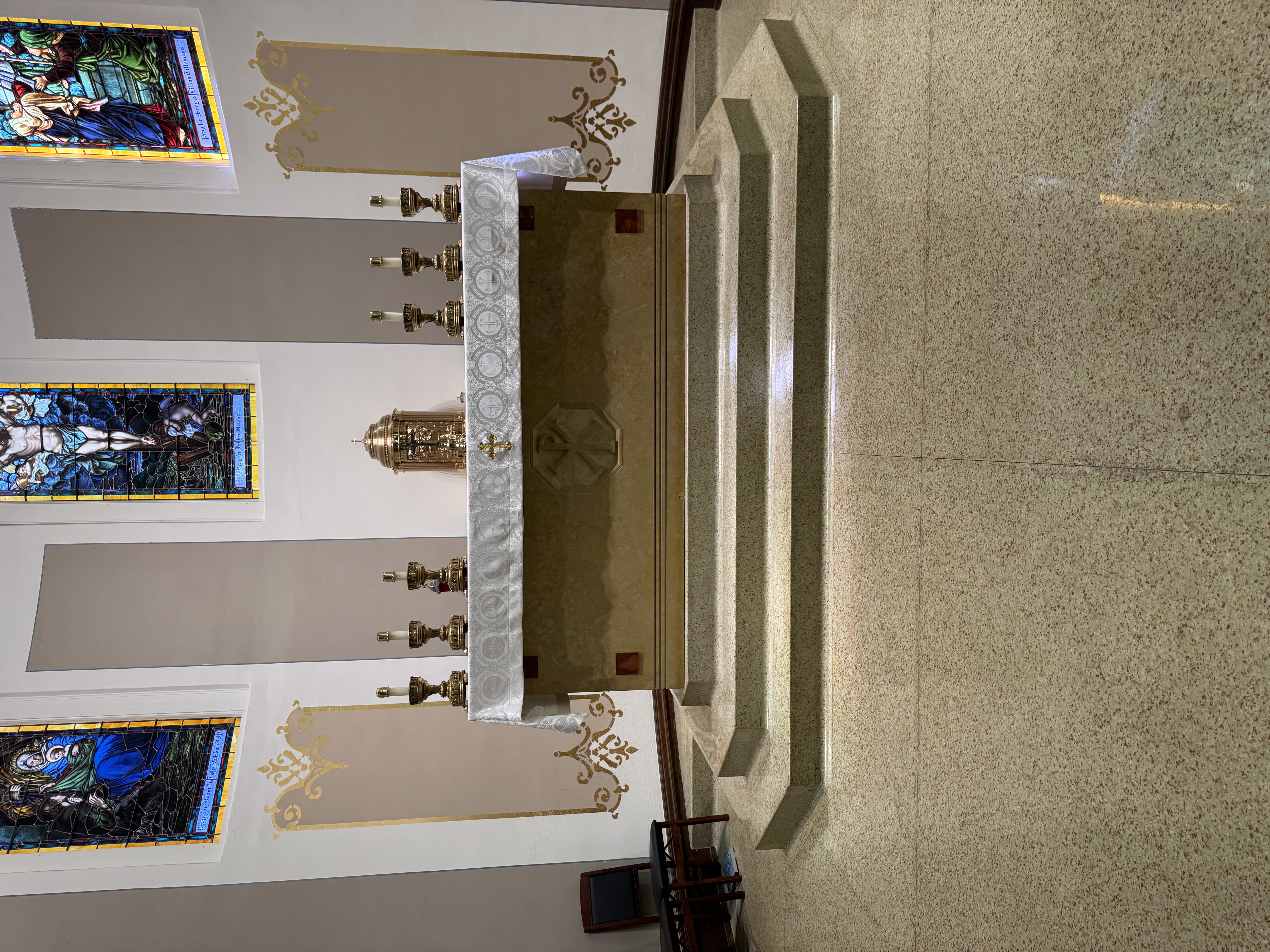
Mankato Stone Altar of Sacrifice
The Altar is the heart of every Catholic church, for it is upon this sacred table that the Eucharistic Sacrifice is offered and Christ becomes truly present under the appearances of bread and wine. Crafted from Mankato stone, a durable limestone quarried in southern Minnesota, this altar reflects both the permanence of the Catholic faith and the beauty of the region from which it was formed. The use of local stone also expresses the Church's long tradition of offering the finest materials of creation back to God in worship. This Altar along with the side Altars were installed in 1952 in preparation of the Diamond Jubilee.
The altar recalls both the table of the Last Supper and the rock of Calvary, where Christ offered Himself for the salvation of the world. It also symbolizes Christ Himself, the "living stone" (1 Peter 2:4) upon whom the Church is built. At every Mass, the altar becomes the meeting place of heaven and earth as Christ's one sacrifice is made sacramentally present and the faithful are invited to share in the heavenly banquet.
For this reason, Catholics show profound reverence to the altar. It is kissed by the priest at the beginning and end of Mass, incensed on solemn occasions, and dedicated with sacred chrism when first consecrated. More than a piece of liturgical furniture, the altar is the center of the church's worship and the enduring sign of Christ's presence among His people.
The Altars front is a stylized Chi-Rho - the first two Greek letters for Christ. There are 4 red Marble squares in the corners - a detail repeated in the Altar of Repose and the Ambo. Three engraved lines are at the base, again a detail repeated in the Altar of Repose, bringing a unity to these two Altars - one of Sacrifice, the other of Enduring Presence.
The Ambo
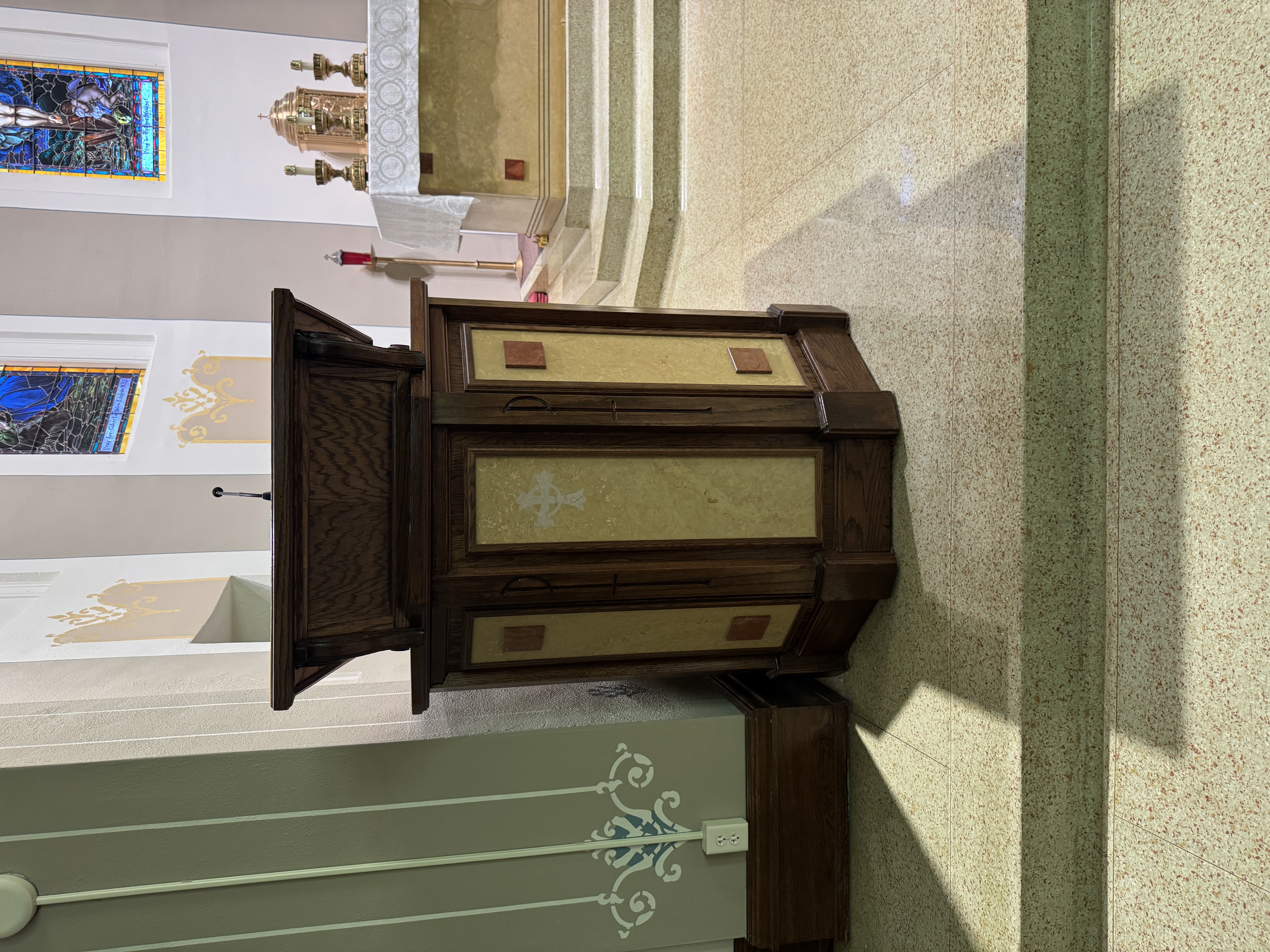
The ambo is the place from which the Word of God is proclaimed during the Sacred Liturgy. From this sacred lectern, the readings from Sacred Scripture, the Responsorial Psalm, the Easter Proclamation (Exsultet), and the homily are delivered, making the ambo a symbol of Christ, who continues to speak to His people through His Word. Together with the altar, the ambo forms one of the two principal focal points of the church, expressing the inseparable connection between the Liturgy of the Word and the Liturgy of the Eucharist.
The wooden ambo was handcrafted by Germain Hoffman in 1984, reflecting the beauty of skilled craftsmanship in service to the Church's worship. During the 2025 renovation, Church Interiors enhanced it with Kasota stone panels that visually unite it with the sanctuary's other sacred furnishings. The front panel bears the Cross Fleury with Celtic Circle. The side panels contain squares of Russo marble, matching the altar and the Altar of Repose, creating a harmonious design that underscores the unity of the sanctuary. Together, these materials proclaim that the Word of God and the Eucharist flow from the same saving mystery of Christ and are at the heart of the Church's life.
Engraved in Kasota stone on the front of the ambo is a stylized cross enclosed within a circle. This image is repeated on the Presider's Chair, as well, uniting them. The fleur-de-lis terminals, drawing from the gold floor-de-lis behind the side aisle, on the transept ceiling, and incorporated in the stencils, recall the purity of the Blessed Virgin Mary and the Holy Trinity, while the surrounding circle symbolizes eternity and the triumph of Christ over death. Together, these ancient Christian symbols proclaim that the Cross is the source of eternal life and the center of the Church's faith.
This same motif appears in the seal of St. Edward the Confessor and in the granite crosses of the center aisle. The decorator chose this motif to subtly reinforce the patronal symbolism of St. Edward's Church. It creates a visual thread running from the architecture to the floor and ultimately to the sanctuary, unifying the entire church around the mystery of the Cross.
Altar of Repose / Tabernacle
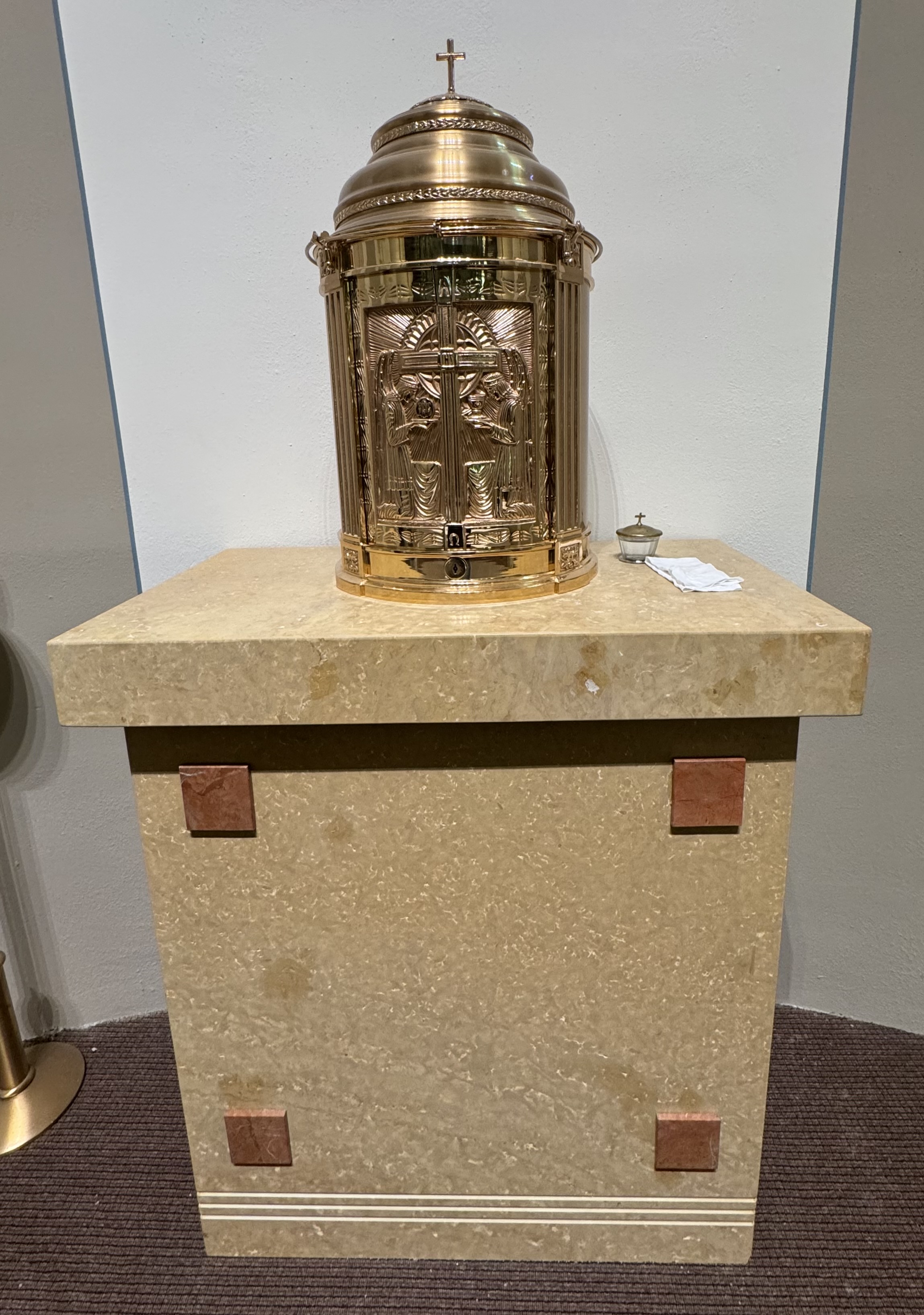
The Altar of Repose, also called the tabernacle stand, is the place upon which the tabernacle rests, housing the Blessed Sacrament reserved after the celebration of Mass. Here the Eucharist is reverently kept for the prayer and adoration of the faithful and for Holy Communion to the sick and dying. The sanctuary lamp burning nearby reminds us that Christ is truly and substantially present in the Blessed Sacrament, inviting all who enter the church to pause in prayer before Him.
Installed during the church's 2025 renovation by Church Interiors, the Altar of Repose is crafted from Kasota stone, symbolizing the permanence and strength of Christ, the cornerstone of the Church. Four Russo marble squares accent the corners, visually connecting the tabernacle stand with the altar and ambo, while three engraved lines in the base recall the mystery of the Holy Trinity, from whom all worship begins and to whom all worship is directed. Together, these carefully chosen materials express the dignity of the Blessed Sacrament and the central place of Christ's abiding presence in the life of the Church. These elements are repeated from the Altar of Sacrifice, uniting these two pieces of Sacred Furniture.
Presider's Chair and Deacons Chairs
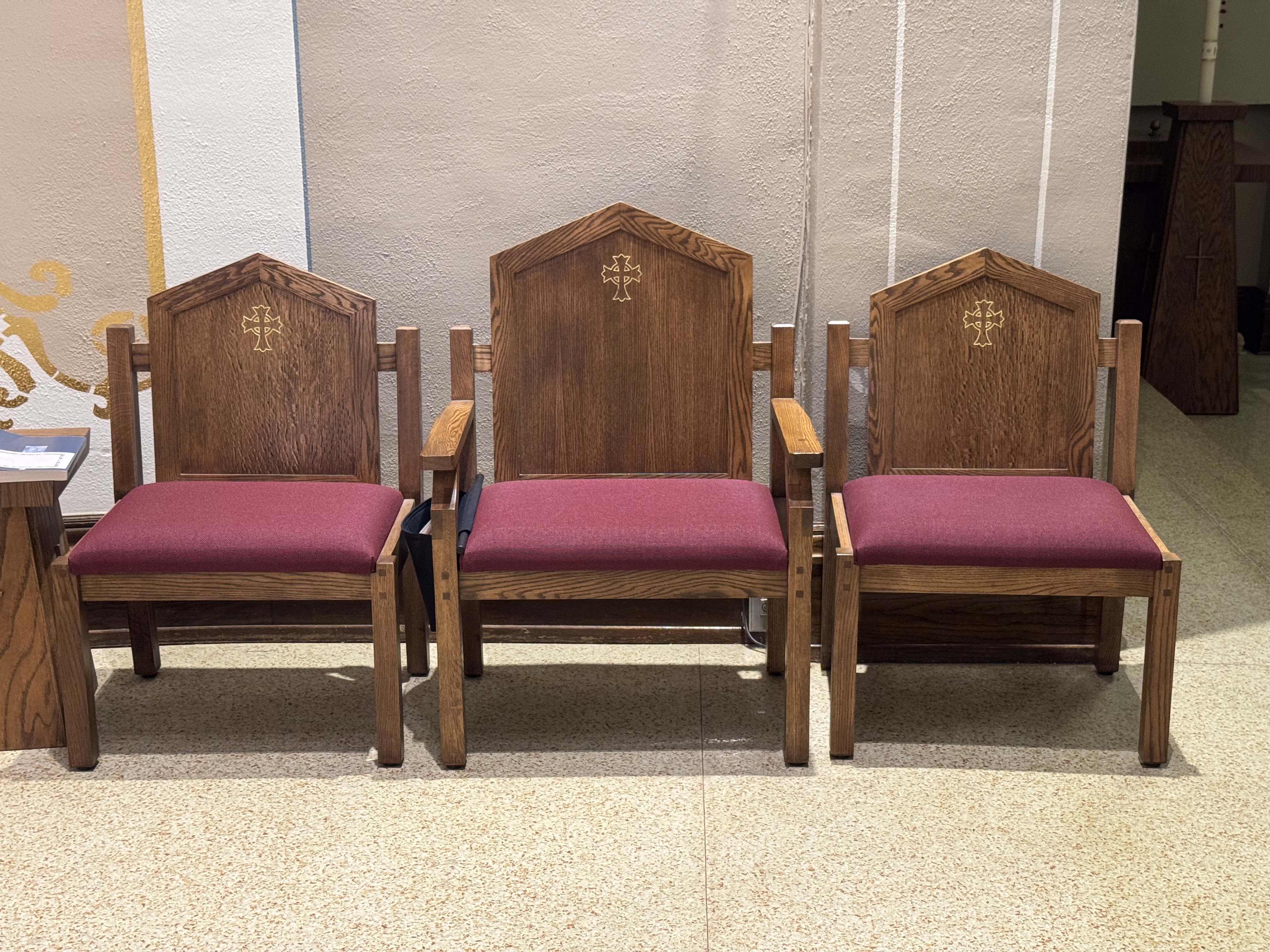
The presider's chair, together with the two deacon chairs, signifies the ministry of leadership and service exercised during the Sacred Liturgy. From the presider's chair, the priest who acts in the person of Christ the Head leads the assembly in prayer, presides over the rites of the Mass, and directs the liturgical celebration. The deacon chairs reflect the deacon's ministry of service to the Word, the altar, and the people of God. Their placement within the sanctuary expresses the distinct yet complementary roles of the ordained ministers in the Church's worship.
Crafted of wood that harmonizes with the ambo, the chairs create a visual unity within the sanctuary, linking the ministry of proclaiming the Word with that of presiding at the Eucharist. Each chair bears the Cross Fleury with Celtic Circle on its back, a symbol proclaiming Christ's victory through the Cross and the promise of eternal life. This recurring motif, found throughout the church, reminds both the ministers and the faithful that every act of leadership and service in the Church finds its source and purpose in the saving Cross of Christ.
These chairs were created in 2025 by the artisans of Church Interiors.
Thank you to Jeanne Schmidt for the creation of the hymnal/missalette bag for the side of the presider's chair.

Baptistry and Paschal Candle
The baptistry is the place where new life in Christ begins through the Sacrament of Baptism. It is here that men, women, and children are washed in the waters of rebirth, freed from original sin, and welcomed into the Church as members of the Body of Christ. The baptistry reminds all who enter the church of their own baptismal calling, for by the waters of Baptism we become sons and daughters of God and are commissioned to live as faithful disciples of Jesus.
This wooden baptistry was handcrafted by Germain Hoffman in 1984, reflecting the beauty and dignity appropriate to the Church's first sacrament.
Standing beside it is the Paschal Candle, the principal candle of the liturgical year, which is renewed each Easter and crafted from pure beeswax, a long-standing symbol of purity and the offering of creation to God. During the Easter Vigil, the newly blessed Paschal Candle is carried into the darkened church as the light of the risen Christ, and from it the baptismal water is blessed before new Christians are baptized. Throughout the Easter season it stands prominently in the sanctuary, and during the rest of the year it is placed beside the baptistry for baptisms and near the coffin at Christian funerals, reminding us that the light of Christ received at Baptism guides us through life and into the promise of eternal life.
This Candle stand was purchased in memory of Nicholas Mootz indy Millie Mootz.
The Side Altars
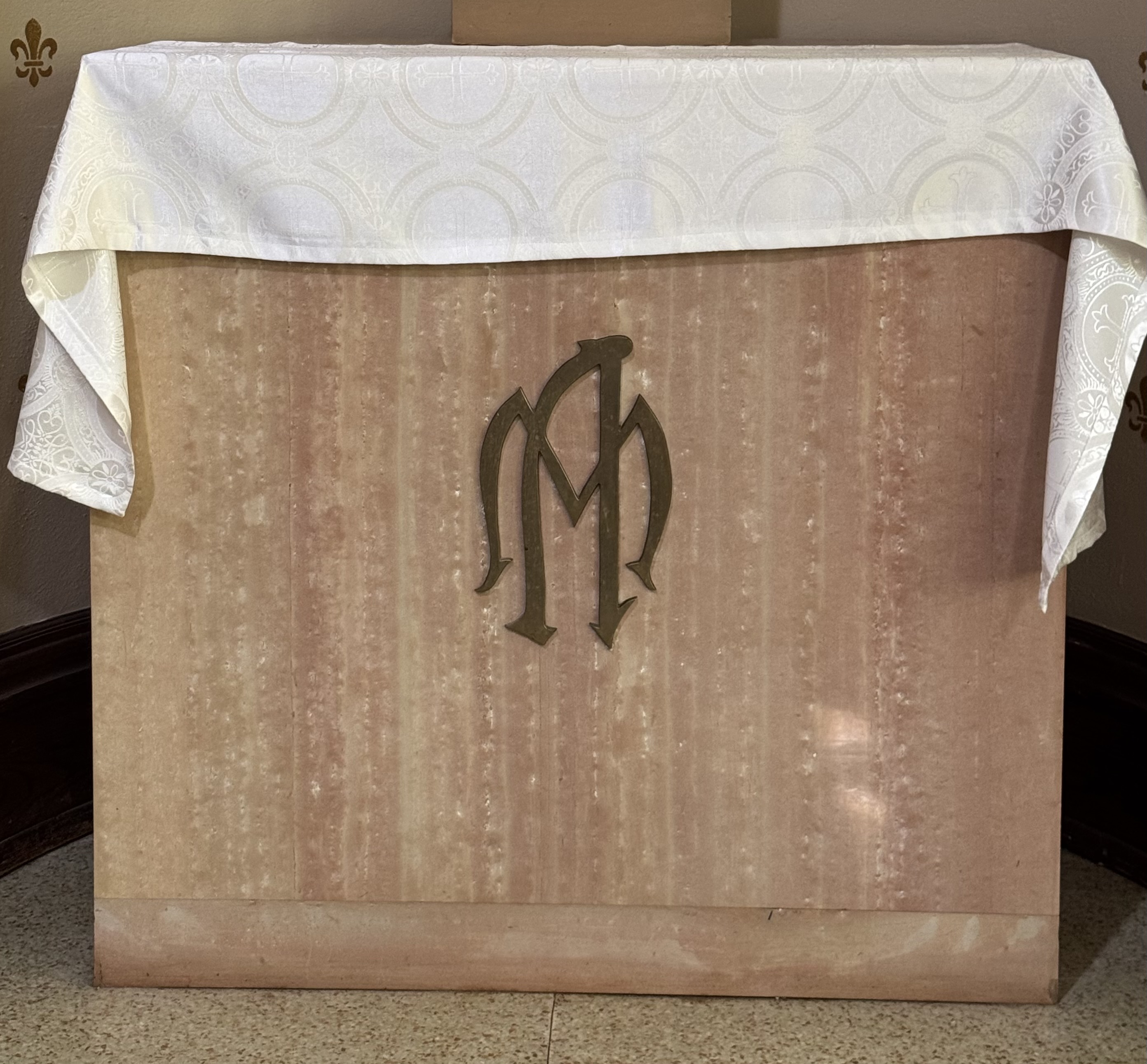
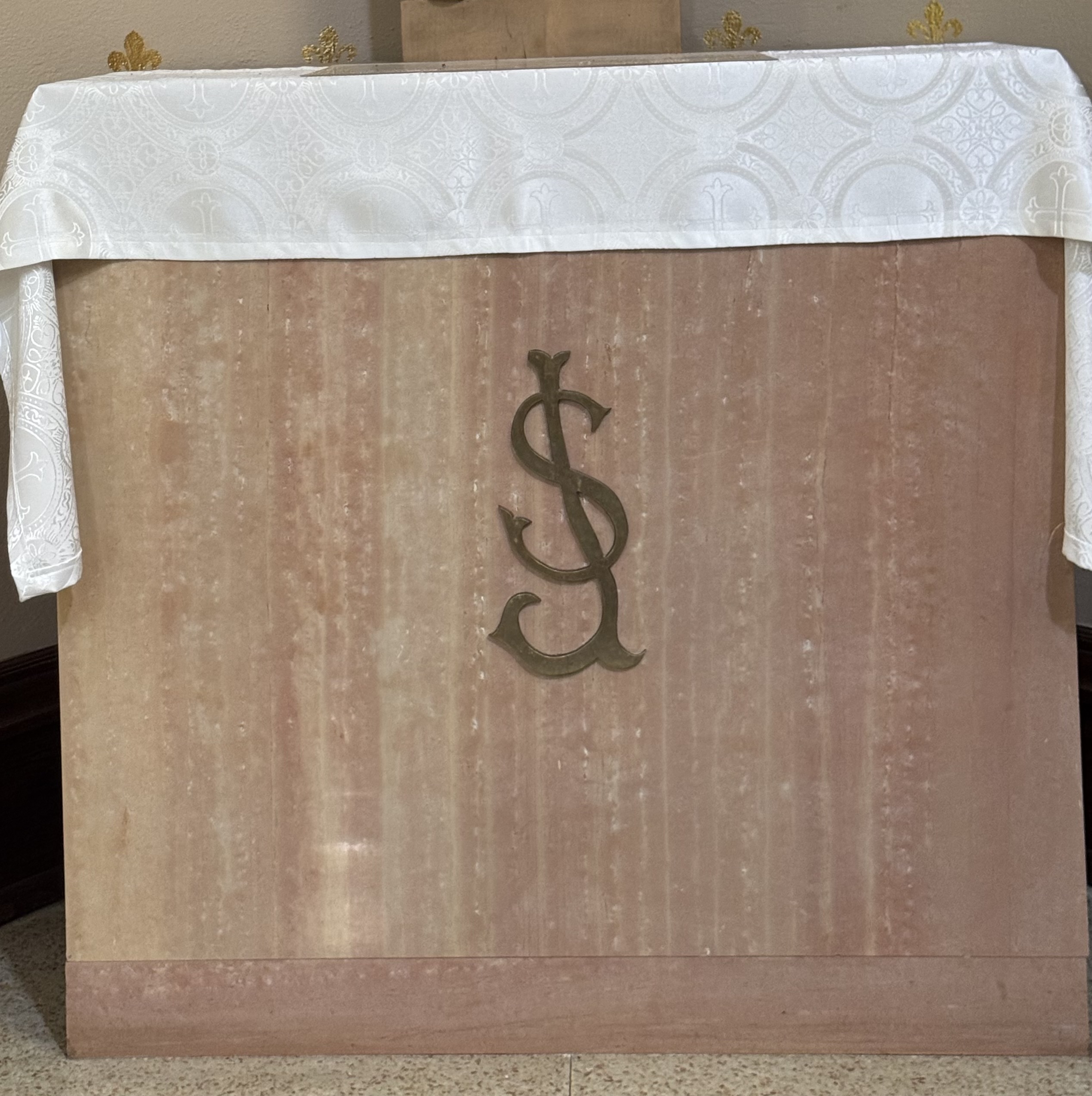
Located in the niches on either side of the apse, the side altars dedicated to the Blessed Virgin Mary and Saint Josephhave long provided places for prayer, devotion, and the celebration of the Church's rich spiritual traditions. Before the liturgical reforms of the Second Vatican Council, it was common for priests to celebrate daily Mass at these altars, allowing multiple Masses to be offered in the same church each day. While Mass is now ordinarily celebrated at the principal altar, the side altars continue to serve as cherished places of prayer and reminders of the communion of saints.
The placement of these altars beside the sanctuary is deeply meaningful. The Blessed Virgin Mary and Saint Joseph, who lovingly cared for Jesus during His earthly life, continue to accompany the Church by their prayers and example. Their presence near the sanctuary reminds us that all the saints lead us to Christ and join us in worship before the throne of God. Set within the architectural niches of the apse, these shrines beautifully frame the sanctuary and express the unity of the heavenly and earthly Church gathered around the Eucharistic Lord.
Today, these side altars invite the faithful to pause for personal prayer, to seek the intercession of Mary and Saint Joseph, and to reflect upon their virtues of faith, obedience, purity, and humble service. They remain enduring signs that the celebration of the Eucharist is always surrounded by the prayers of the saints, who encourage us to follow Christ with steadfast hearts.
These Altars were installed in 1952 and are made of Mankato Stone.
The Sanctuary Lamp
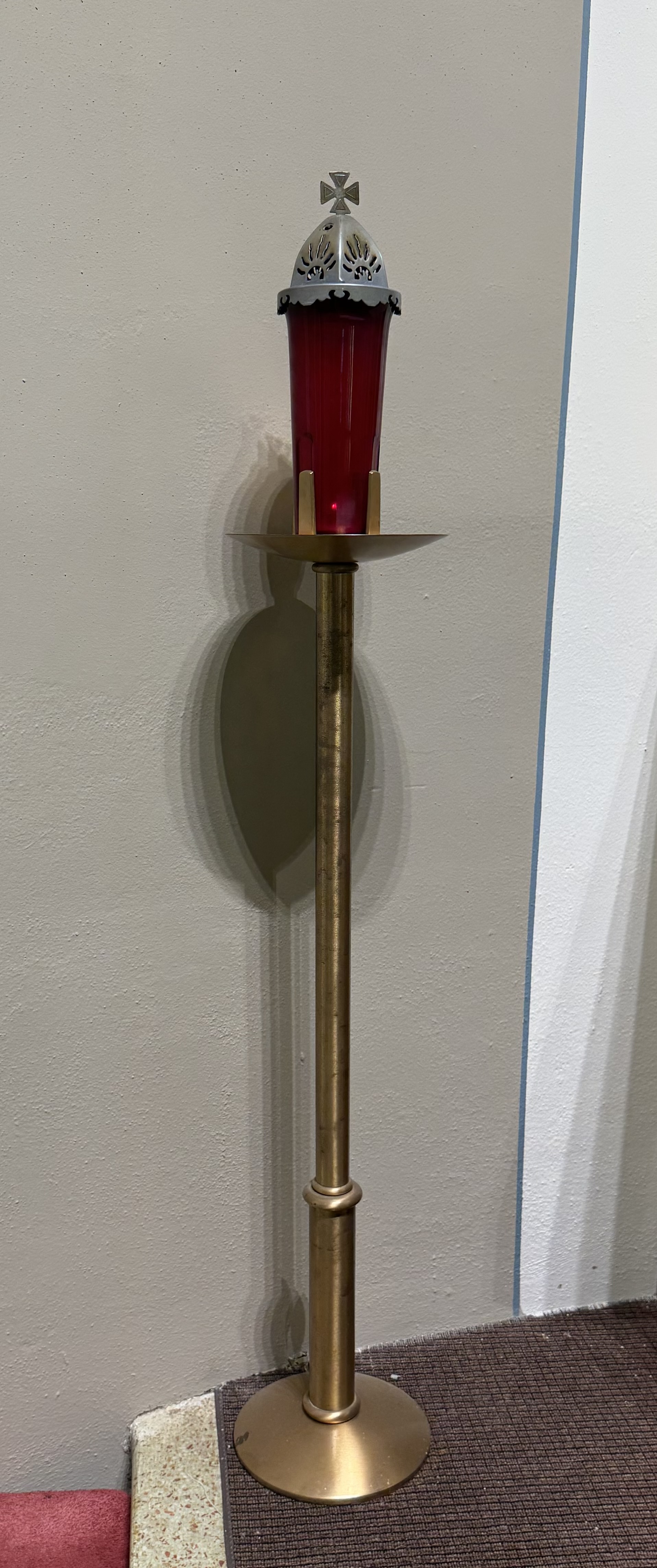
The sanctuary lamp is one of the most recognizable signs in a Catholic church. Burning continuously near the tabernacle, it signifies that Jesus Christ is truly present in the Blessed Sacrament. Whenever the sanctuary lamp is lit, the faithful know that the Eucharist is reserved in the tabernacle, inviting all who enter the church to pause in prayer, genuflect in reverence, and adore the Lord who dwells among His people.
Crafted of brass, the sanctuary lamp reflects the dignity and permanence appropriate to its sacred purpose. Its red glasshas long been the traditional color used for sanctuary lamps throughout the Catholic Church. Red symbolizes the sacrificial love of Christ, whose Precious Blood was poured out for the salvation of the world, and serves as a visible reminder that the Eucharistic Lord is the same Christ who offered Himself on the Cross and now remains present among His people. The unwavering flame also recalls Christ as the Light of the World, whose presence continually illumines His Church and calls the faithful to lives of faith, hope, and charity.