About our 2025 Renovation
Overall, we had a few priorities for our renovation project.
We wanted to repair the plaster, pews, and floor tiles.
We wanted to highlight our Patron, St. Edward, more than the stained glass windows as mentioned in above the main entry.
We wanted to have any decoration in keeping with the unique architecture of our building.
We wanted an ‘organic’ or natural tie between the structure, colors, and sacred furniture so that we would see the interconnections.
Keep some important things, such as the Altar and ambo, original.
We wanted to be as economical as possible.
While the council and previous pastors had consulted with other firms, it was decided to seek a bid from Church Interiors Inc of North Carolina. They specialize in Churches, and provide a one-stop shop for projects. They gave an estimate on all that we had hoped to do: Refinishing pews, repair and painting of the walls and ceiling, replacing the floor with something more durable, and perhaps some new Sacred furniture that would be more connected to everything. In the end, we replaced the Presider and Deacon Chairs, The Altar of Repose, and added some elements to the ambo. We kept the Altar and the Ambo structure.
Church Interiors Inc. contracted with several others. These included a pew crew, plaster repair and paint crew, a decorative and stencil paint crew, and a floor crew. They coordinated the various crews.
About the colors
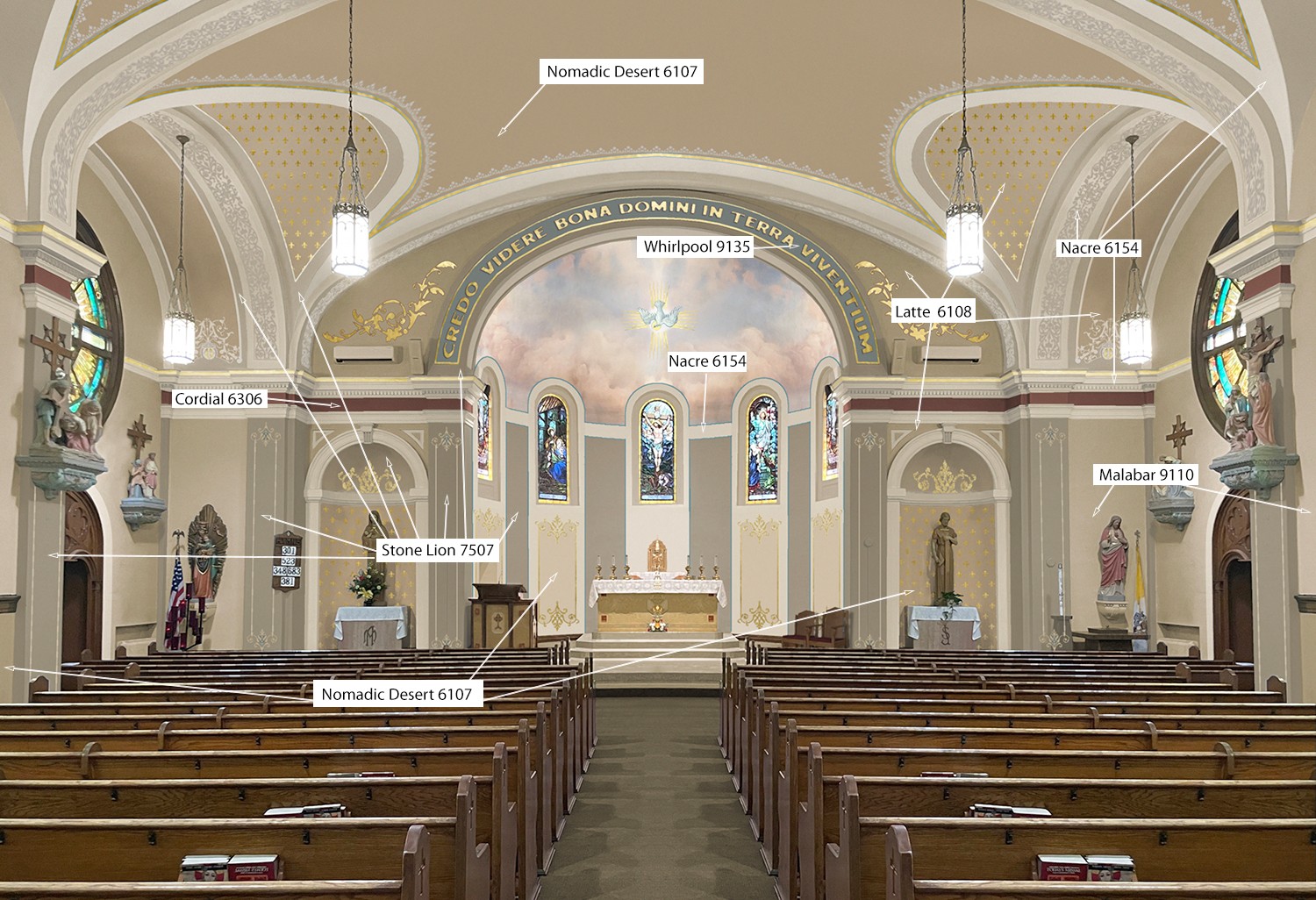
The Architects rendering of the Color Selection (Church Interiors)
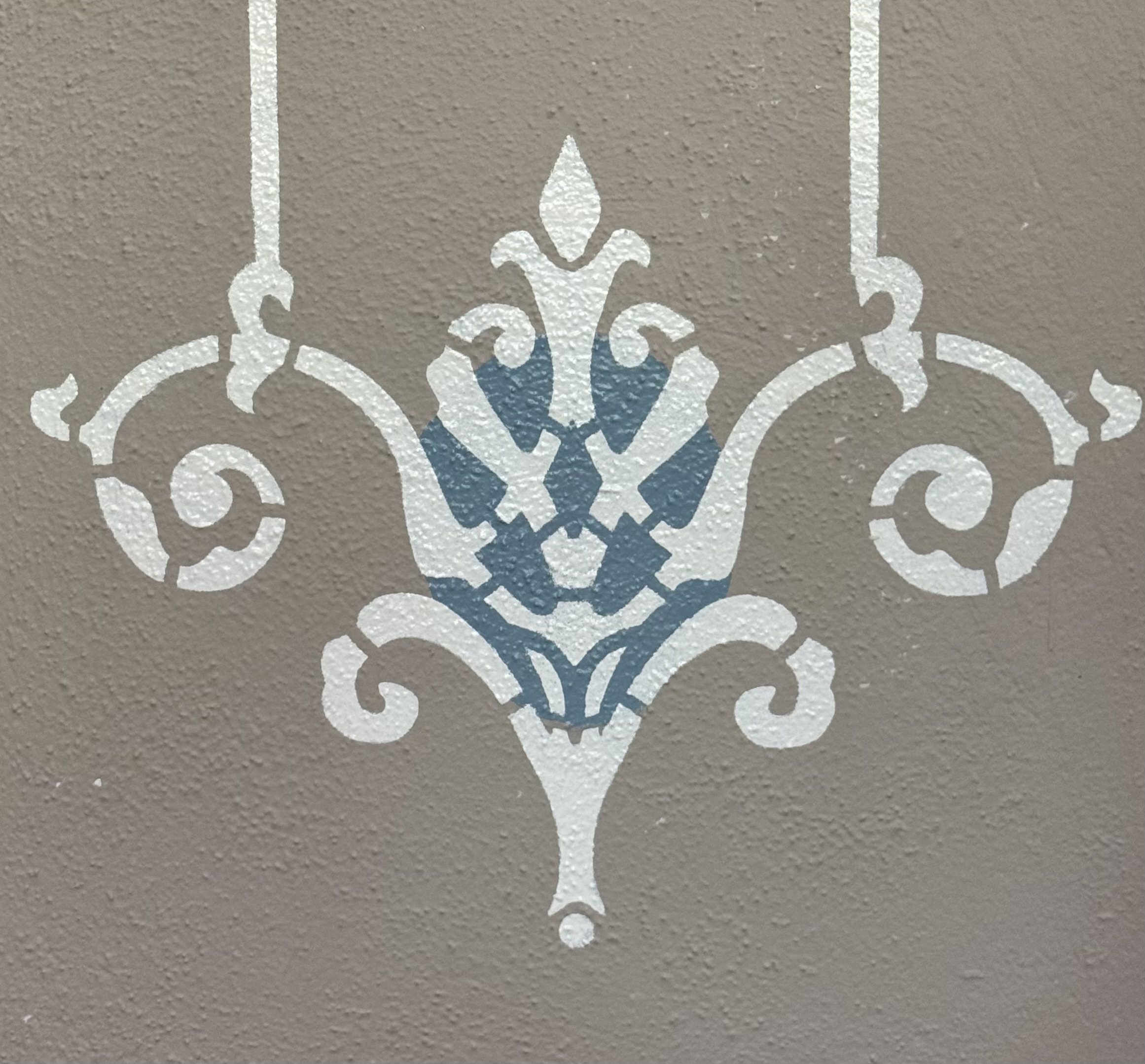
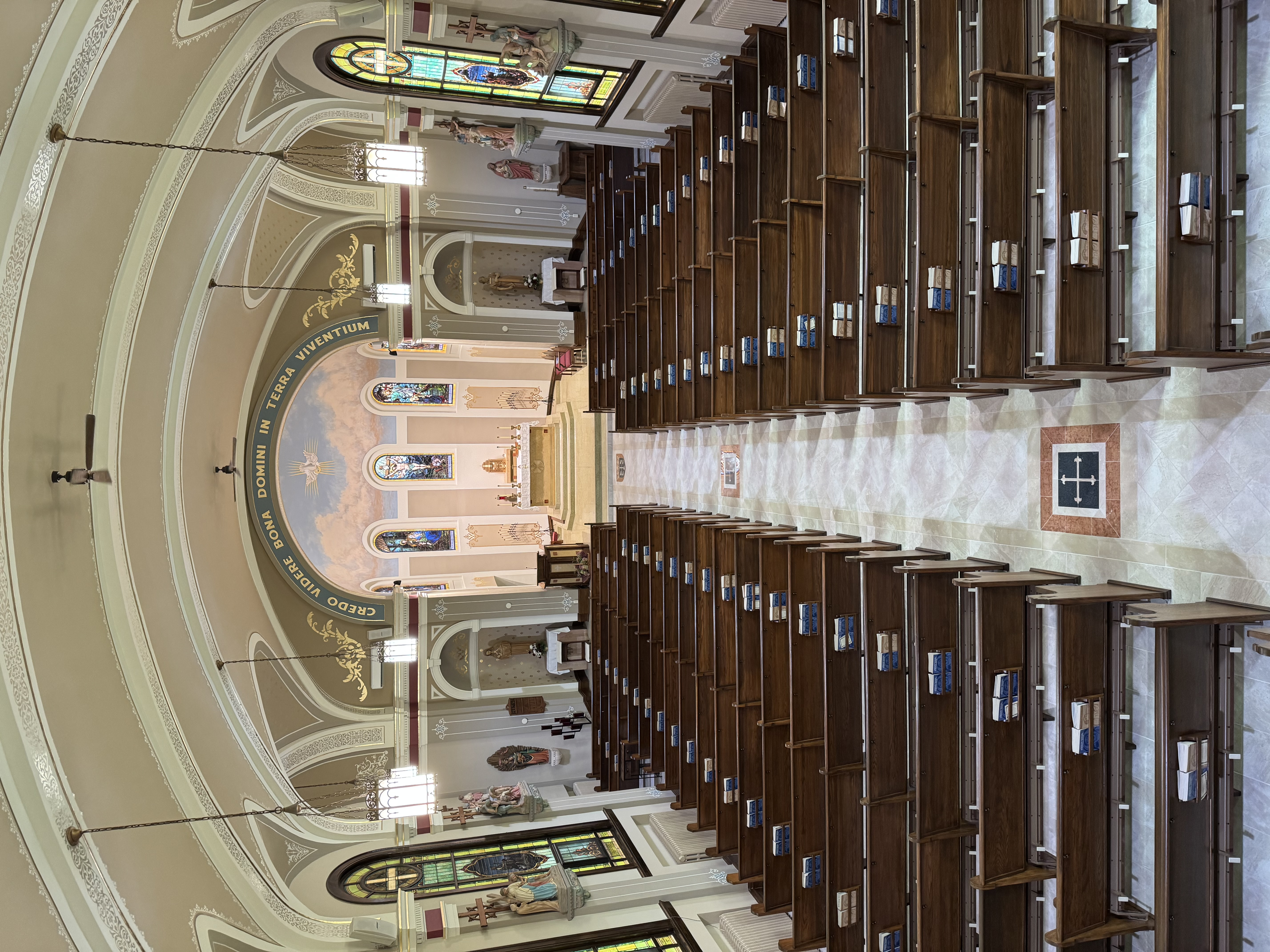
We gave the the complete reins for the recommendation of a full color Palate to the artists and team of Church Interiors. Following the philosophy of architecture and color of Masquaray, they recommended highlighting the architectural features of the columns, ceiling ribs and alcoves. The repetitive stencils add eye-catching contrast that highlight the features without overwhelming. The majority of colors, five of the seven used in the painting scheme, are variations of tan, which help give a warmth to the building. The highlights colors, Cordial (the burgundy of the Belt Course -the band that runs parallel about 20 feet above the floor around the Church) is reminiscent of the traditional colors of Jesus's cloak, a symbol of His taking on flesh and blood, while Whirlpool (the blue background of the arch and accent colors) reflects the Blessed Mother, symbolizing the grace of God that covered her.
About the materials
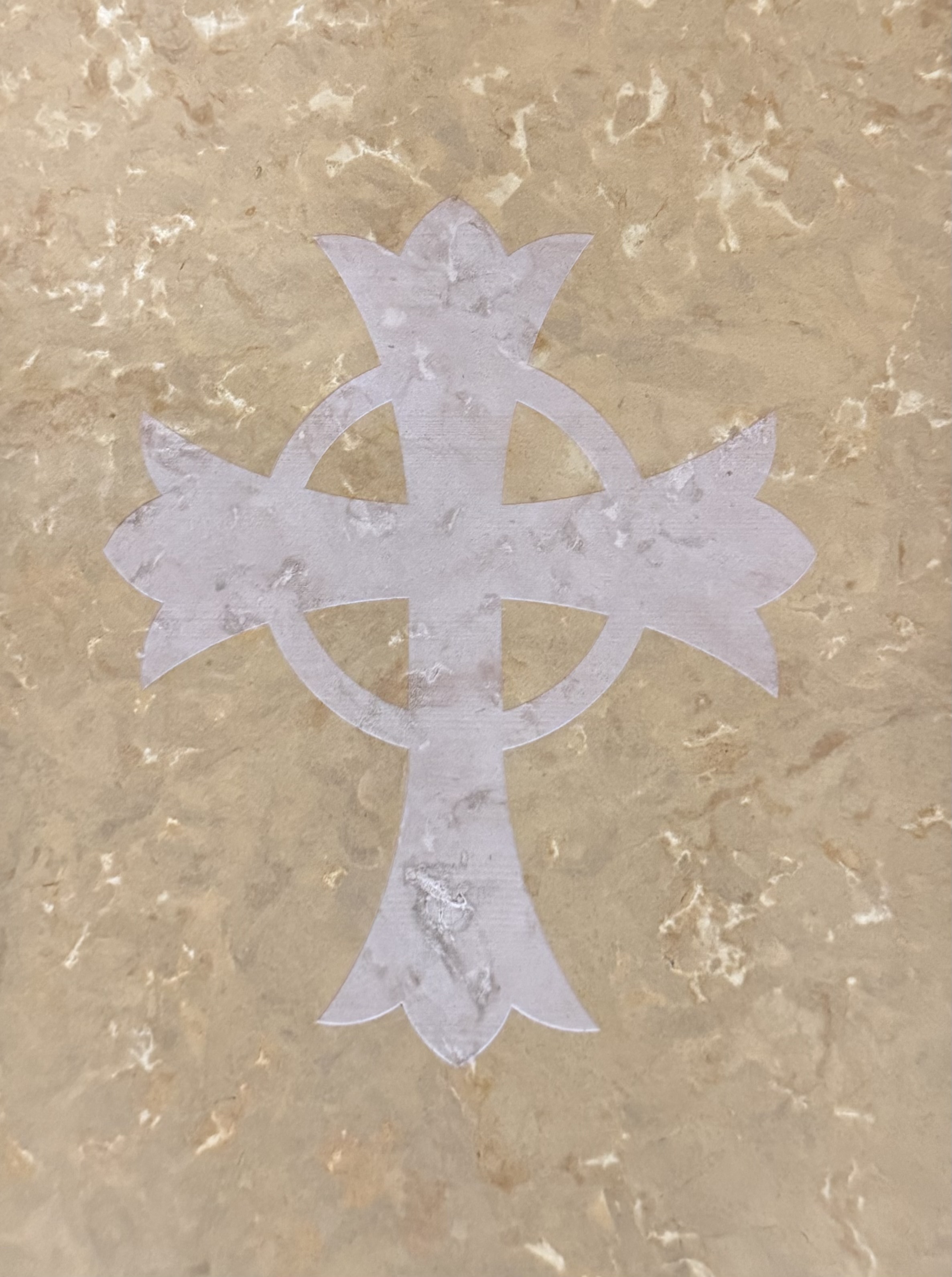
Mankato limestone, often called Kasota stone, is a distinctive type of limestone quarried in south-central Minnesota, especially near the towns of Mankato and Kasota. This beautiful, golden-beige stone has been prized for more than a century for building churches, cathedrals, courthouses, and even national landmarks.
How It Was Formed
Around 450–470 million years ago, during the Ordovician Period, much of Minnesota was covered by a warm, shallow sea.
Over time, the shells and skeletons of countless tiny marine organisms—such as corals, brachiopods, and other sea life—settled to the sea floor.
Layer upon layer of this calcium-rich sediment was compacted and cemented together over millions of years, eventually forming limestone.
Geological uplift and erosion later exposed these layers, making them accessible for quarrying today.
Kasota stone is part of the Oneota Dolomite formation, known for its durability and fine, uniform texture.
Qualities of Mankato Limestone
Durability – It is dense, strong, and highly resistant to weathering, making it ideal for both interior and exterior construction.
Warm Coloration – The stone’s natural golden or buff color adds warmth and elegance to buildings.
Workability – Despite its strength, it can be easily carved, which is why it has been used for intricate architectural details like columns, arches, and statues.
Local Sustainability – Being quarried in Minnesota, it has historically been a cost-effective and environmentally responsible building material for regional projects.
For churches and sacred buildings, Mankato limestone carries symbolic meaning. Formed over millions of years from countless small creatures, it reminds us of the Church as a living body—many parts united into one strong and beautiful whole. Its enduring strength reflects the steadfastness of faith and community.
Rosso Marble: Red Marble accents
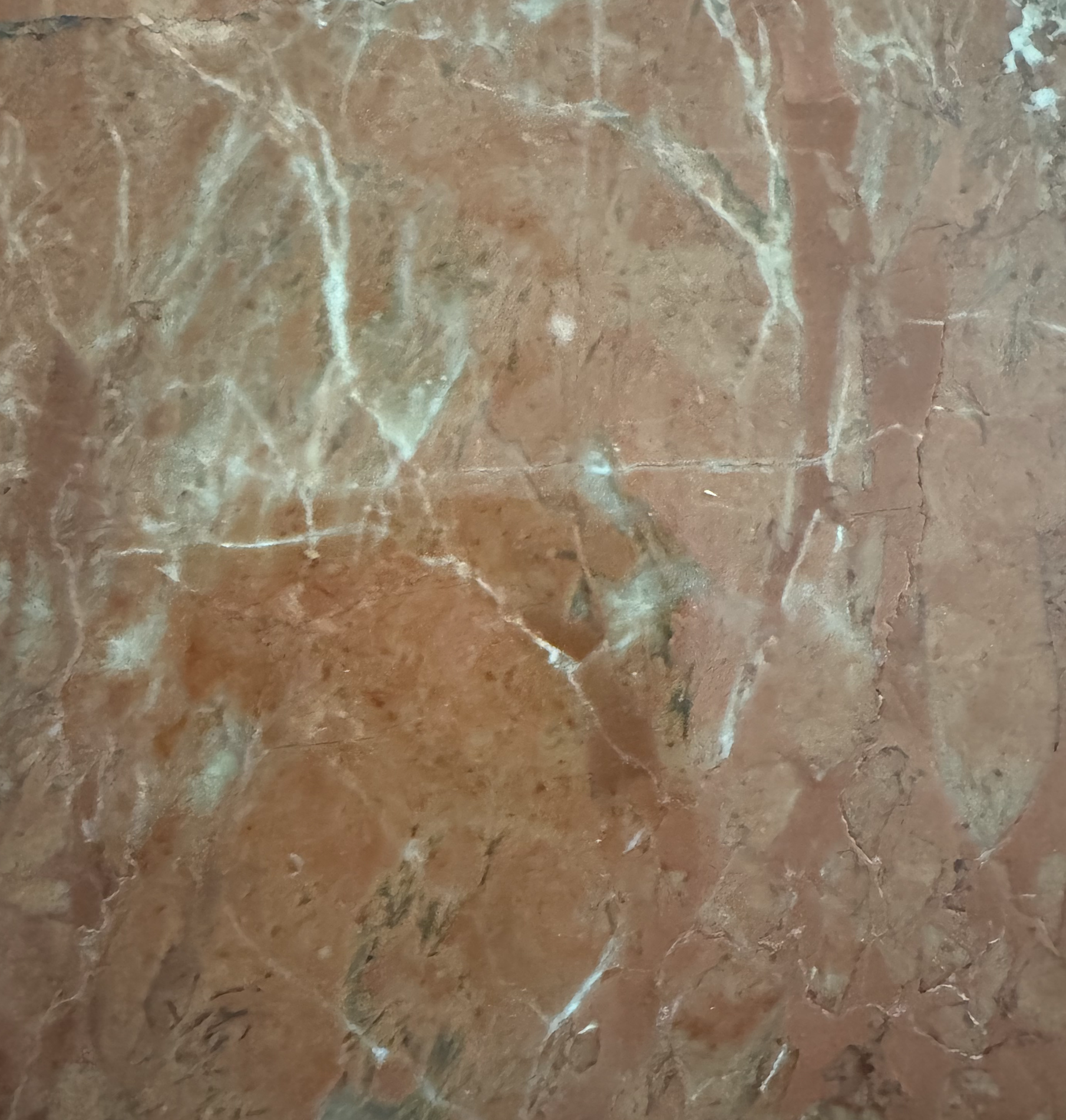
Rosso marble is a striking natural stone known for its rich red to reddish-brown color, accented by intricate white, cream, or gray veining. It has been prized for centuries in architecture and sculpture, commonly used in churches, palaces, and decorative applications. Classic varieties include Rosso Verona, Rosso Levanto, and Rosso Alicante, each named for its region of origin.
Rosso marble originates from limestone that undergoes metamorphism, a geological process involving intense heat and pressure over millions of years.
Initial Stage – Limestone
It begins as sedimentary limestone, rich in calcium carbonate from marine organisms like corals and shells.
Iron oxide and other mineral impurities give the stone its distinctive red hues.
Metamorphic Process – Marble Formation
Over time, tectonic activity subjects the limestone to high temperatures and pressures.
This transforms the rock into marble, a crystalline form of calcite.
The veining occurs when minerals such as quartz, feldspar, or clay intrude during this process, creating the intricate patterns visible on the surface.
Historically, Rosso marble has been used in cathedrals, basilicas, and palaces throughout Europe, especially in Italy.
Like Mankato stone, its use reminds us that the Church is an organic being made of many creatures.
Other Stone
The Medallions are composed of other natural stones, mostly various forms of granite. Granite is an igneous rock formed deep within the Earth’s crust from the slow cooling and solidification of molten magma. Because it cools gradually underground, large crystals of minerals such as quartz, feldspar, and mica have time to grow, giving granite its distinctive speckled appearance. The colors of granite vary widely depending on its mineral composition:
Pink or red tones come from potassium feldspar,
White or light gray from quartz and lighter feldspars,
Black or dark gray from minerals like biotite or hornblende.
This natural variety makes granite both strong and visually striking, which is why it has been a favored material for buildings, monuments, and decorative stonework for centuries.
Gold
Gold has long been used in church architecture as a symbol of heavenly glory, the divine presence, and the offering of our best to God. Because gold does not tarnish, it represents eternity and the glory of heaven described in Revelation. Churches often use gold leaf or foil instead of solid gold, as it is extremely thin, lightweight, and practical while still radiant. Applied to altars, tabernacles, icons, and ceilings, gold reflects light beautifully, drawing the eye toward the sacred and transforming the space into a visible sign of God’s eternal kingdom.
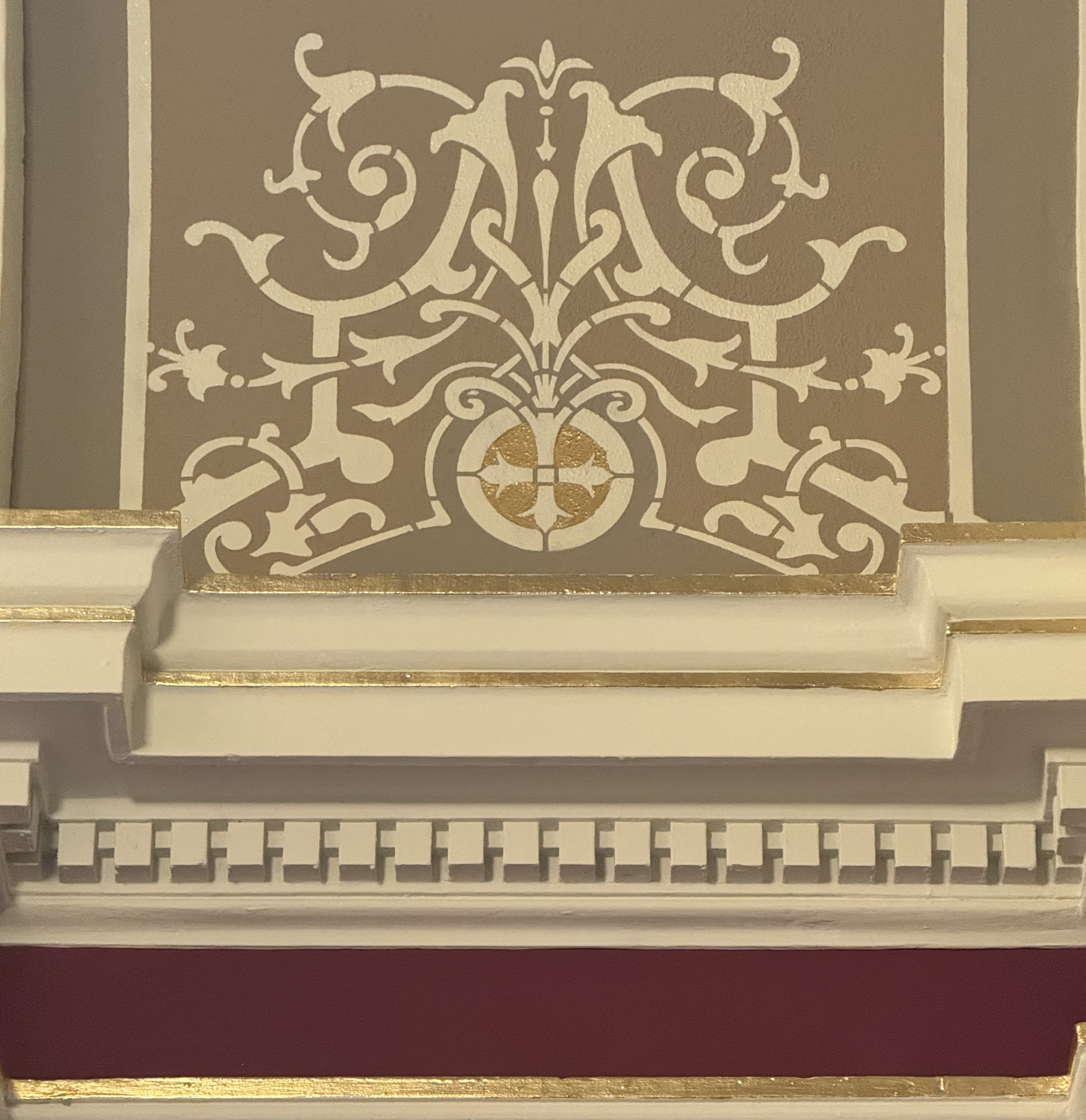
Many of the stencils and some of the trim is covered in gold foil.
Painting Motto, Images, and Motifs
The Motto
Credo videre bona Domini in terra viventium
“I believe that I shall see the goodness of the Lord in the land of the living.” (Psalm 27:13)
Painted in the arch of our church is the Latin inscription, Credo videre bona Domini in terra viventium, taken from Psalm 27:13. The Catholic Church has preserved Latin as her official language for centuries, making it a fitting choice for a sacred inscription. While an English translation conveys the meaning well, it is considerably longer and would not fit as gracefully within the architectural space of the arch.
These words also hold a special connection to our patron. Tradition recounts that Saint Edward the Confessorechoed this verse in his final moments before his death (“Weep not, my dear daughter; I shall not die, but shall live. Departing from the land of the dying, I hope to see the good things of the Lord in the land of the living.”), expressing his unwavering confidence in God’s promises. As a parish dedicated to St. Edward, this inscription reminds us to imitate his steadfast faith and hope.
In its original context, the “land of the living” referred to the Temple, the place where God’s people encountered His presence. For Christians, that meaning is enriched in the Church, where Christ continues to dwell among His people in Word and Sacrament. Every time we gather for worship, we come into the presence of the living God.
At the same time, these words point beyond this life. They express the Christian virtue of hope—the confident expectation that we will one day behold the fullness of God’s goodness in the eternal “land of the living,” the Kingdom of Heaven. It is therefore especially fitting that this verse was chosen during the Jubilee Year of Hope, reminding all who enter our church that our earthly worship is a foretaste of the heavenly liturgy and that our lives are directed toward the eternal joy prepared for God’s faithful people.

The Dove of the Holy Spirit
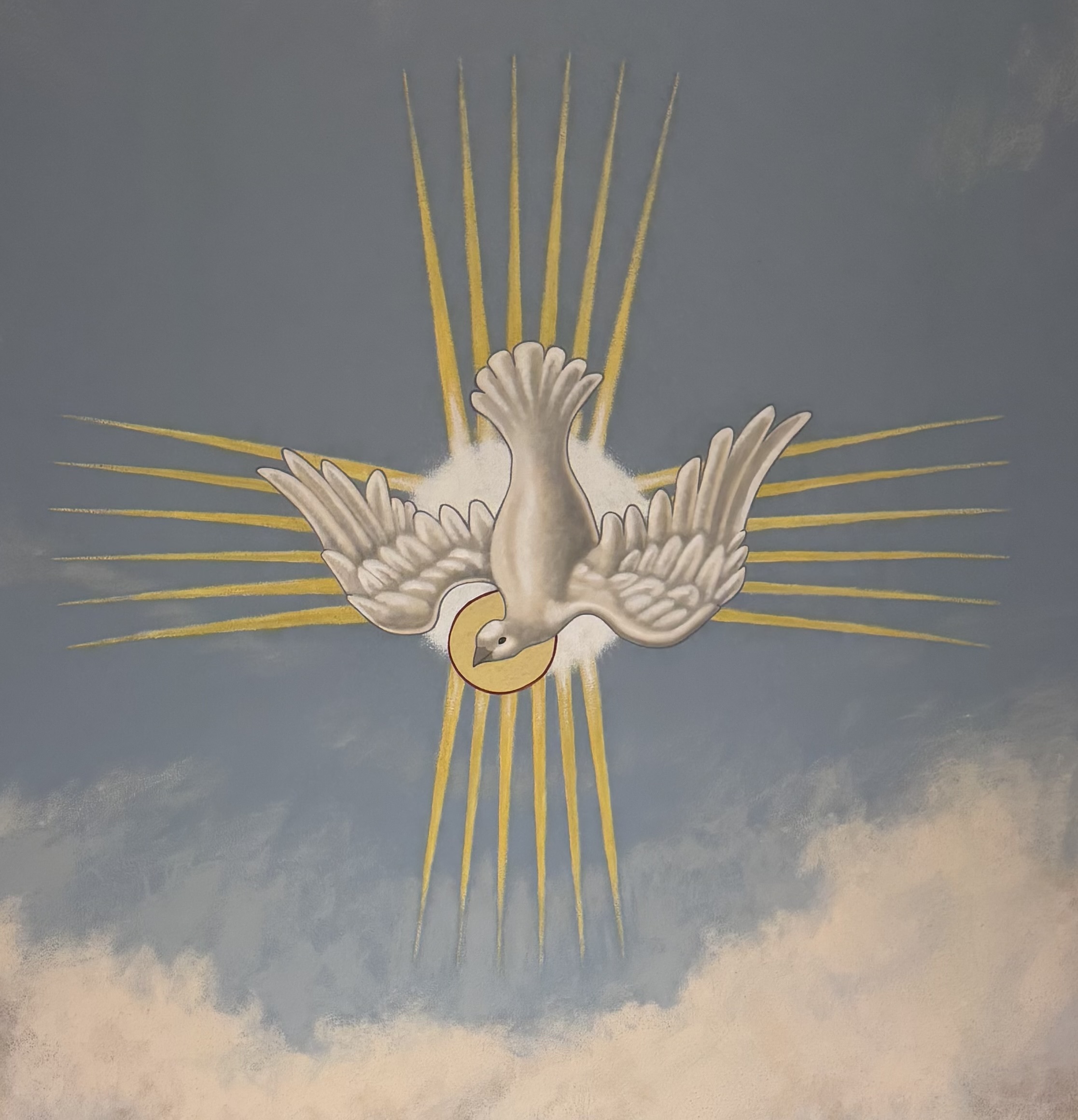
Above the sanctuary, in the apse of the church, is a dove surrounded by twenty-four rays of light, six extending in each of the four directions. The dove has long been the traditional symbol of the Holy Spirit, recalling His descent upon Jesus at His baptism in the Jordan River and His abiding presence within the Church.
The rays of light represent the Holy Spirit’s divine glory and the outpouring of His grace upon the Church and the world. Positioned above the altar, this image reminds us that every celebration of the Eucharist is accomplished through the power of the Holy Spirit, who sanctifies the gifts of bread and wine and transforms the faithful into the Body of Christ.
Seal of St. Edward the Confessor
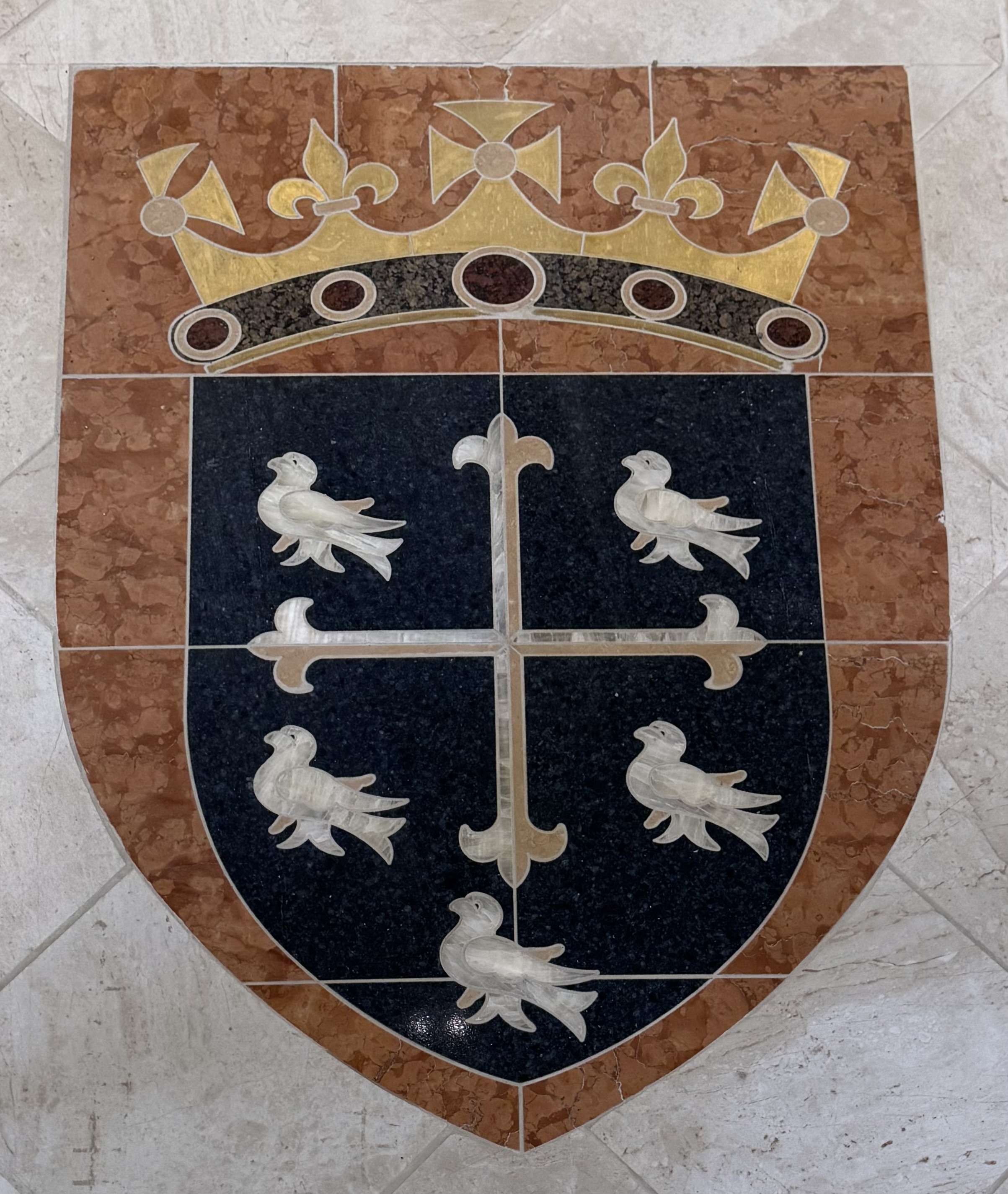
Set into the marble and granite floor before the altar is the seal of our patron, Saint Edward the Confessor. At its center is a cross crowned with a royal crown, surrounded by five doves—one in each quadrant of the cross and one at its base.
Although this design is associated with St. Edward, it is best understood as a symbolic representation of his life and legacy rather than a documented personal seal. The crowned cross proclaims that Christ reigns above every earthly kingdom and reflects Edward’s desire to govern as a Christian king, placing his authority in service to God. The five doves symbolize the Holy Spirit, whose gifts guided Edward’s renowned wisdom, justice, and holiness. Together, the cross, crown, and doves express the ideal of Christian leadership: earthly authority submitted to Christ and animated by the grace of the Holy Spirit.
Placed before the altar, this emblem reminds us that all authority finds its fulfillment in the sacrifice of Christ, the true King, whom St. Edward faithfully served throughout his life.
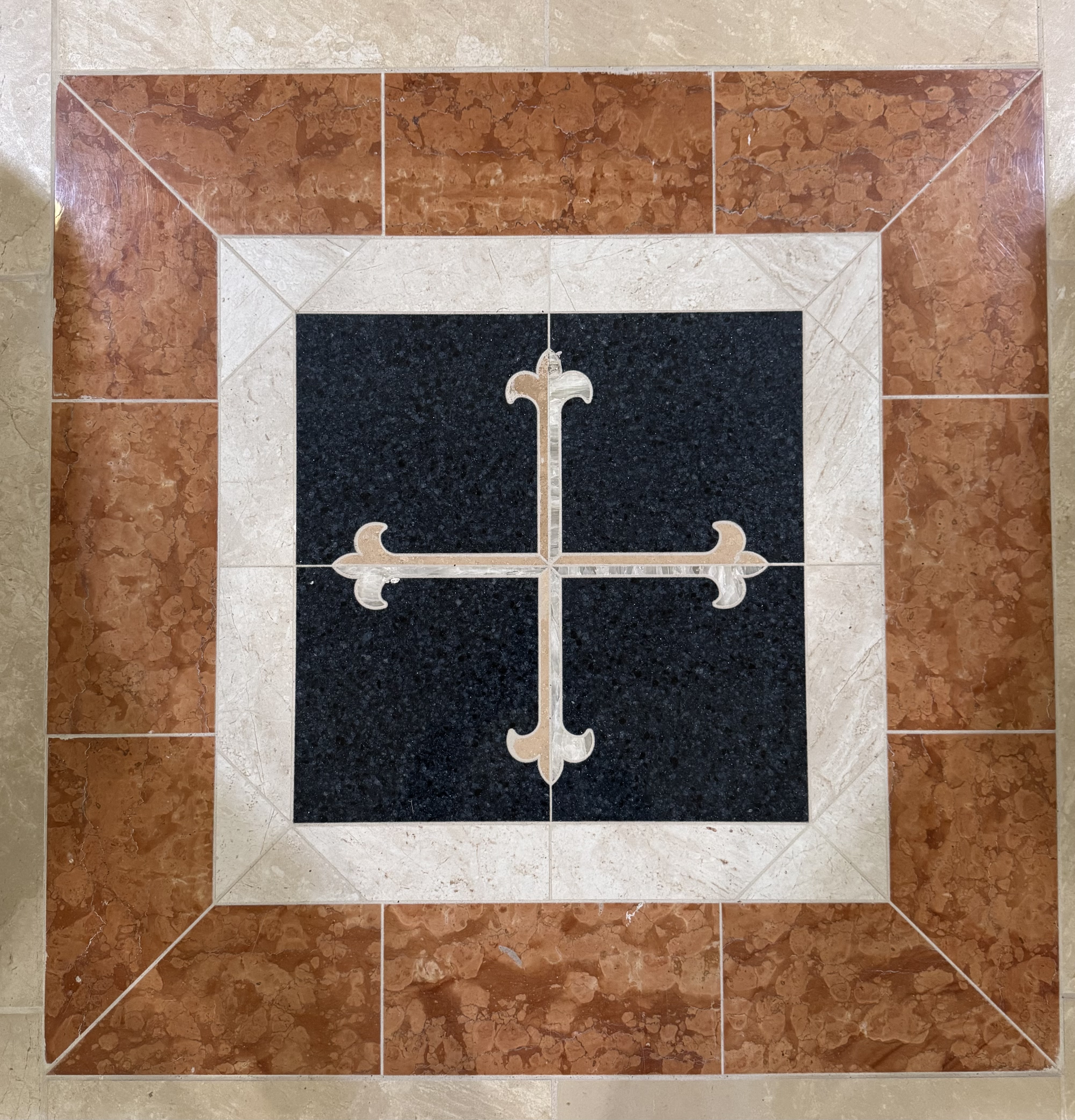
Continuing the symbolism of the seal of St. Edward the Confessor, three additional crosses of the same design have been placed along the main aisle of the church—at the beginning of the nave, one-third and two-thirds of the way toward the sanctuary, and at the foot of the altar. Crafted in marble and granite, these crosses form a visual and spiritual pathway leading the faithful toward the altar, where Christ’s sacrifice is made present in the Eucharist.
The repeated image of the cross recalls the central mystery of our faith: that through the Cross of Christ came our salvation. As worshippers move through the church, these crosses invite them to journey more deeply into the life of Christ, passing from the entrance of the church toward the altar, the source and summit of Christian worship.
The placement of the final cross directly before the altar connects the earthly journey of the faithful with the heavenly worship represented in the sanctuary. Together, these crosses remind us that every Christian life is a pilgrimage marked by the Cross, guided by the grace of the Holy Spirit, and ultimately directed toward union with Christ the King.
Fleur-de-lis
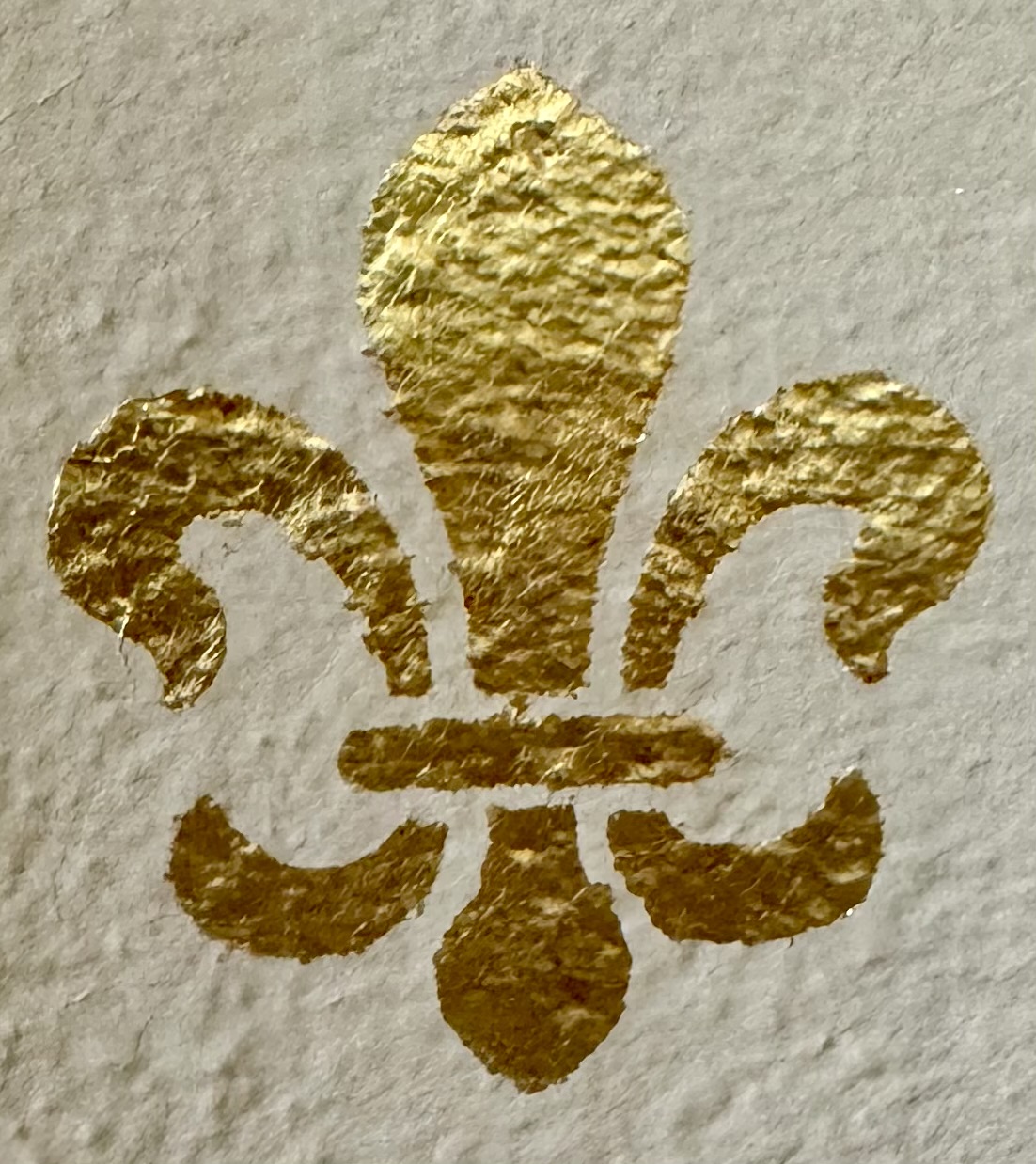
The fleur-de-lis, or stylized lily, is one of the oldest symbols of the Blessed Virgin Mary. Since the lily represents purity and innocence, the fleur-de-lis came to signify Mary's perpetual virginity, her Immaculate Conception, and her complete holiness. The three petals are also commonly understood to represent the Holy Trinity, reminding us that Mary's life was entirely centered on the Father, the Son, and the Holy Spirit. Because of these associations, the fleur-de-lis frequently appears in Catholic churches, stained glass windows, vestments, and Marian artwork as a sign of Mary's unique role in God's plan of salvation.
During the Gothic Revival and Romanesque Revival periods (late 19th and early 20th centuries), it became one of the most common decorative motifs in Catholic architecture.
This symbol can be found in gold behind the side altars holding the statues of the Blessed Mother and St. Joseph, and on the ceiling of the east and west transepts.
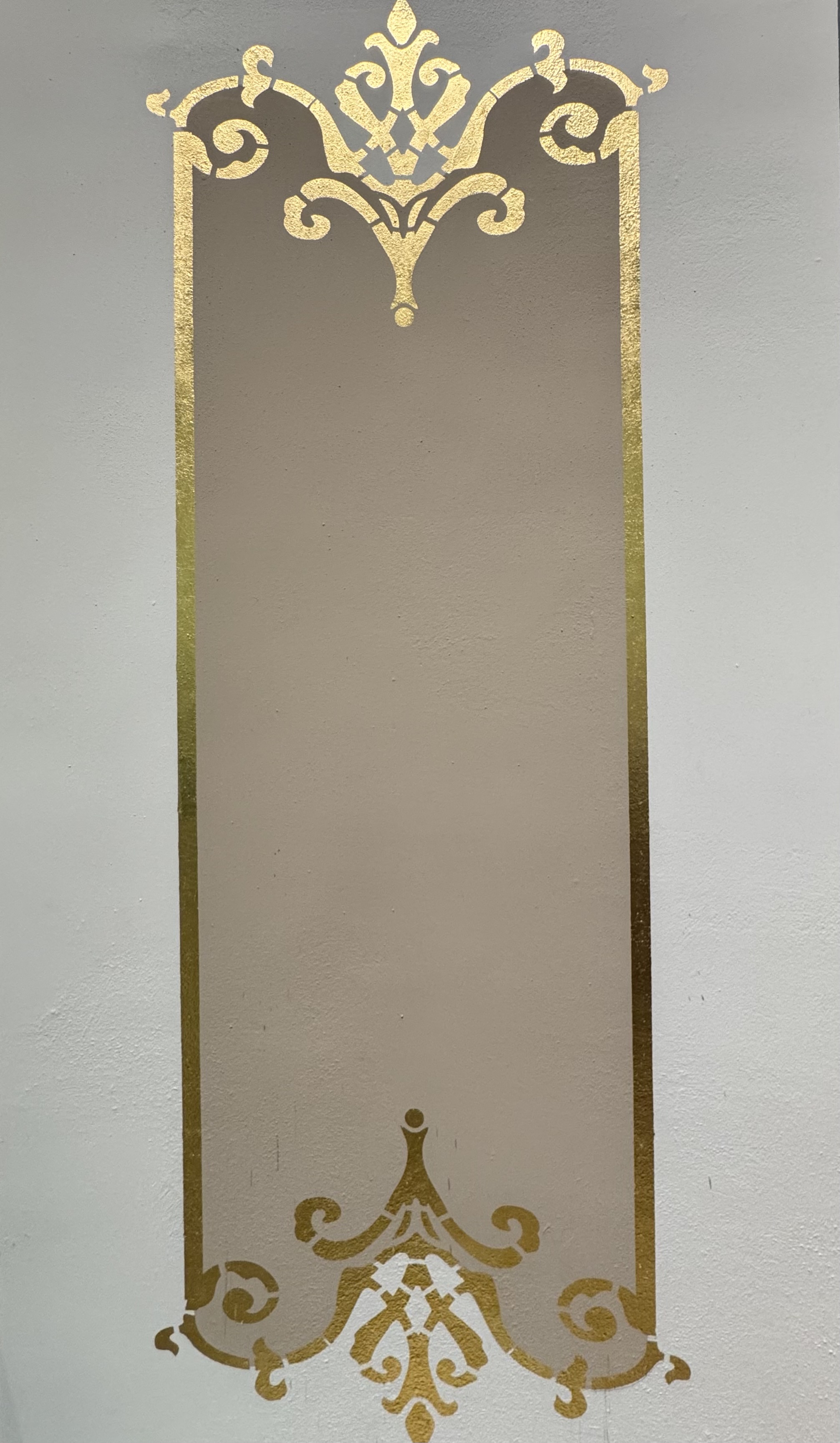
Decorative Stencil Work
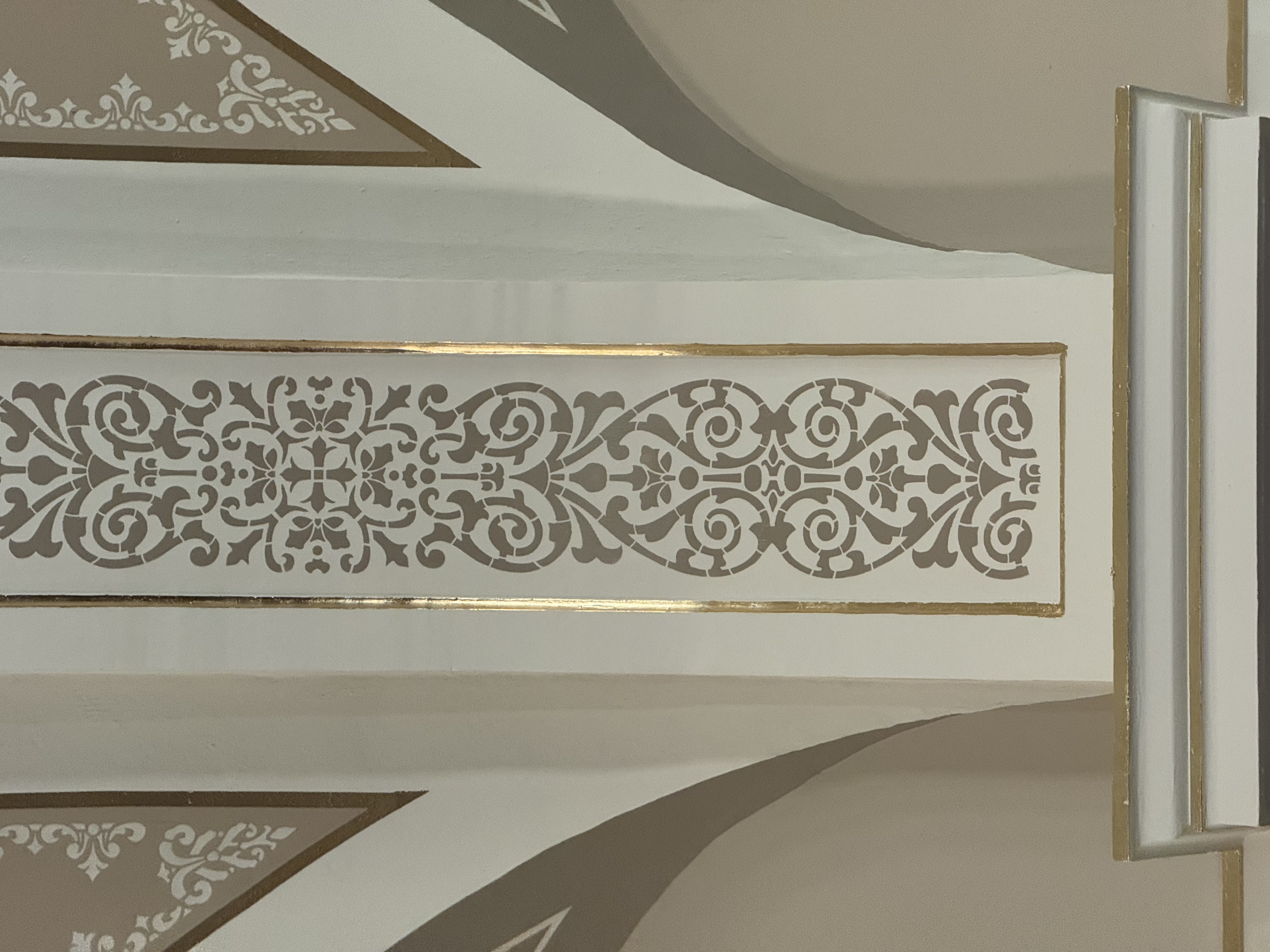
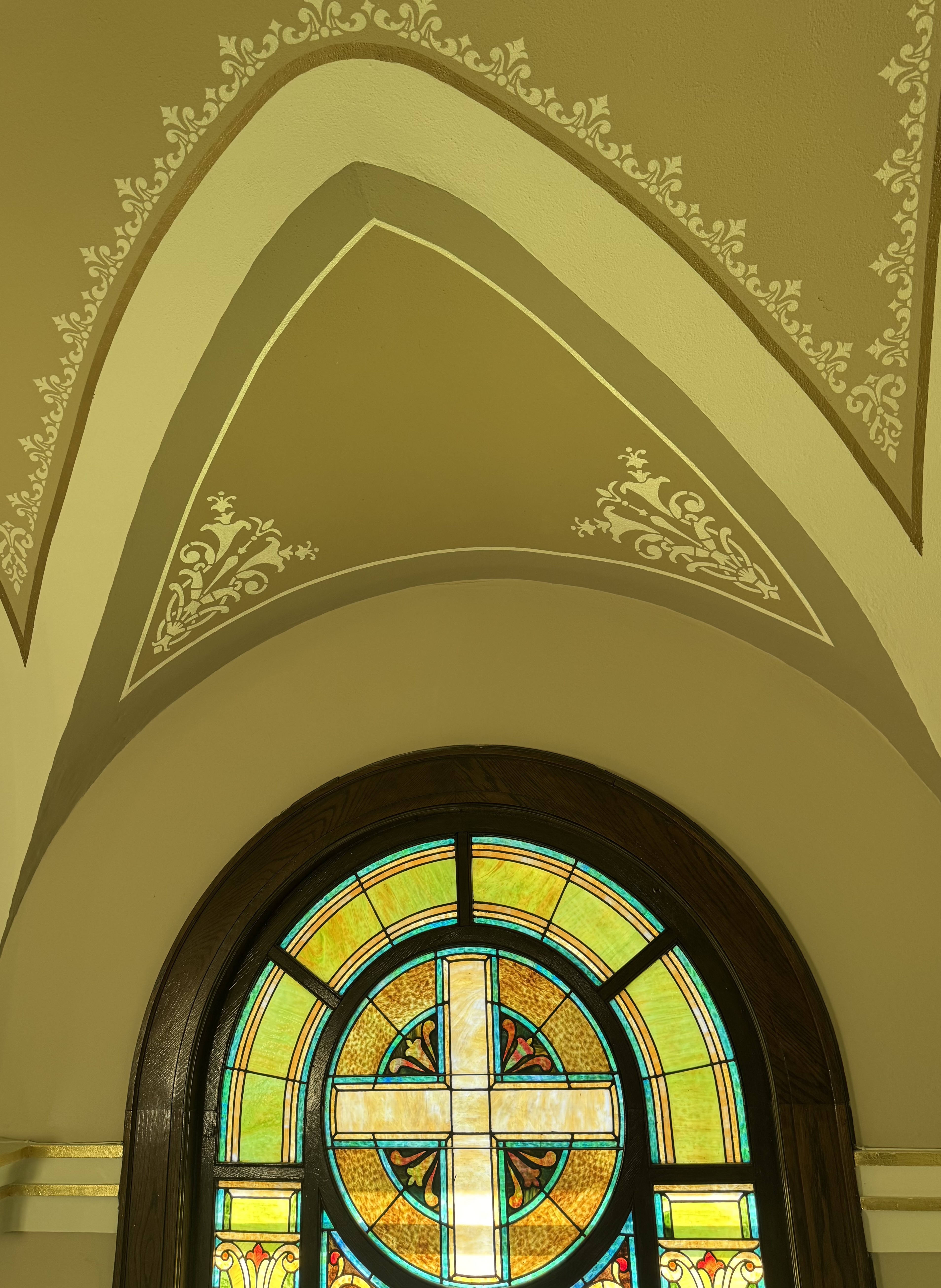
The decorative stencil work adorning the ribs, arches, and window surrounds is an important part of the church's original artistic design. Popular in Catholic churches during the early twentieth century, these painted patterns transform the architectural structure itself into a work of sacred art.
The repeating motifs include fleur-de-lis, symbolizing the purity of the Blessed Virgin Mary; crosses, reminding us that Christ's sacrifice stands at the center of our faith; and scrolling vines and acanthus leaves, ancient Christian symbols of eternal life, spiritual growth, and the life of grace flowing from Christ to His Church. The balanced, symmetrical patterns reflect the order and beauty of God's creation while drawing the eye upward toward heaven.
Rather than serving as mere decoration, these stencils proclaim a theological truth: all of creation, even the walls and arches of a church, exists to give glory to God. Together they create an atmosphere of reverence and beauty, reminding worshippers that they have entered a sacred place where heaven and earth meet.