
A Lesson in Theology and History - Our Windows
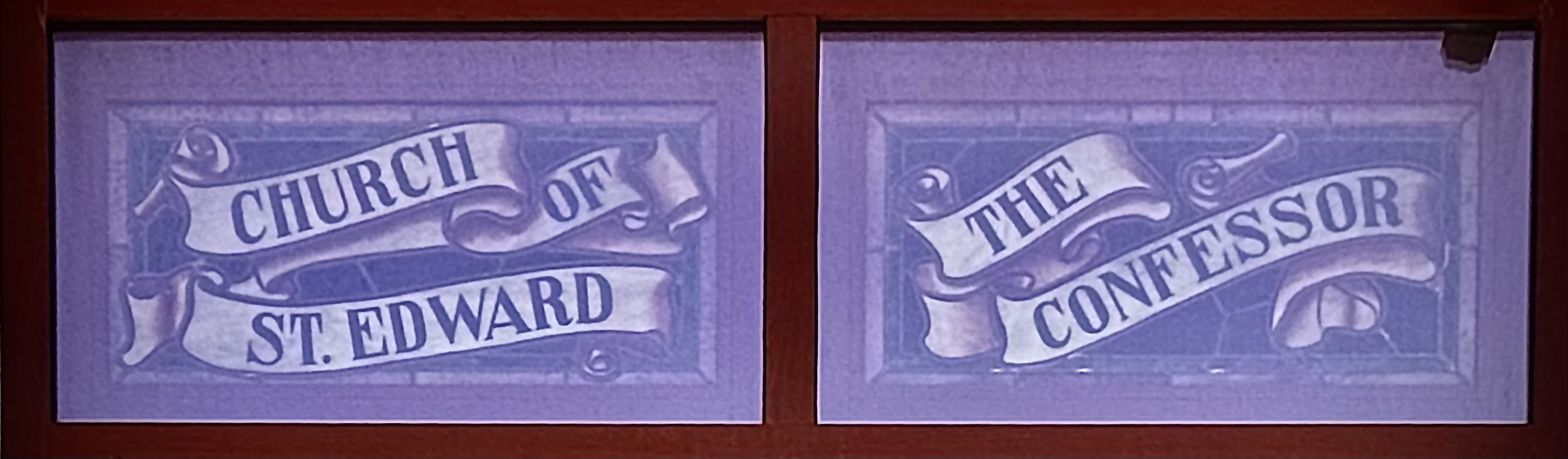
The stained glass windows of St. Edward Church are more than beautiful works of art; they are a history of faith in glass—a visual proclamation of Scripture, Church history, and the enduring faith of generations who have worshiped in this sacred place.
Installed around 1914, these windows were created by the Pittsburgh Plate Glass Company of Minneapolis, one of the nation’s leading glass manufacturers during the early twentieth century. Through the skill of their craftsmen, colored glass, painted details, and traditional Catholic imagery were brought together to create windows that would teach, inspire, and lift the hearts of the faithful for generations. At a time when stained glass served as the “Bible of the poor,” these windows transformed the walls of the church into a living lesson of faith, allowing all who entered to encounter the story of salvation through beauty and light.
The windows of the apse present the central mysteries of our redemption, serving as a catechism in glass. Beginning with the Annunciation, when Mary’s “yes” welcomed the Savior into the world, they lead us through the Nativity, the Passion and Death of Christ, His glorious Resurrection, and His Ascension into heaven. Together, they proclaim the heart of the Gospel: that God became man, offered Himself for our salvation, conquered sin and death, and opened for us the path to eternal life.
The windows of the nave tell the story of the Church’s journey through history—a history lesson in glass. Beginning with the restoration of St. Peter after his denial of Christ, they recall the mission entrusted to the Apostles and the spread of the Gospel throughout the world. They continue through moments of courage, missionary zeal, and perseverance, including the arrival of the Catholic faith in the lands that would become Minnesota. These windows remind us that the faith we celebrate today is a gift received from those who faithfully carried the Gospel before us.
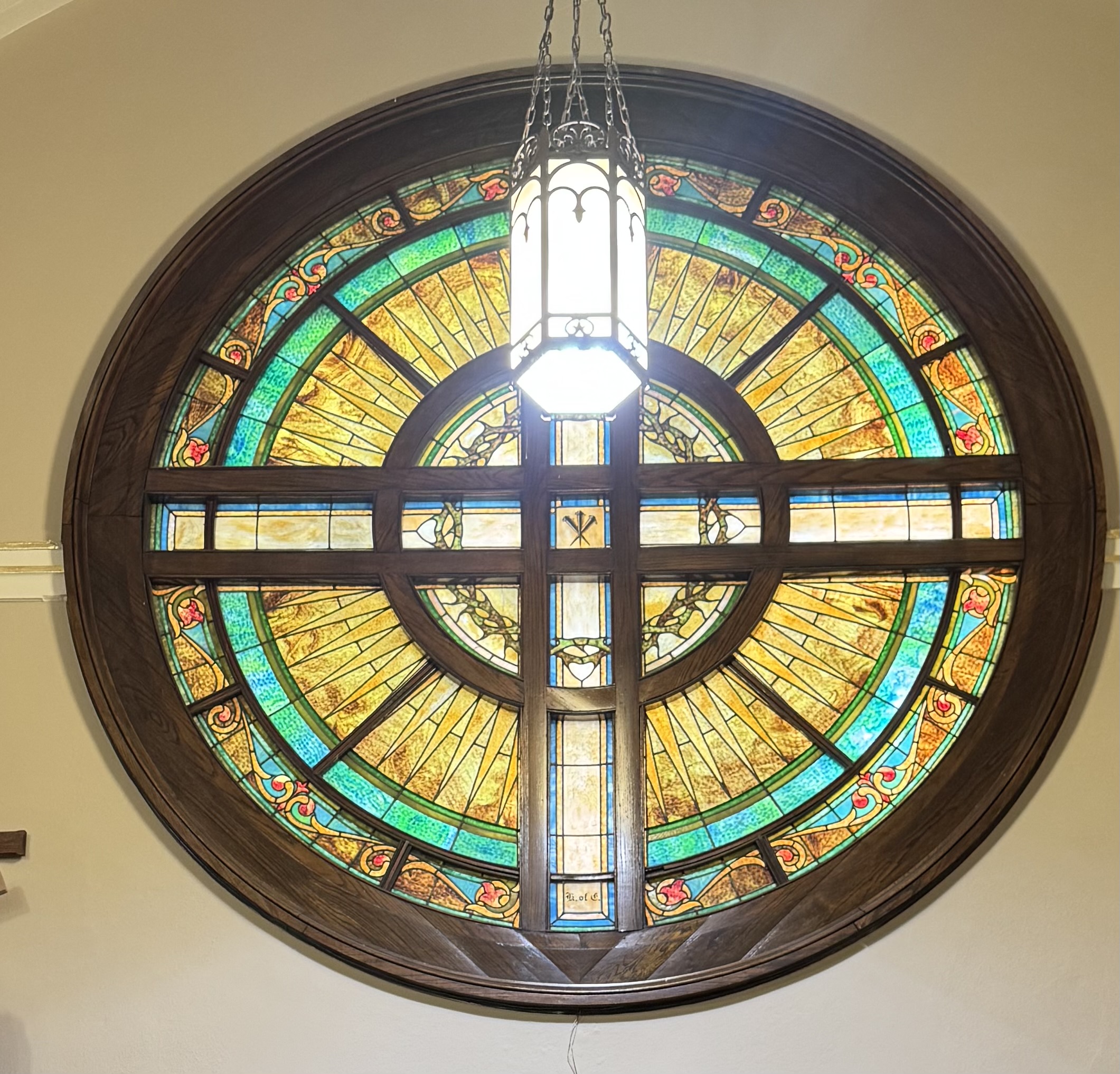
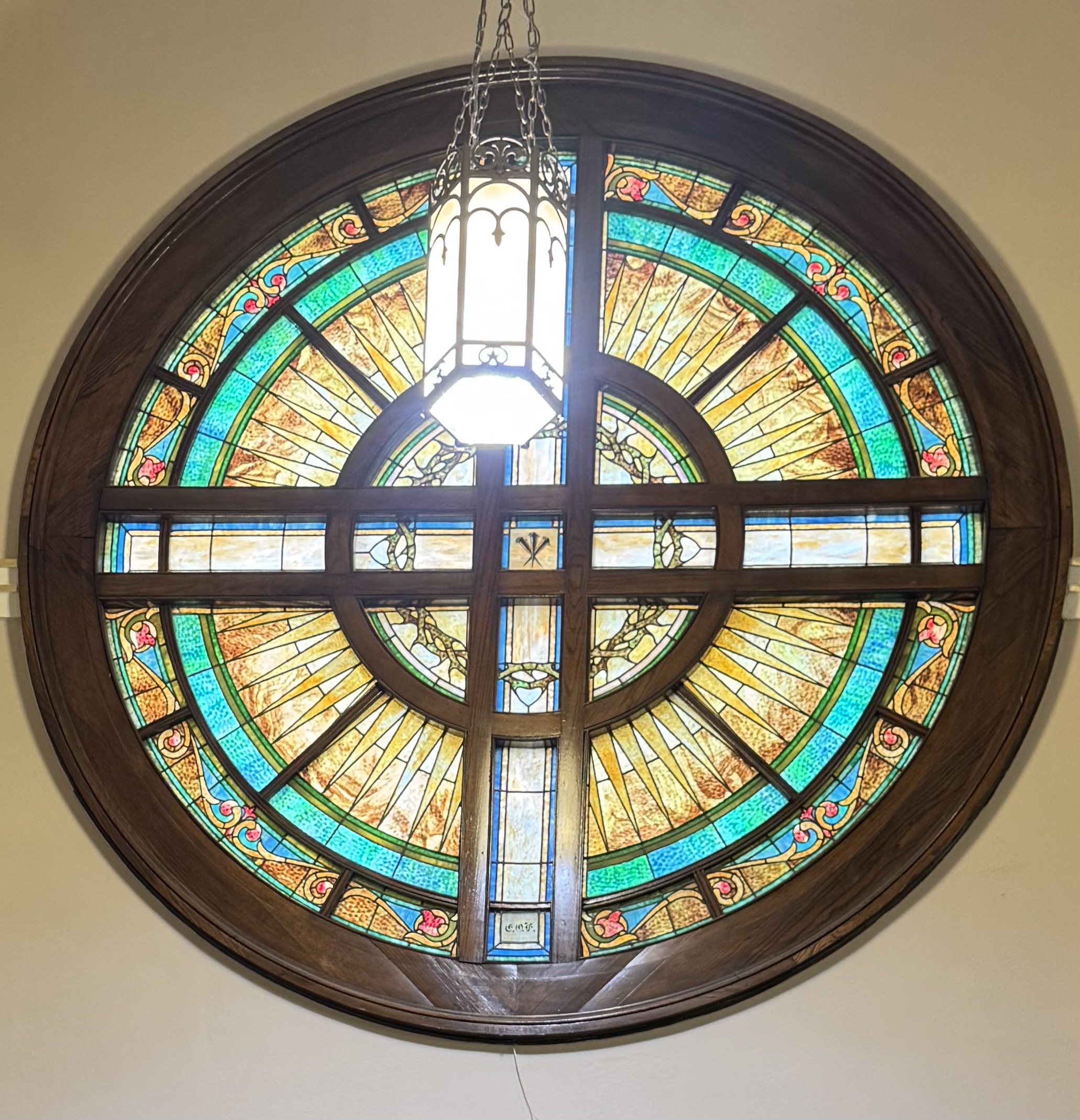
Other windows throughout the church preserve the memory of the saints, the sacraments, and the parish community itself. The choir loft windows recall the places where the faithful of St. Edward first gathered in prayer and around the altar. The transept rose windows draw our eyes to the mystery of Christ’s Passion through the Crown of Thorns and the Three Nails, reminding us that the Cross stands at the center of our salvation. The image of the Holy Spirit, originally placed in the baptistry, continues to proclaim the life-giving presence of God’s grace through Baptism and Reconciliation.
Together, these windows form a sacred story written not with ink, but with glass and light. They connect the universal story of salvation with the local history of St. Edward Parish, reminding us that we are part of the same great journey of faith begun by the Apostles and continued through every generation of believers.
May these windows continue to teach, inspire, and remind all who enter this church that Christ is the true Light of the World, shining through the centuries and calling His people to faith, hope, and love.
All the windows in the Nave and apse contain a panel about who donated them or in whose memory. Those that have RIP (Rest In Peace or Requiem In Pax) were already deceased. All the windows in the Nave were donated in memory of Robert and Helen Culshaw - The panel at the bottom of each window inscribes "Pray for Robert and Helen Culshaw RIP."
The Apse Windows: The Story of Salvation in Glass
The apse windows of St. Edward Church present the central mysteries of our salvation, beginning with the Annunciation and culminating in the Ascension of Our Lord. Together, they serve as a catechism in glass, proclaiming the truths of our faith through sacred images that have instructed generations of Christians. Like the pages of Scripture brought to life in color and light, these windows invite us to contemplate God's plan of redemption revealed through Jesus Christ.
The story begins with the Annunciation, when the Blessed Virgin Mary received the message of the Angel Gabriel and, through her humble “yes,” the eternal Son of God took flesh. The windows then lead us to the Nativity, where Christ is revealed as the Savior born for all people, welcomed by Mary, Joseph, and the humble shepherds. They continue through the saving mysteries of Christ’s Passion and Death, where the Lord offers Himself upon the Cross as the Lamb of God, and His Resurrection, where He conquers sin and death and opens the way to eternal life. The sequence concludes with the Ascension, as the risen Christ returns to the Father in glory, while entrusting His mission to His Church.
Together, these windows proclaim the heart of the Gospel: that God entered into human history to save His people. They remind us that every Mass celebrated in this church makes present the same mystery of Christ’s saving love—from His Incarnation to His victory over death and His glorious reign in heaven. These images are not merely decorations; they are a visual proclamation of the faith of the Church, inviting all who enter to encounter the living Christ and to become part of the great story of salvation.
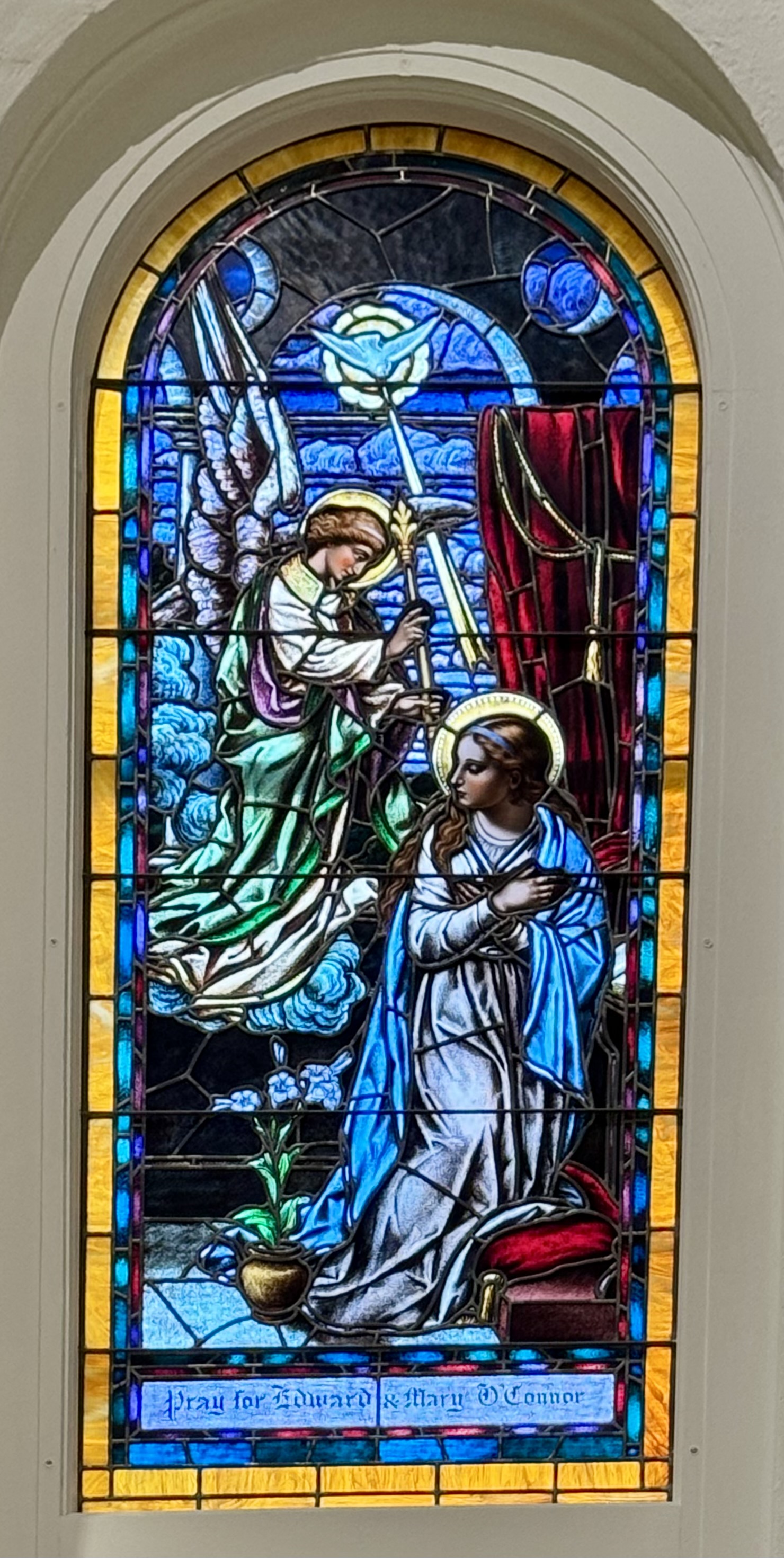
The Annunciation of the Lord
The Angel Gabriel was sent by God to Nazareth to announce that the Virgin Mary had been chosen to become the Mother of the Son of God. As Mary knelt in prayer, the angel proclaimed, “Hail, full of grace! The Lord is with you” (Luke 1:28). Though troubled by the greeting, Mary listened with faith as Gabriel revealed that the Holy Spirit would come upon her and that the child to be born would be called the Son of the Most High. Her humble response, “Behold, I am the handmaid of the Lord. May it be done to me according to your word” (Luke 1:38), marked the moment when the eternal Word became flesh.
This window depicts Mary turning from her prayer to receive the angel's message, while a beam of light descending from the dove symbolizes the Holy Spirit overshadowing her at the mystery of the Incarnation. The lily beside her is a traditional symbol of her perpetual virginity and purity, reminding us that Christ was conceived not by human power but through the saving work of God. Mary's open heart and complete trust transformed her "yes" into the beginning of humanity's redemption.
The Annunciation reveals the perfect harmony of God's grace and human freedom. Through Mary's faithful obedience, the Savior entered the world, fulfilling the promises made to Israel and opening the way to salvation for all people. Her example continues to inspire every Christian to receive God's will with faith and generosity, trusting that His plans lead to life and everlasting joy.
Pray For Edward and Mary O'Connor
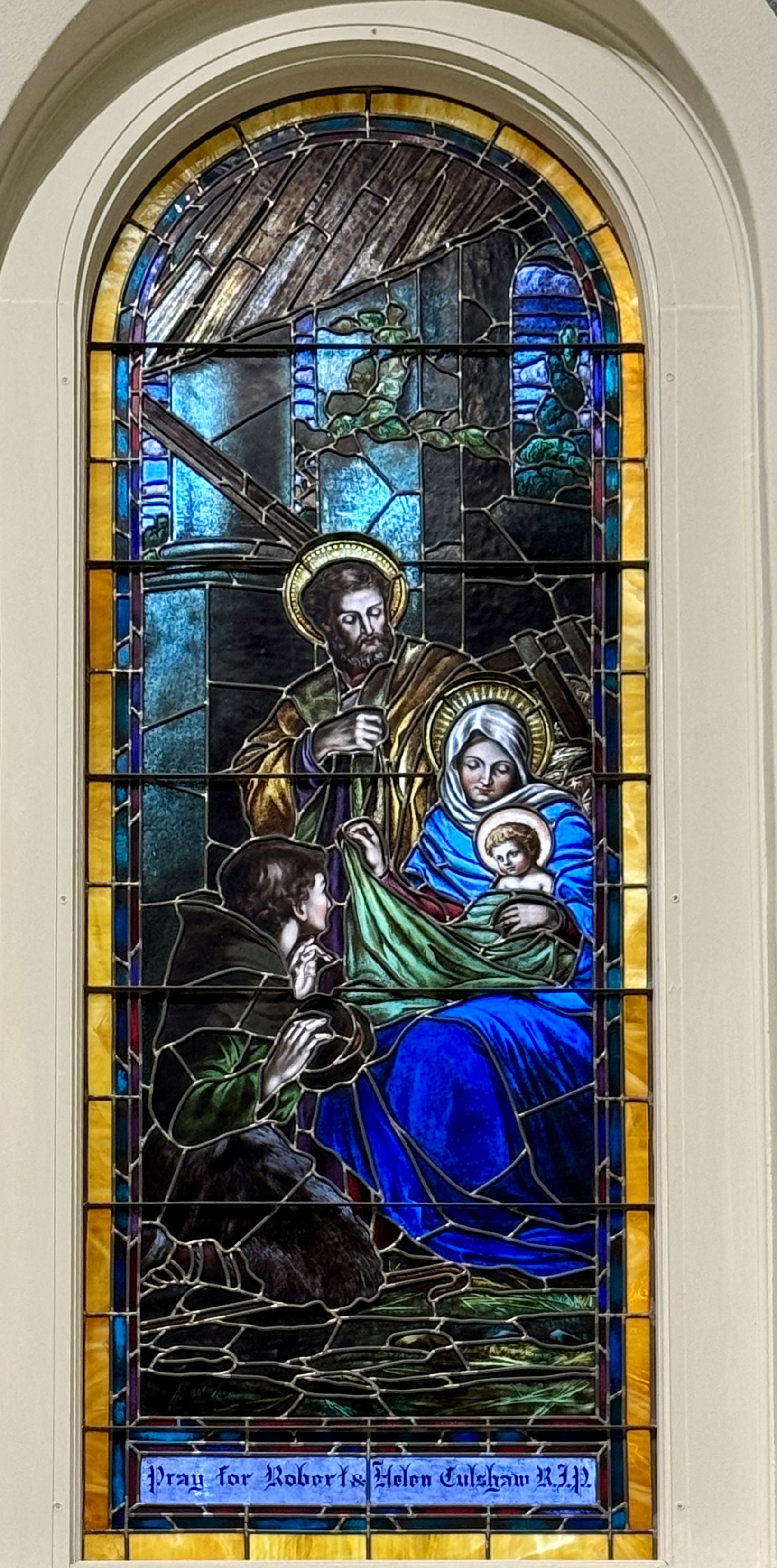
The Nativity of Our Lord
On the holy night of Christ's birth, the eternal Son of God entered the world in the humility of a stable at Bethlehem. Wrapped in swaddling clothes and laid in a manger, the newborn Savior was first revealed not to kings or rulers, but to humble shepherds who came in haste after hearing the angels proclaim, “Today in the city of David a Savior has been born for you who is Messiah and Lord” (Luke 2:11). There, in poverty and simplicity, heaven and earth were united in the person of Jesus Christ.
This window portrays the Blessed Virgin Mary holding the Christ Child while gently drawing back the covering that veils Him, inviting a kneeling shepherd to behold and adore the newborn King. Behind them stands St. Joseph, the faithful guardian of the Holy Family, watching over the Mother and Child with quiet strength and loving devotion. The shepherd's humble posture reminds us that true worship begins with hearts open to receive the gift of God, recognizing in the infant Jesus the long-awaited Messiah.
The Nativity reveals that God's glory is made known through humility, love, and self-giving. The shepherds became the first witnesses to the Incarnation, showing that the Gospel is offered to the poor, the lowly, and all who seek the Lord with sincere hearts. Like them, we are invited to kneel before Christ in faith and adoration, receiving the Savior who came among us so that we might become children of God.
Pray for Robert and Helen Culshaw RIP.
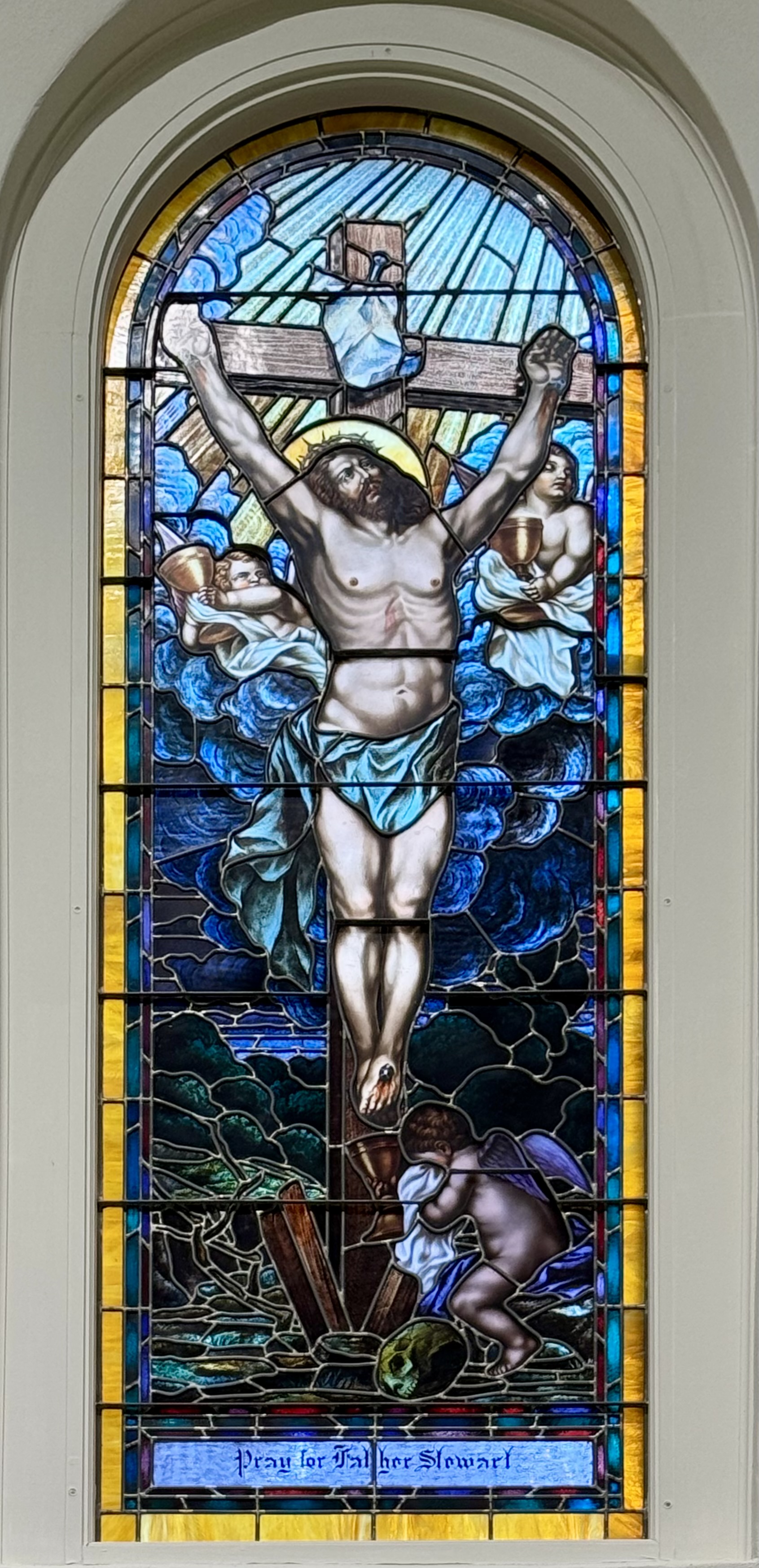
The Crucifixion of Our Lord
On Calvary, Jesus Christ offered Himself upon the Cross as the perfect sacrifice for the salvation of the world. By His willing obedience to the Father's will, He took upon Himself the sins of humanity, fulfilling the promises of the Old Testament and reconciling heaven and earth. As He stretched out His arms upon the Cross, Christ became both the eternal High Priest and the spotless Lamb of God, offering His life so that all who believe in Him might have eternal life.
This window portrays the crucified Lord with cherubim reverently holding chalices beneath His outstretched hands and at His feet, gathering the Precious Blood poured out for the redemption of the world. These angels remind us that Christ's sacrifice is the source of every grace and is made present in every celebration of the Holy Mass. Beneath the Cross rests a skull, a traditional symbol of Adam, recalling the ancient Christian belief that Golgotha, the "Place of the Skull," was the burial place of our first father. As death entered the world through Adam's disobedience, so eternal life is restored through the obedience of Christ, the New Adam.
The Crucifixion stands at the heart of the mystery of our faith. At the foot of the Cross, justice and mercy meet, sin is conquered, and the gates of heaven are opened once more. Every Mass draws us into this same saving sacrifice, inviting us to unite our lives with Christ, who "loved us and handed himself over for us" (Ephesians 5:2), so that we might share forever in His Resurrection and glory.
Pray for Father Stewart.
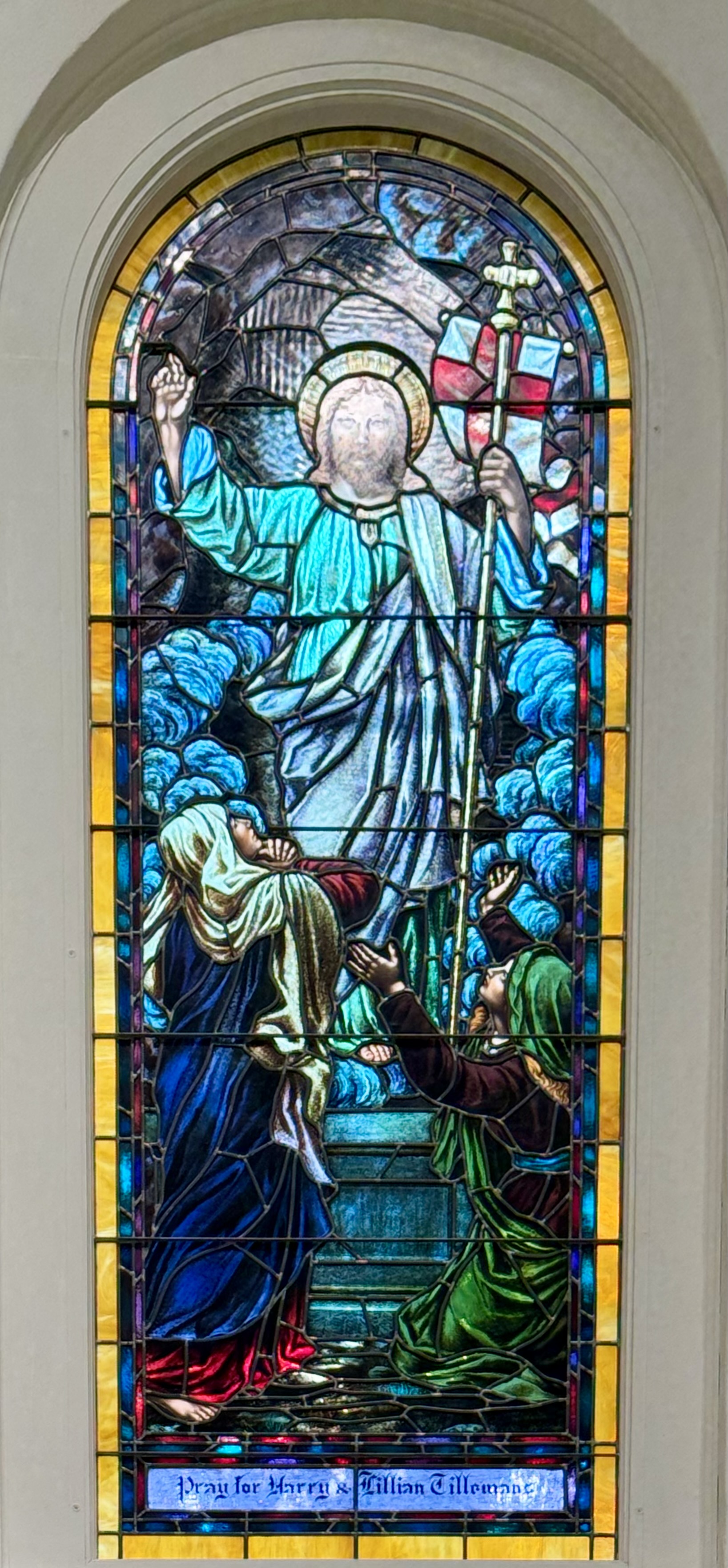
The Resurrection of Our Lord
On the third day after His Crucifixion, Jesus Christ rose victorious from the dead, fulfilling His promise and conquering sin and death forever. The empty tomb became the sign that the Father's plan of salvation had been accomplished and that Christ's victory would never end. No longer bound by death, the risen Lord appeared to His disciples, bringing them peace, strengthening their faith, and commissioning them to proclaim the Good News to the ends of the earth.
This window depicts the risen Christ holding the triumphal banner—a white standard bearing a red cross—an ancient symbol of His victory over death and His reign as the conquering King. Kneeling before Him is St. Mary Magdalene, the first witness to the Resurrection, who recognized her Lord when He called her by name and was sent to announce the joyful news to the Apostles. Standing nearby is the Blessed Virgin Mary. Although the Gospels do not explicitly record an appearance of the risen Christ to His Mother, Christian tradition has long held that she, who remained perfectly faithful throughout His Passion, was among the first to share in the joy of His Resurrection.
The Resurrection is the foundation of the Christian faith and the source of our hope. Christ's victory assures us that death does not have the final word and that all who remain faithful to Him will share in His eternal life. The triumphal banner proclaims that the Cross, once an instrument of shame, has become the sign of salvation, calling every believer to live in the joy and confidence of the risen Lord, who declares, "I am the resurrection and the life" (John 11:25).
Pray for Harry and Lillian Tilleman.
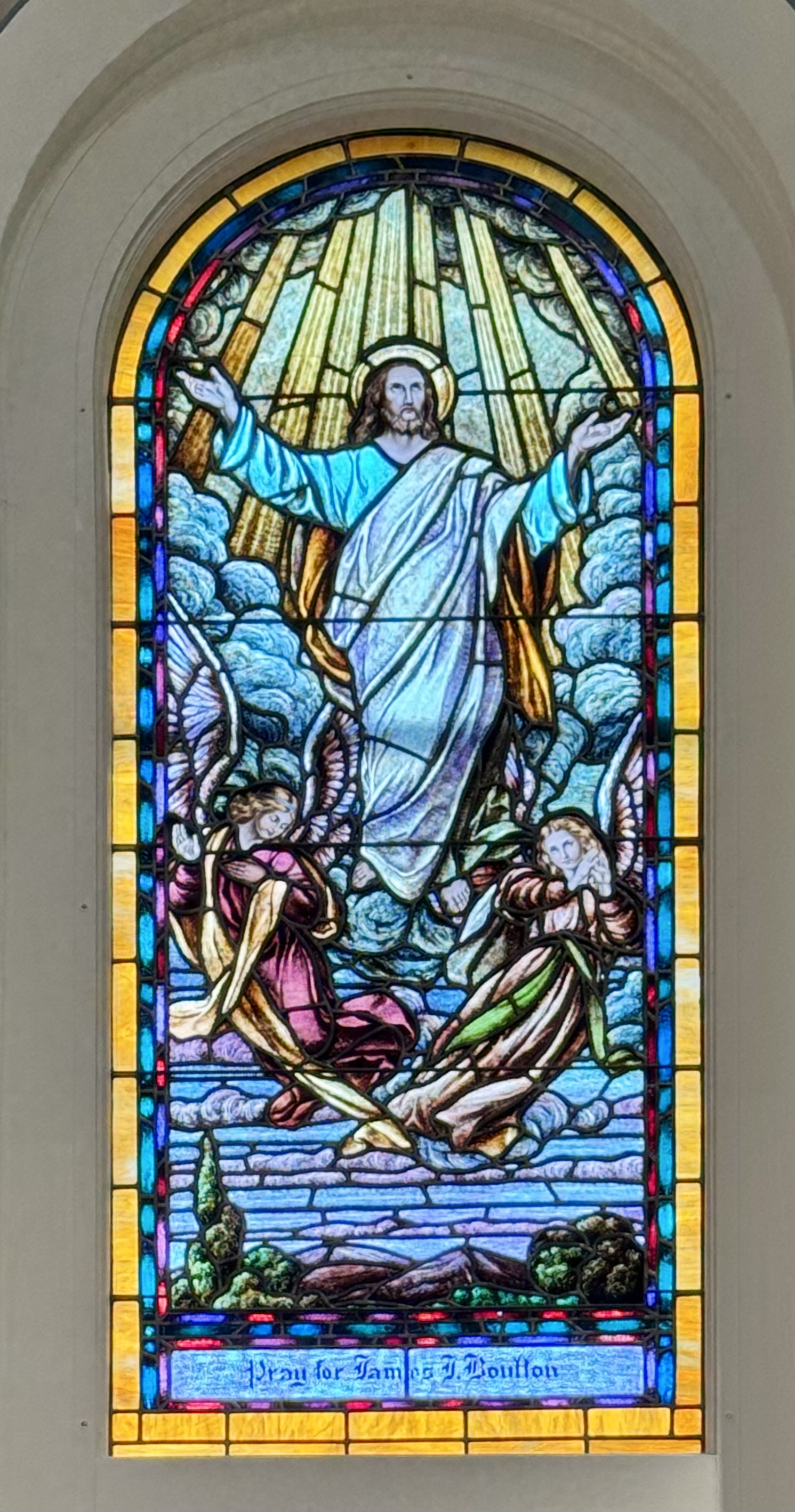
The Ascension of Our Lord
Forty days after His Resurrection, Jesus Christ gathered His Apostles on the Mount of Olives and ascended into heaven before their eyes. Having completed the work of our redemption, He returned to the Father, not to abandon His Church, but to reign in glory and intercede for His people as our eternal High Priest. From His heavenly throne, Christ continues to guide His Church and prepares a place for all who faithfully follow Him.
This window depicts the risen Lord ascending upon the clouds, the biblical sign of God's divine glory and majesty, while an angels below rise in adoration before the victorious Christ. The angels' worship reminds us that the Ascension is not Christ's departure from the world but His exaltation as King of heaven and earth. Seated at the right hand of the Father, Jesus reigns over all creation, while His promise remains unchanged: "And behold, I am with you always, until the end of the age" (Matthew 28:20).
The Ascension directs our hearts toward our heavenly homeland and strengthens our hope in the life to come. As the angels instructed the Apostles not to stand gazing into heaven, they were sent forth to continue Christ's mission on earth. So too, every Christian is called to proclaim the Gospel with confidence, awaiting the day when the Lord will return in glory and gather His faithful into the eternal Kingdom He has prepared for them.
Pray forJames J. Boulton.
The Nave Windows: A History of Faith in Glass
The nave windows of St. Edward Church present a visual history of the Catholic faith, tracing the journey of the Church from the time of the Apostles to the arrival of Christianity in the land that would become Minnesota. Like the pages of Sacred Scripture brought to life in color and light, these windows tell the story of God's providence unfolding through generations of faithful disciples.
Beginning with the restoration of St. Peter after his denial of Christ, the windows recall the mission entrusted to the Apostles and the continued witness of the Church throughout history. They lead us through moments of evangelization, courage, sacrifice, and devotion—from the proclamation of the Gospel throughout the world to the arrival of Catholic missionaries who brought the faith to the peoples and lands of North America.
Together, these windows serve as a history lesson in glass, reminding us that the faith we celebrate today is a gift received from those who came before us. The same Gospel proclaimed by the Apostles, carried by missionaries, preserved by saints, and handed down through generations continues to be lived in this parish community. Each window invites us to remember our place in this great story of salvation and to become faithful witnesses for those who will come after us.
Each window in the nave of the sanctuary has the same decorative outer window with the inner pane. Below each pane is the title and a panel with the name of the donor or person it is in memory of. The outer window is columns with a cross with lilies in each quadrant.
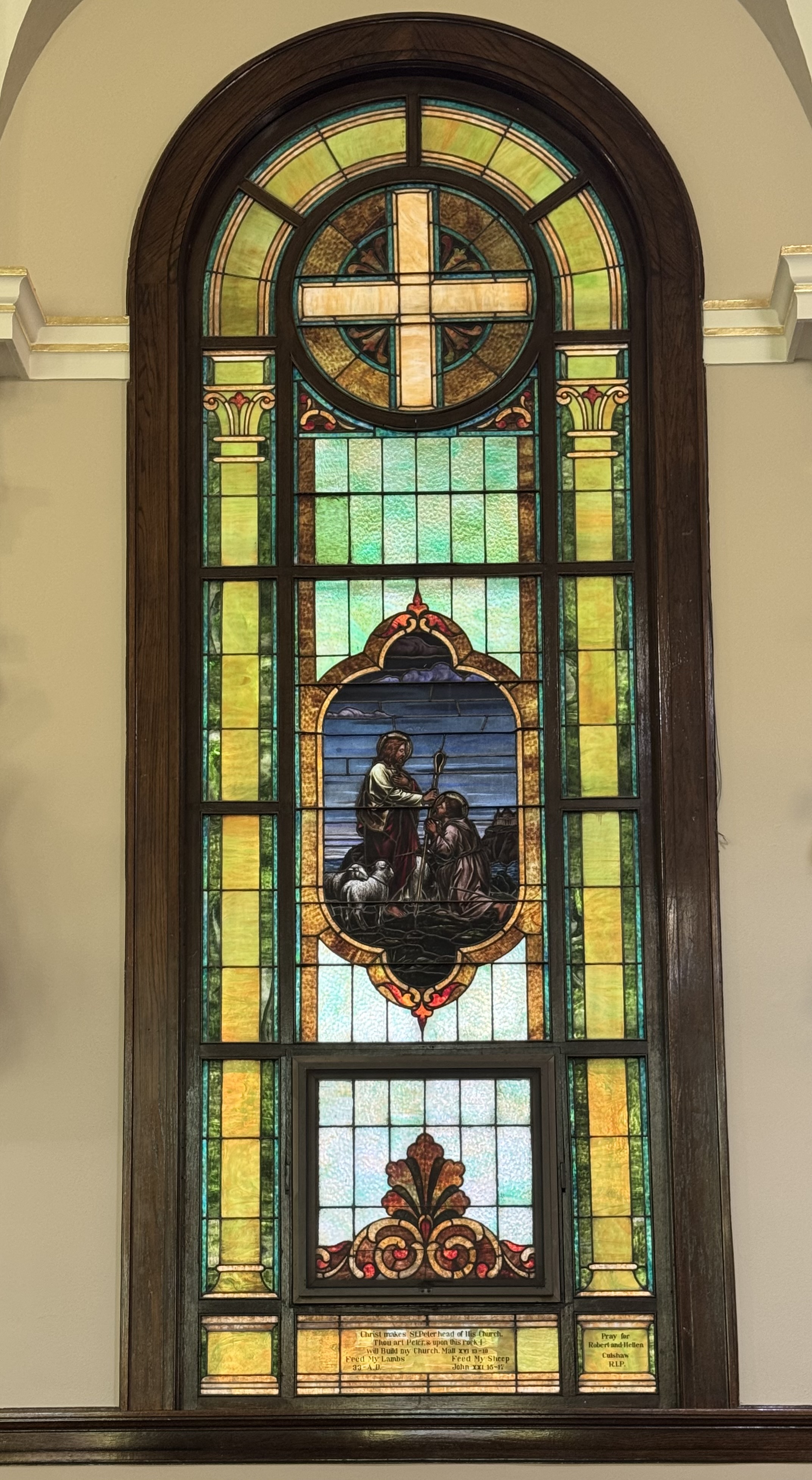
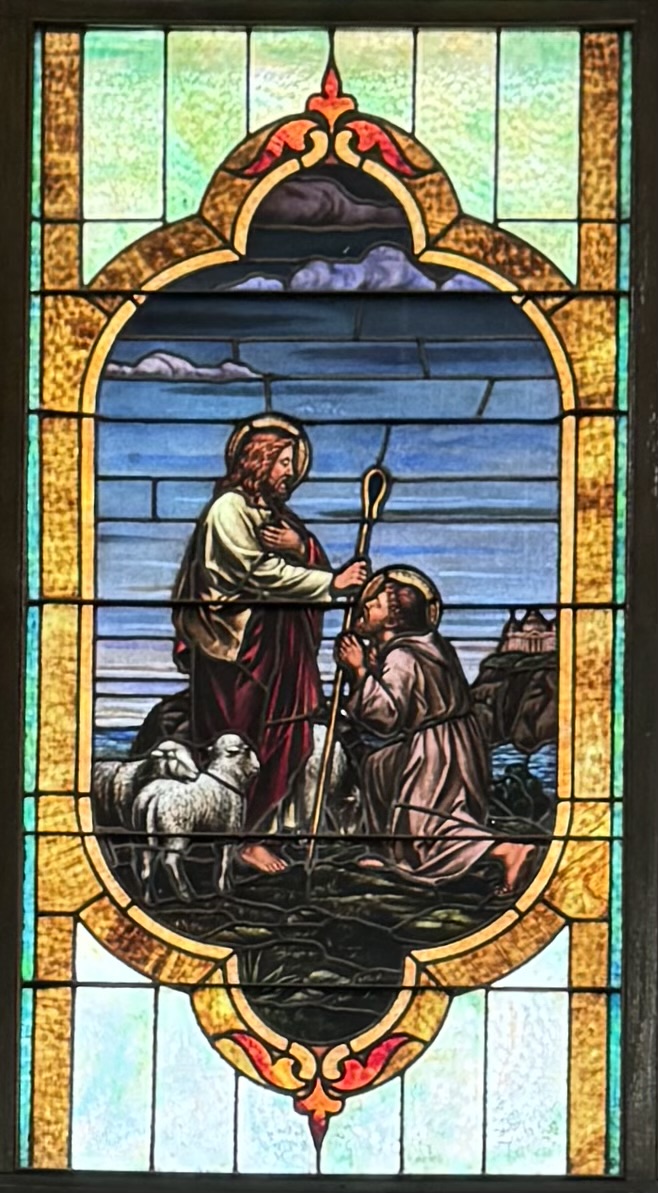
Christ makes St. Peter head of His Church – "Feed My Lambs " "Feed My Sheep" (John 21:15–17) 33 A.D.
This window depicts the risen Christ restoring St. Peter on the shores of the Sea of Galilee following the Resurrection. After Peter's threefold denial during Christ's Passion, Jesus gently asks him three times, "Do you love me?" Each time Peter responds, Jesus entrusts him with the care of the Church: "Feed my lambs... Tend my sheep... Feed my sheep." The shepherd's crook and the sheep symbolize this commission, representing Peter's call to shepherd the flock of Christ as the first pope.
This encounter is one of the most significant moments in the New Testament. Rather than condemning Peter for his failure, Christ forgives and restores him, transforming his weakness into a mission of leadership and service. The image has long served as a symbol of God's mercy, the healing power of repentance, and the pastoral office entrusted to Peter and his successors. The shepherd's staff, later adopted as the crosier carried by bishops, remains a visible reminder that all pastoral authority is exercised in imitation of Christ, the Good Shepherd.
This window invites the faithful to reflect on both Christ's boundless mercy and His call to faithful discipleship. Just as Peter was forgiven, strengthened, and sent forth to care for God's people, every Christian is called to respond to Christ's love with renewed fidelity and service.
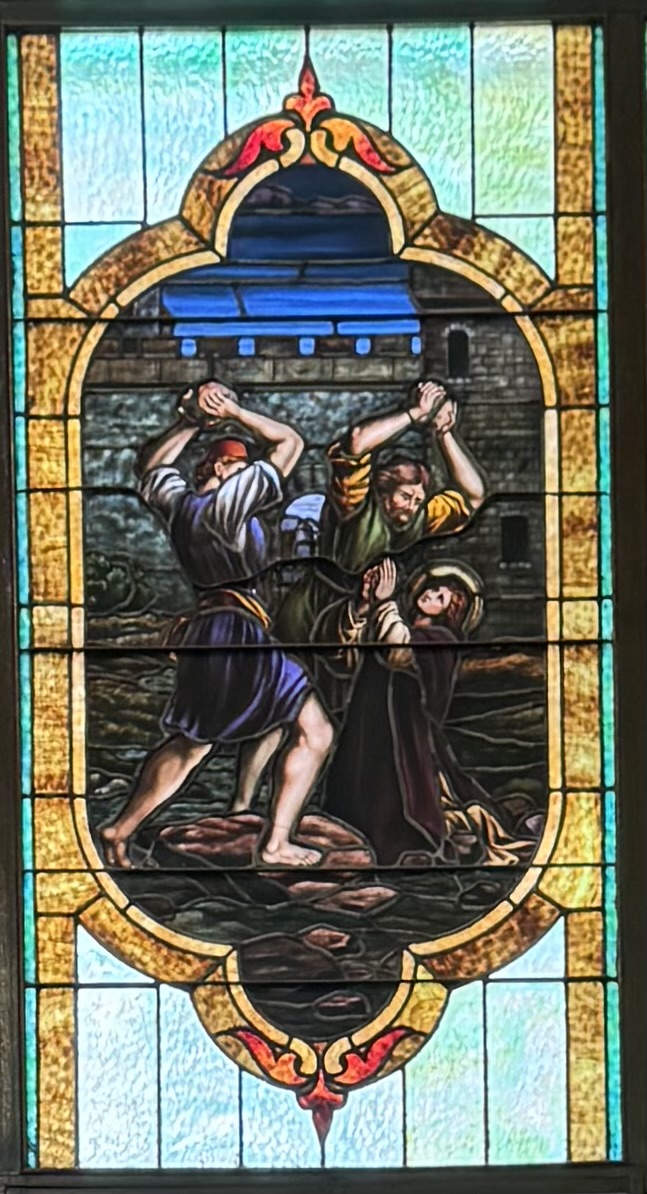
The Martyrdom of St. Stephen 38 A.D.
This window depicts the martyrdom of St. Stephen, the first Christian martyr. Stephen kneels in prayer as he is struck by stones thrown by an angry crowd outside the walls of Jerusalem. Rather than cursing his persecutors, he follows the example of Christ by praying, "Lord, do not hold this sin against them" (Acts 7:60). His serene expression amid the violence reflects his unwavering faith and trust in God.
Stephen was one of the first seven deacons chosen by the apostles to serve the growing Christian community. Filled with the Holy Spirit, he preached boldly that Jesus was the promised Messiah. His testimony before the Sanhedrin provoked fierce opposition, leading to his execution by stoning. Among those approving of his death was a young Pharisee named Saul, who would later be converted by Christ and become St. Paul, the great Apostle to the Gentiles. In this way, Stephen's witness bore fruit far beyond his own lifetime.
This window reminds us that Christian discipleship sometimes demands great courage and sacrifice. St. Stephen's forgiveness of his executioners stands as a powerful witness to Christ's command to love one's enemies, while his steadfast faith continues to inspire believers to proclaim the Gospel with conviction, even in the face of persecution.
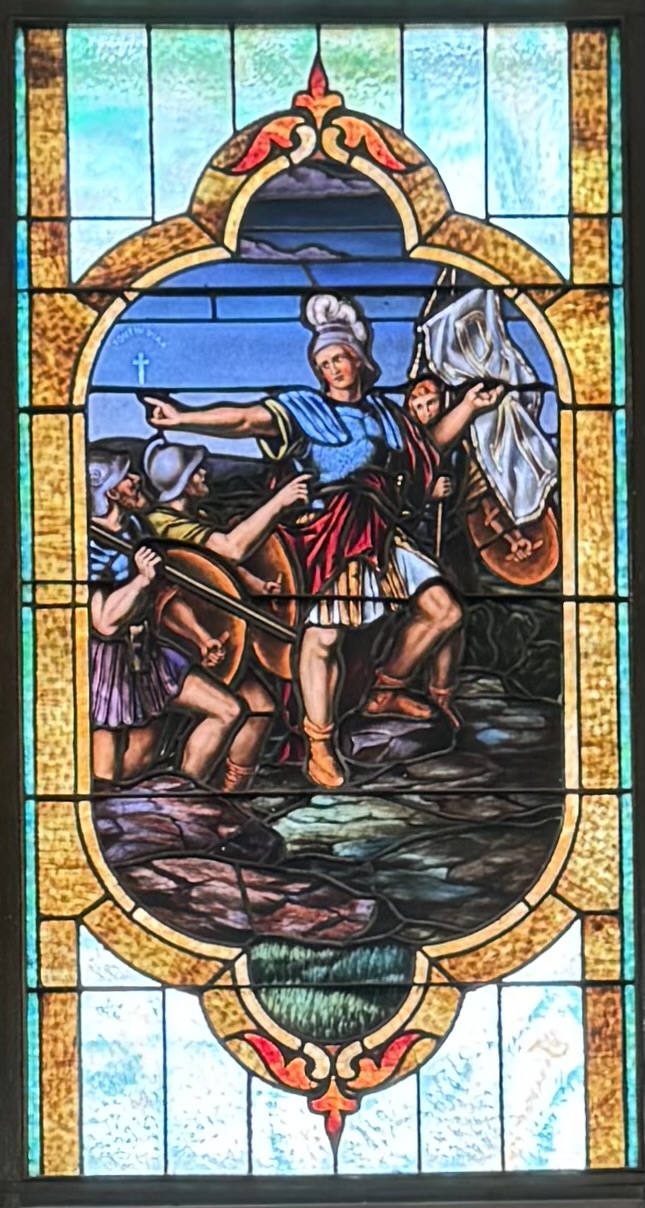
The Conversion of Constantine the Great 312 A.D.
This window portrays the Roman Emperor Constantine receiving the divine sign that changed the course of Christian history. Before the Battle of the Milvian Bridge, Constantine is shown pointing toward the heavens, where he saw the sign of the Cross accompanied, according to tradition, by the words, In hoc signo vinces—"In this sign, you will conquer." He ordered the Christian symbol, the Chi-Rho, to be placed on the shields and standards of his soldiers, and his victory marked a turning point for the Church.
In the following year, Constantine and his co-emperor Licinius issued the Edict of Milan (A.D. 313), granting religious freedom throughout the Roman Empire and ending nearly three centuries of official persecution of Christians. Constantine went on to support the building of many of Christianity's earliest great churches, including the original St. Peter's Basilica in Rome and the Church of the Holy Sepulchre in Jerusalem. He also convened the Council of Nicaea in A.D. 325, where the bishops defended the divinity of Christ and composed the Nicene Creed, which remains a profession of faith for Christians today.
This window celebrates God's providence in using a Roman emperor to transform the history of the Church. While Constantine was not without faults and was baptized only near the end of his life, his reign ushered in an era in which Christianity could flourish openly, allowing the Gospel to spread throughout the Roman world. It stands as a reminder that God can work through both saints and rulers to accomplish His saving plan.
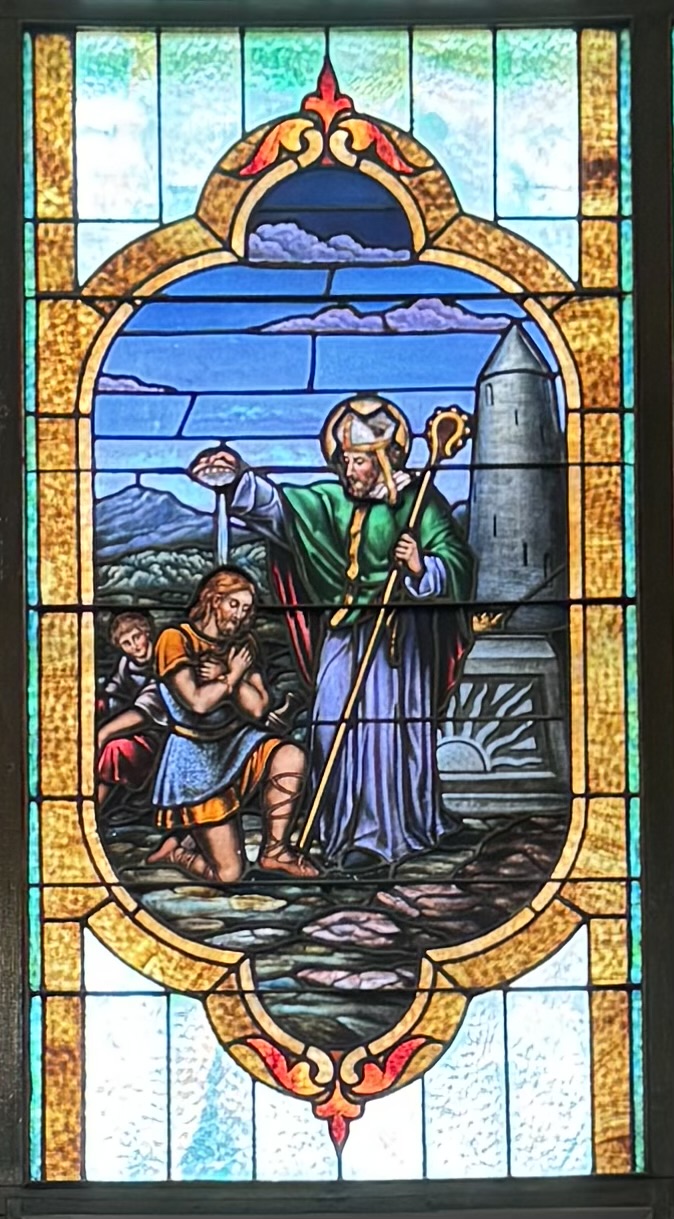
St. Patrick Baptizing King Aengus on the Rock of Cashel 445 A.D.
This window depicts St. Patrick, the fifth-century missionary bishop who brought the Gospel to Ireland. Wearing the vestments of a bishop and carrying his pastoral staff, Patrick pours the waters of baptism over a kneeling convert, symbolizing the spread of Christianity throughout Ireland. The Irish round tower in the background recalls the monasteries that became centers of prayer, learning, and evangelization in the centuries that followed Patrick's ministry.
Born in Britain around A.D. 385, Patrick was kidnapped by Irish raiders as a teenager and held in slavery for six years. After escaping and returning home, he discerned a call from God to return to Ireland as a missionary. Through his preaching, baptisms, and establishment of Christian communities, Patrick played a pivotal role in the conversion of Ireland. Although legend credits him with using the three-leaf shamrock to explain the mystery of the Holy Trinity and with driving the snakes from Ireland, his true legacy lies in the flourishing of the Christian faith and the vibrant monastic tradition that made Ireland known as the "Land of Saints and Scholars."
This window celebrates the transforming power of baptism and the missionary call to bring the Gospel to every nation. St. Patrick's life is a remarkable witness to forgiveness and evangelization, as he returned to the very people who had once enslaved him in order to share with them the saving message of Jesus Christ.
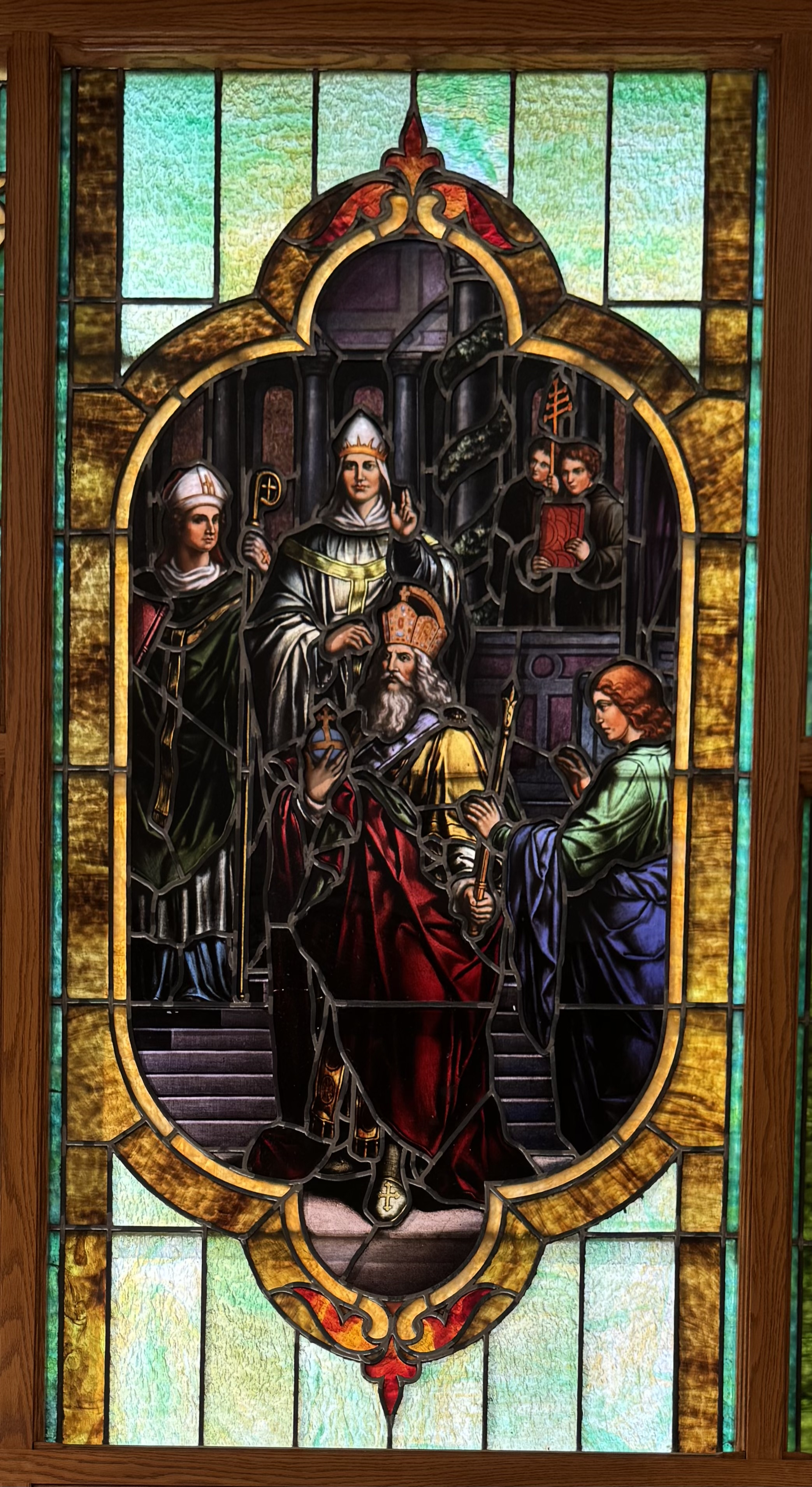
The Coronation of Charlemagne 800 A.D.
This window depicts the Coronation of Charlemagne by Pope Leo III in St. Peter's Basilica in Rome on Christmas Day, A.D. 800. The pope is shown raising his hand in blessing, while attendants and clergy witness this historic event. Charlemagne holds the orb and scepter, traditional symbols of Christian kingship and his responsibility to govern in service to God and the common good.
Charlemagne (c. 742–814), King of the Franks, united much of Western Europe after the collapse of the Western Roman Empire. A devoted supporter of the Church, he promoted missionary activity, established churches and monasteries, encouraged education among both clergy and laity, and helped preserve classical and Christian learning during what became known as the Carolingian Renaissance. His coronation by Pope Leo III symbolized the close relationship between the Church and Christian rulers in medieval Europe and marked the beginning of what would later be called the Holy Roman Empire.
This window commemorates a pivotal moment in the history of Christian civilization. While the relationship between Church and state has evolved over the centuries, Charlemagne's coronation remains a reminder that political authority is ultimately called to serve justice, protect the faith, and promote the common good. It also recalls the Church's enduring mission to shape society by proclaiming the Gospel and forming leaders according to the wisdom of Christ.
Note that this window was moved from the nave to make an entrance for the elevator. It is now in the across from the elevator in the side entrance. The panel with the title is being repaired and will be installed by Spring of 2027.
St. Edward the Confessor overseeing the Building of Westminster Abbey A.D. 1066
This window depicts our patron St. Edward the Confessor, King of England (1042–1066), overseeing the construction of Westminster Abbey, one of the most significant churches in Christian history. Clothed in royal robes and holding the scepter and orb of Christian kingship, Edward is shown directing the work while churchmen and builders stand nearby. The unfinished church in the background symbolizes his vision of creating a magnificent house of worship dedicated to the glory of God.
Edward earned the title "the Confessor" because he was revered not as a martyr but for the holiness of his life. Known for his deep personal piety, generosity to the poor, and commitment to justice, he devoted much of his reign to fostering peace and strengthening the Church in England. Around 1045, he began rebuilding the ancient monastery at Westminster in the Romanesque style. The new abbey was consecrated in December 1065, only days before Edward's death. Although the medieval church he built was largely replaced by the present Gothic structure begun by Henry III in the thirteenth century, Westminster Abbey remains the site of English and later British coronations, royal weddings, and the burial place of many monarchs and notable figures.
This window honors St. Edward as a model of Christian leadership, reminding us that the lasting legacy of a ruler is found not merely in political achievements but in faithfulness to God and service to His people. His dedication to building a worthy house of worship reflects the Church's belief that beauty, reverence, and sacred architecture can lift the human heart to God and become enduring witnesses to the faith for generations to come....
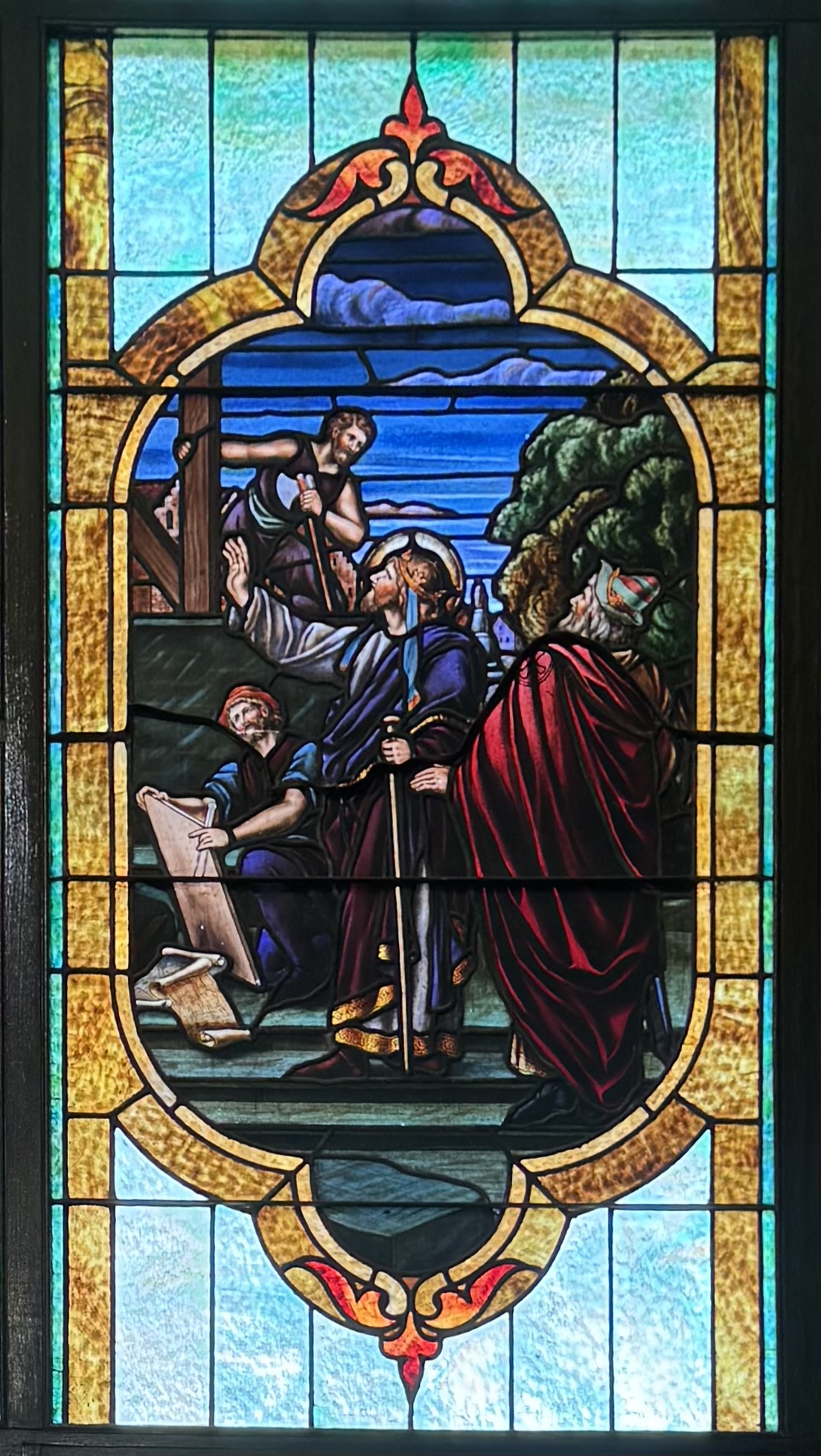
St. Bernard [of Clairvaux] preaching to the Crusaders A.D. 1147
This window depicts St. Bernard of Clairvaux preaching the Second Crusade. Bernard stands before a gathering of nobles, clergy, and soldiers, urging them to take up the cross in response to the fall of the Crusader city of Edessa. His raised hand and commanding posture reflect his reputation as one of the greatest preachers of the Middle Ages, whose words inspired thousands to pledge themselves to the campaign.
Born in 1090, Bernard entered the newly founded Abbey of Cîteaux and later established the Abbey of Clairvaux, from which he became the leading voice of the Cistercian reform. Renowned for his holiness, theological insight, and devotion to Christ and the Blessed Virgin Mary, he advised popes, bishops, and kings, earning the title Doctor of the Church. In 1146, at the request of Pope Eugene III, Bernard traveled throughout France and the German lands preaching the Second Crusade. The Crusades were undertaken to defend Christian pilgrims and the holy places of the East, and to assist the embattled Christian kingdoms established after the First Crusade. Although the Second Crusade ultimately ended in military failure, Bernard maintained that its setbacks resulted not from God's providence but from the sins and lack of fidelity of its participants.
This window commemorates both St. Bernard's zeal for the Church and the complexity of an important chapter in Christian history. While modern perspectives rightly acknowledge the tragedies, excesses, and injustices that accompanied the Crusades, the Church also recognizes the historical context in which Christians sought to defend fellow believers and preserve access to the holy sites. Above all, St. Bernard is remembered not for military campaigns but for his profound love of Christ, his preaching on humility and charity, and his enduring spiritual writings, which continue to lead believers to a deeper relationship with God.
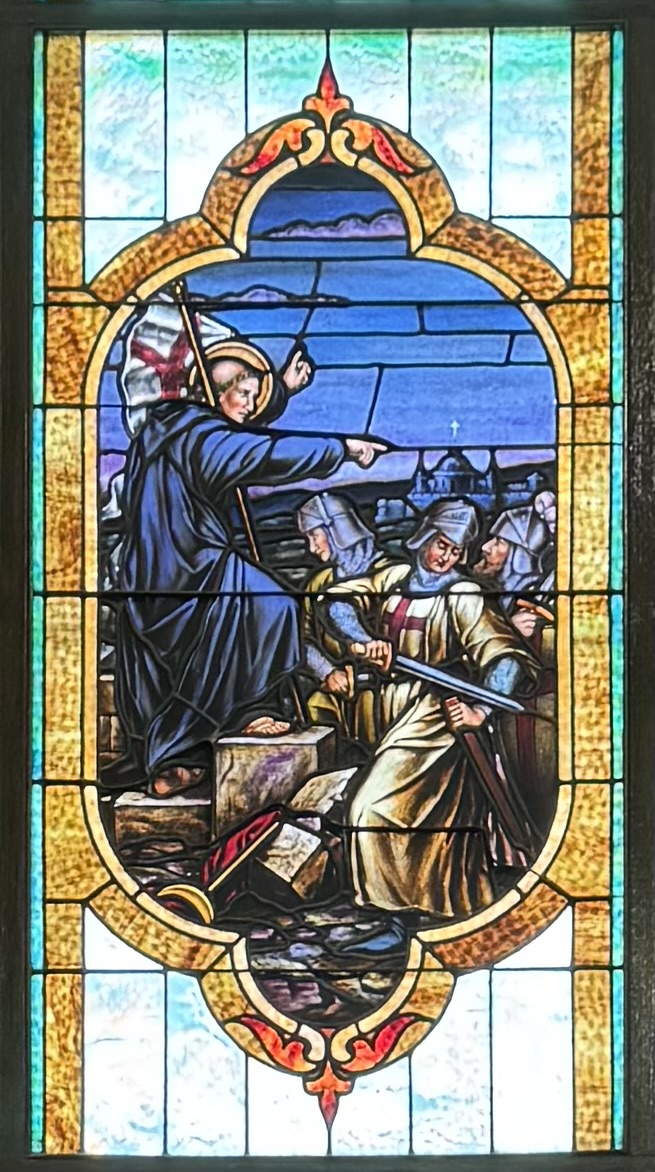
The Landing of [Christopher] Columbus Planting the cross A.d. 1492
In 1492, Christopher Columbus crossed the Atlantic Ocean and landed on the shores of the West Indies, beginning a historic encounter between the peoples of Europe and the Americas. His voyage, while complex and marked by both noble intentions and human shortcomings, became a moment through which the Christian faith was brought to a new continent. Following in the path of the explorers came missionaries, priests, and religious communities who proclaimed the Gospel, celebrated the sacraments, and shared the hope of Jesus Christ with the peoples they encountered.
This window recalls the missionary heart of the Church and the universal call to bring Christ to every corner of the earth. The arrival of Christianity in the New World would lead to the witness of countless saints, martyrs, and faithful disciples who gave their lives for the Gospel. Like the Apostles sent forth after Pentecost, the Church continues Christ’s command: “Go and make disciples of all nations” (Matthew 28:19), proclaiming the saving love of God to every generation and every people.
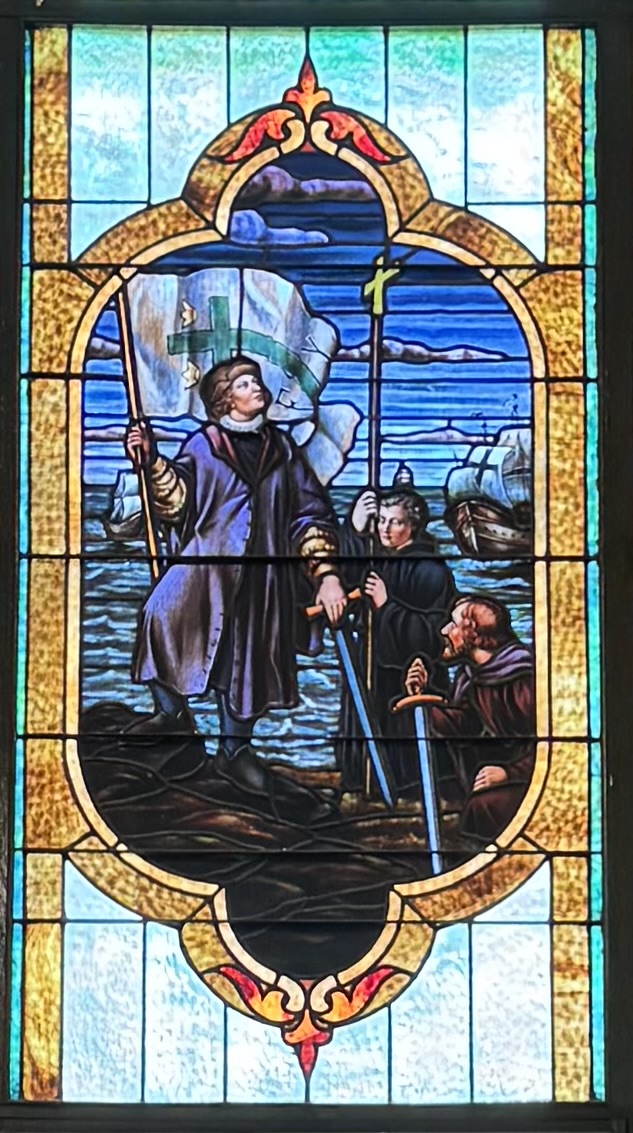
Mass in Penal Times A.D. 1559-1829
During the Penal Times, when Catholic priests were forbidden by law from openly exercising their ministry, the faithful risked great hardship and danger to preserve the Holy Sacrifice of the Mass. In Ireland especially, following the Reformation, priests went into hiding, and Mass was often celebrated in secret on remote hillsides, in forests, or in the homes of faithful Catholics. These hidden places became known as “Mass rocks,” where priests offered the Eucharistic sacrifice for communities that refused to abandon the faith handed down from the Apostles.
This window depicts a priest celebrating Mass outdoors, facing east with the people kneeling behind him in prayer. In the midst of persecution, poverty, and uncertainty, these faithful Catholics gathered around the altar with courage and devotion, recognizing that Christ was truly present among them. The Mass became a source of strength, unity, and hope—a reminder that no earthly power can extinguish the light of faith.
The witness of those who preserved the Eucharist during times of persecution calls all generations to cherish the gift of the Holy Mass and to remain faithful to Christ, who promised: “I am with you always, until the end of the age” (Matthew 28:20).
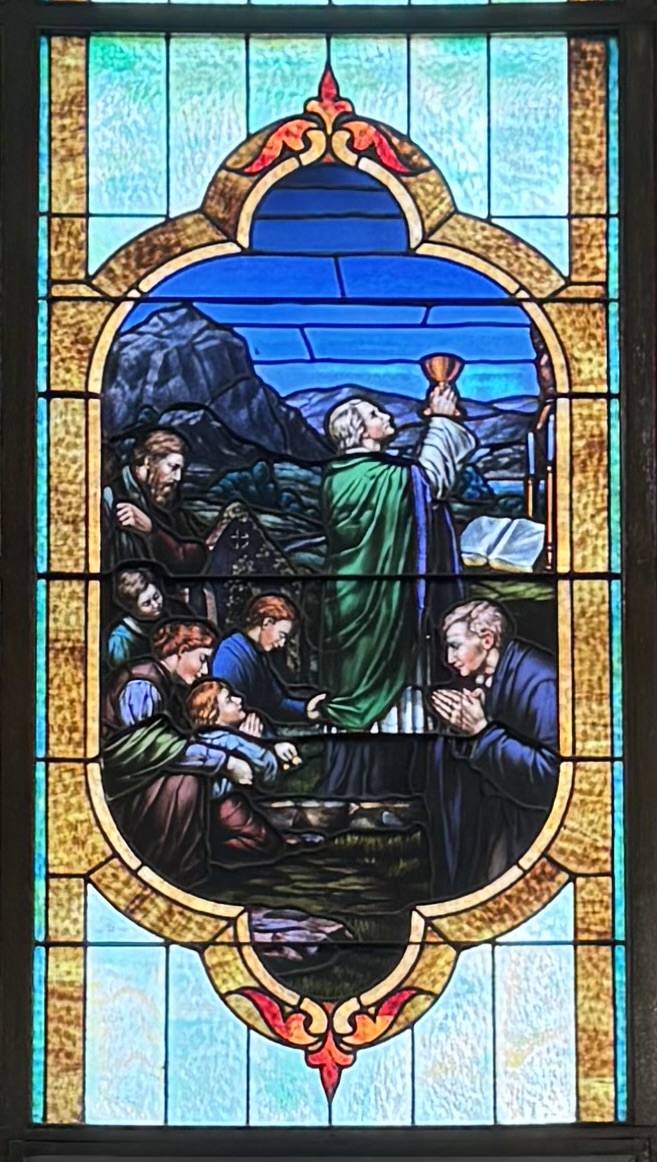
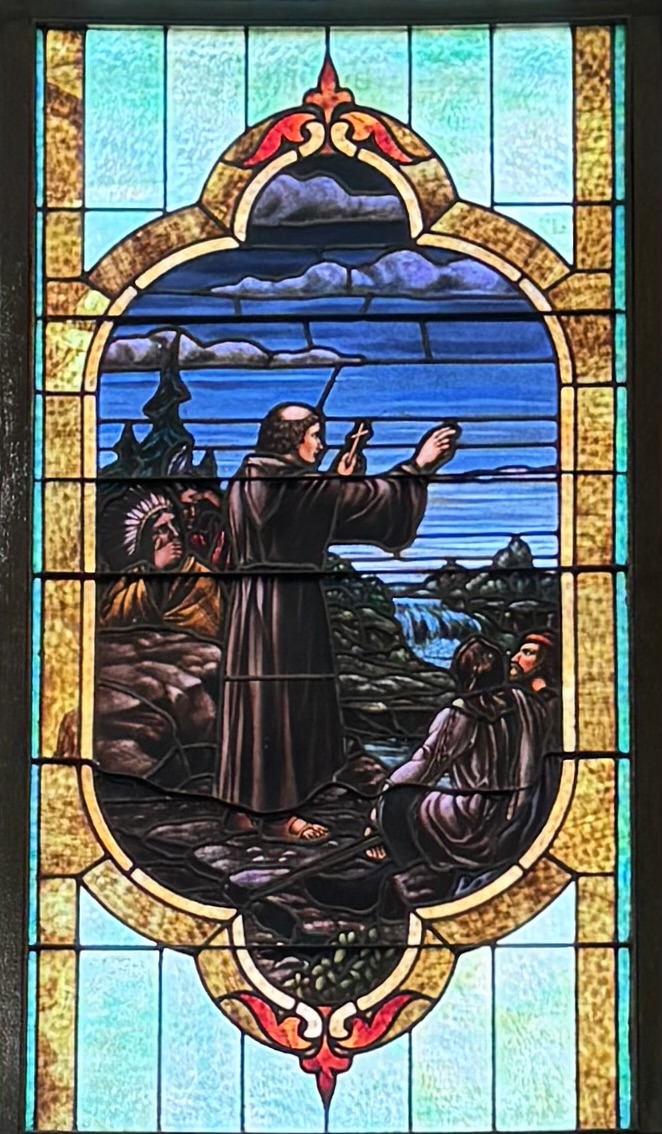
Father Hennepin blessing the Falls of St. Anthony- A.D. 1680
In 1680, the Franciscan missionary Father Louis Hennepin became one of the first Europeans to encounter the great waterfall on the Mississippi River that would later be known as St. Anthony Falls. A priest and explorer from Belgium, Father Hennepin traveled through the lands of the Dakota people seeking to learn about the region and to bring the message of the Gospel to those he encountered. Upon seeing the powerful falls, he named them in honor of his patron, St. Anthony of Padua, entrusting this remarkable place to the intercession of the beloved saint.
This window recalls the missionary spirit of the Church, which seeks to discover, bless, and dedicate all creation to the glory of God. Like the first Apostles who carried the Gospel to distant lands, Father Hennepin brought the presence of Christ to the frontier, proclaiming that every place and every people belong to God. The naming of St. Anthony Falls reminds us that creation itself bears witness to the Creator and that the Church’s mission is to recognize God’s providence in every corner of the earth.
Through the centuries, St. Anthony Falls became a place of industry, community, and growth, but its name continues to recall the deeper truth that all human work and discovery find their meaning when they are directed toward God. Like St. Anthony of Padua, whose name it bears, this place stands as a reminder of faith, perseverance, and the enduring proclamation of the Gospel.
Our Parish in Glass: Windows in the Choir Loft
The windows in the choir loft commemorate the history of the Catholic community that would become St. Edward Parish by depicting the three places where the faithful first gathered for prayer and the celebration of the Holy Eucharist. Before a permanent church could be built, generations of parishioners worshiped wherever they could, united by their faith in Christ and their desire to receive the sacraments. These windows honor the perseverance, sacrifice, and devotion of those early Catholics who laid the spiritual foundation upon which the parish was built.
Each scene recalls a different chapter in the life of the parish, reminding us that the Church is not first a building of stone but the People of God gathered around the altar. Though the locations changed over time, the Holy Sacrifice of the Mass remained the center of parish life, nourishing the faithful through the proclamation of God's Word and the gift of the Eucharist. The same Lord who sustained the first parishioners continues to gather His people today.
From these humble beginnings, St. Edward Parish has grown into a lasting witness to the faith handed down from generation to generation. These windows invite us to remember those who came before us with gratitude and to embrace our own responsibility to preserve and strengthen the faith for those who will follow, always building upon the foundation of Jesus Christ, "the same yesterday, today, and forever" (Hebrews 13:8).
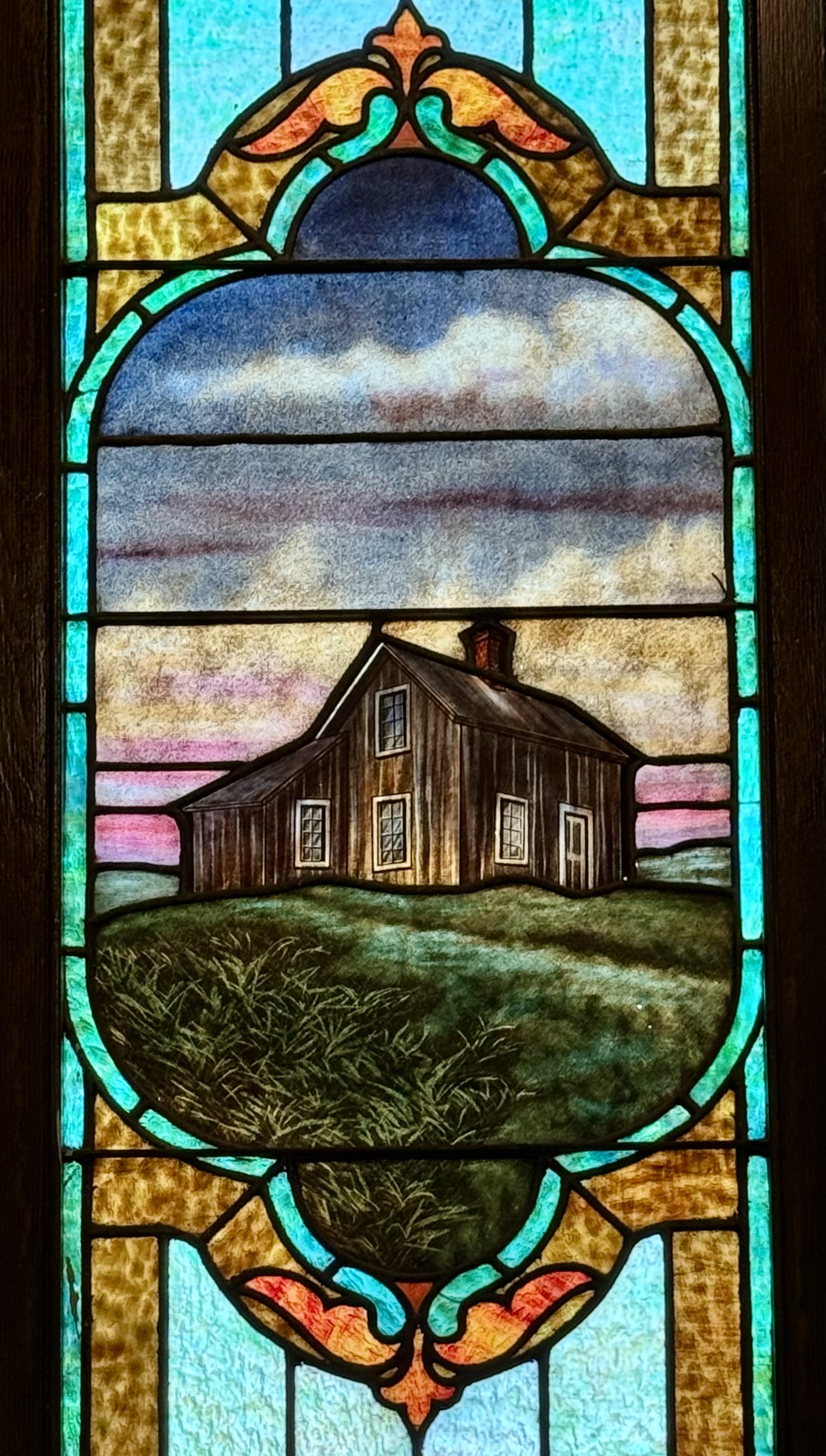
The first Mass in Minneota was offered in the Fall of 1880 in a log cabin about ½ mile west of Minneota, on the north side of Highway 68. It was the home of Father Michael Hanley. In the 1880s, this was the only Catholic Church between Sleepy Eye and Watertown, SD.
Pray forJamieson Stewart. RIP (Fr. Stewart's father)
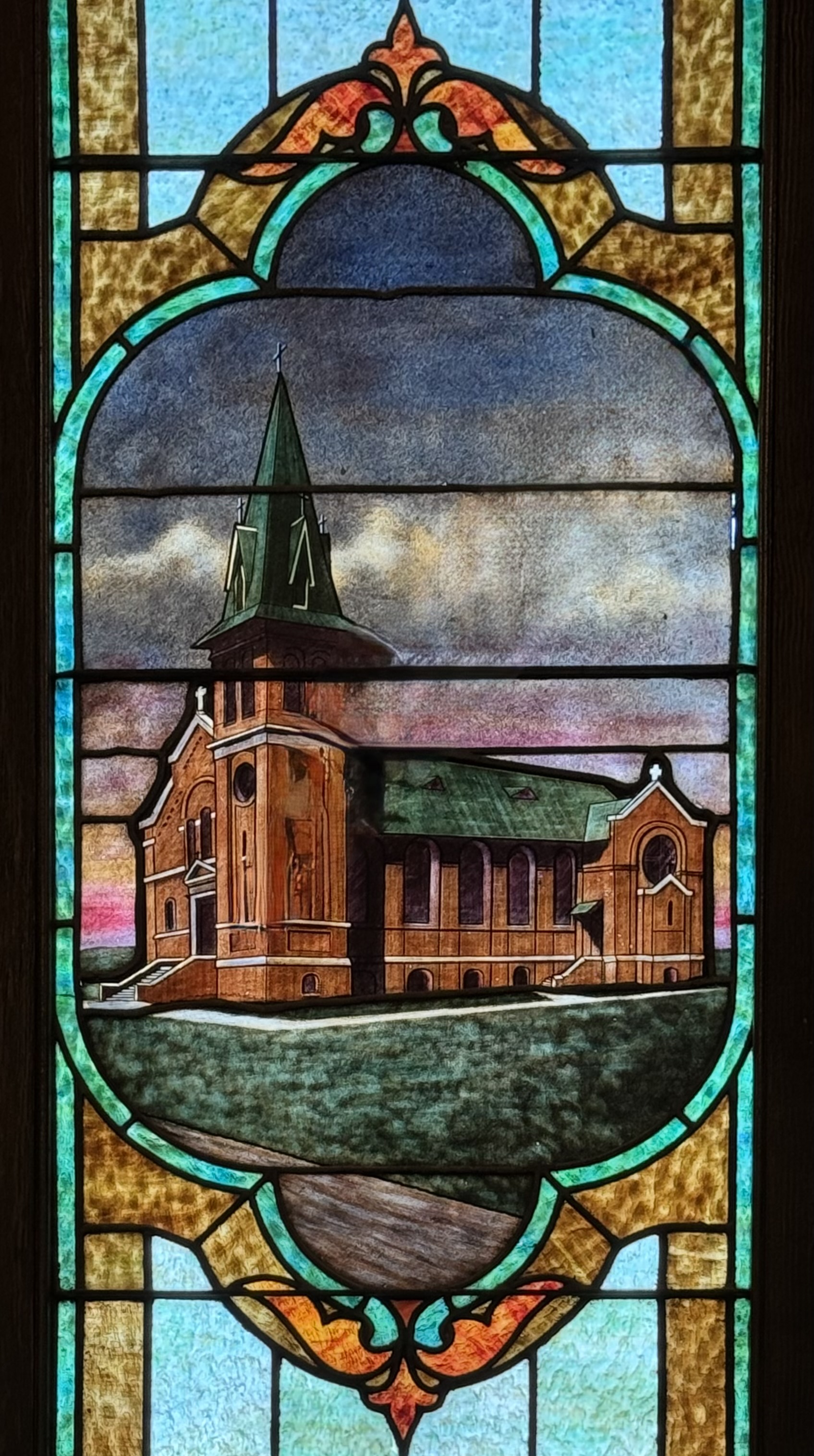
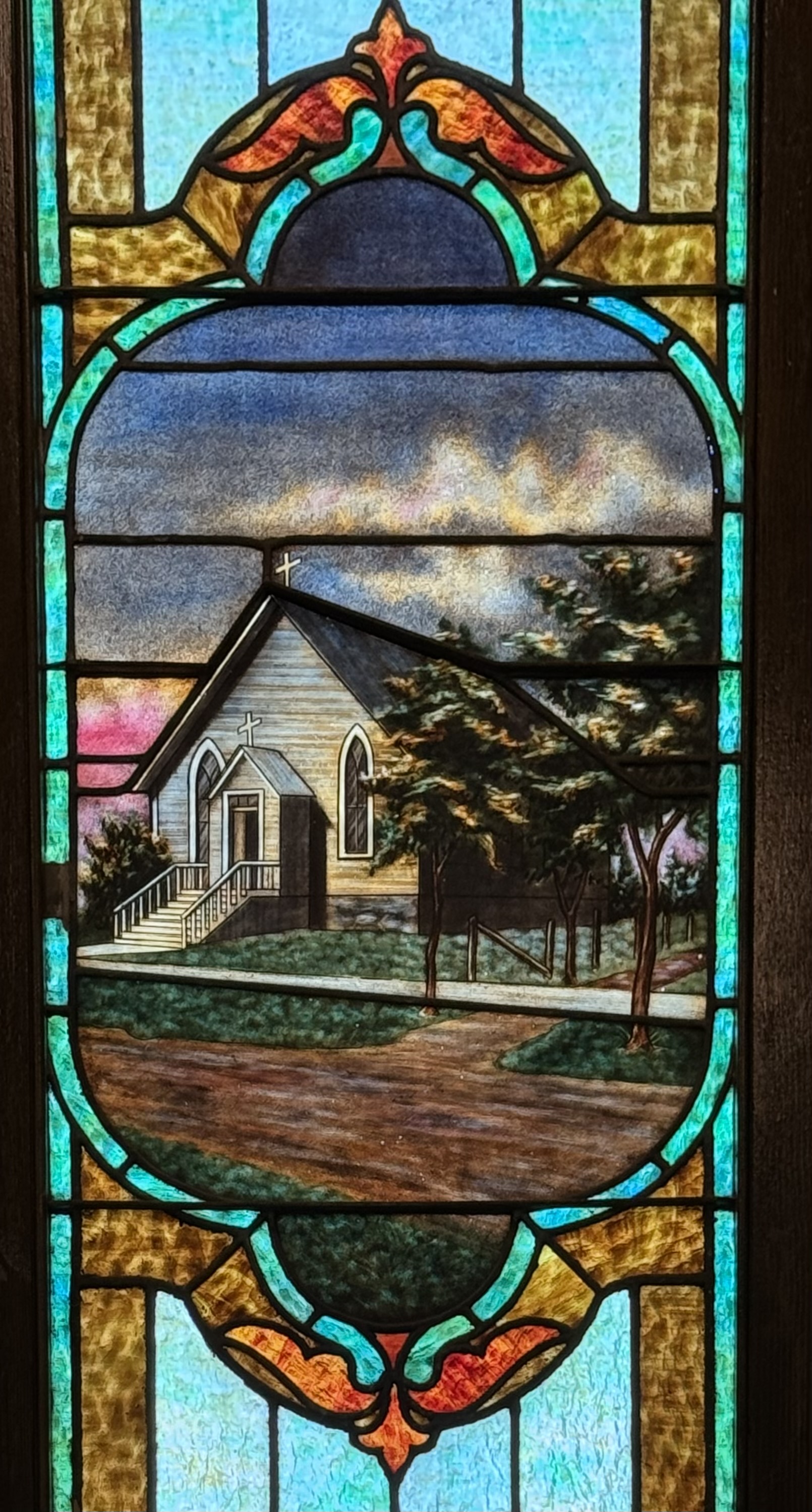
In 1881, the founders built a church and rectory in town, about a block North of the current Hope Lutheran Church. It was here that the Church would gather for the next 30 years.
Pray For Mary Stewart (Fr. Stewart's mother)
Symbols of Faith: Other Windows of the Church of St. Edward
The Transept Rose Windows
The great rose windows in the church's transepts unite the beauty and symbolism found throughout the stained glass with the central mystery of our salvation. Their circular design, without beginning or end, has long symbolized God's eternity and the perfection of His divine plan. The colors and decorative motifs echo those found throughout the church, reminding us that every part of the sacred space proclaims the one Gospel of Jesus Christ.
At the heart of these windows are the Crown of Thorns and the Three Nails of the Lord's Passion. The crown recalls the mockery and suffering Christ willingly endured as He accepted the sins of the world, while the three nails represent His crucifixion, by which He redeemed humanity through His perfect sacrifice. These instruments of His Passion, once symbols of humiliation and death, have become signs of Christ's victorious love and the price of our redemption.
Placed in the transepts—the arms of the church's cruciform design—these rose windows draw our attention to the Cross, the center of the Christian faith. They remind us that every celebration of the Eucharist makes present the one sacrifice of Calvary and that all who enter this church are invited to contemplate the boundless love of Christ, who transformed suffering into glory and opened the way to eternal life through His Passion, Death, and Resurrection.
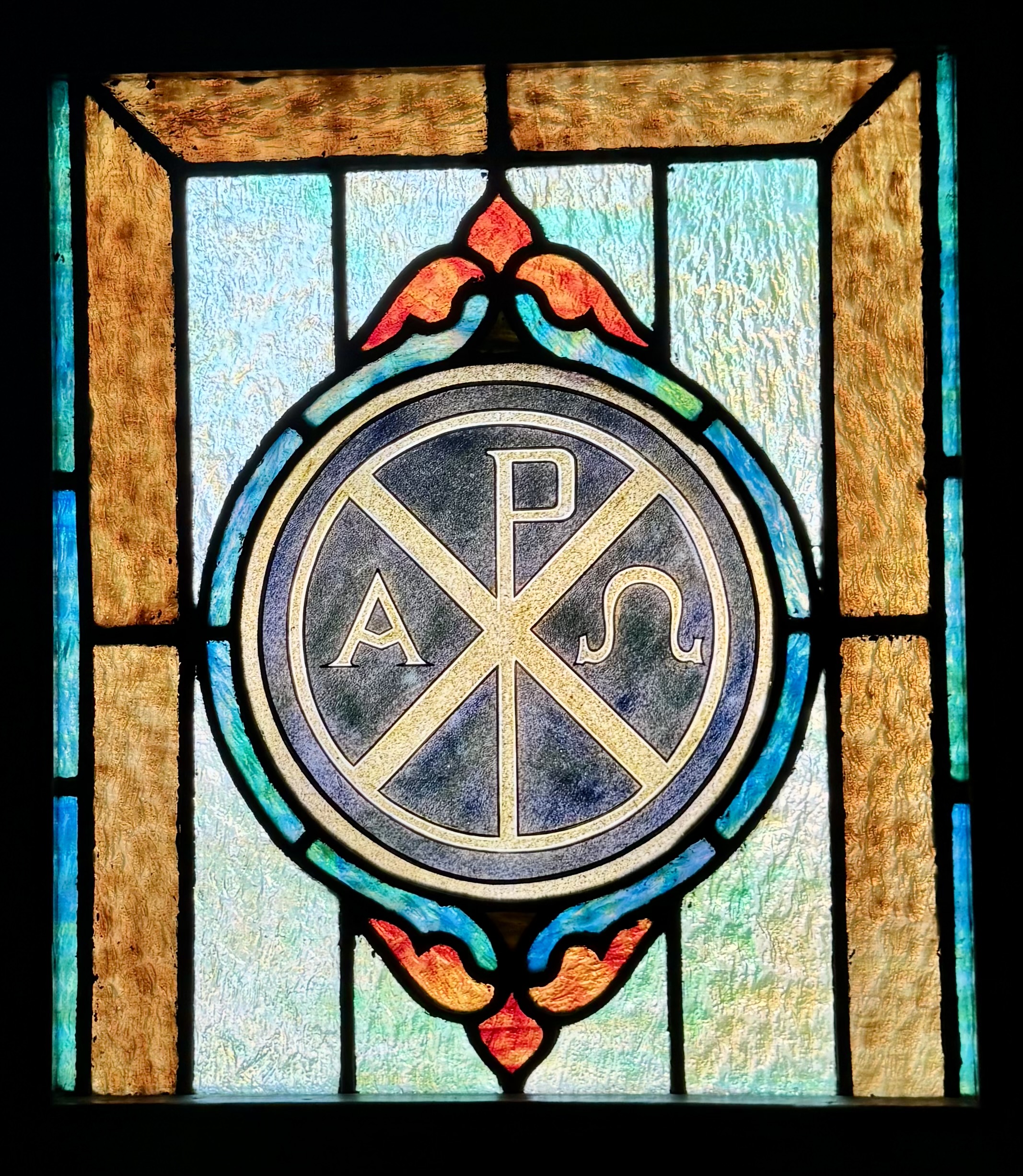
The Chi-Rho: The Monogram of Christ
The Chi-Rho is one of the oldest and most recognizable symbols of Jesus Christ. Formed from the Greek letters Chi (Χ)and Rho (Ρ)—the first two letters of the Greek word Christos (Χριστός), meaning "Christ" or "Anointed One"—it was used by the earliest Christians as a sacred monogram proclaiming Jesus as the Messiah. The symbol gained particular prominence after Emperor Constantine's vision before the Battle of the Milvian Bridge, when he adopted it as a sign of Christ's victory.
Also incorporated into this window are the Greek letters Alpha (Α) and Omega (Ω), the first and last letters of the Greek alphabet. These recall Christ's own words in the Book of Revelation: "I am the Alpha and the Omega, the first and the last, the beginning and the end" (Revelation 22:13). Together, these symbols proclaim that Jesus Christ is the eternal Son of God, through whom all things were created and in whom all things find their fulfillment.
The Chi-Rho, together with the Alpha and Omega, reminds us that Christ reigns over all of history. He is the Lord of time and eternity, the fulfillment of God's promises, and the source of our salvation. These ancient Christian symbols continue to proclaim the same truth confessed by the Church from the beginning: that Jesus Christ is yesterday, today, and forever, and that every knee shall bend before His glorious name.
This window is in the stairwell up to the Choir Loft.
Pray for Fr. Stewart.
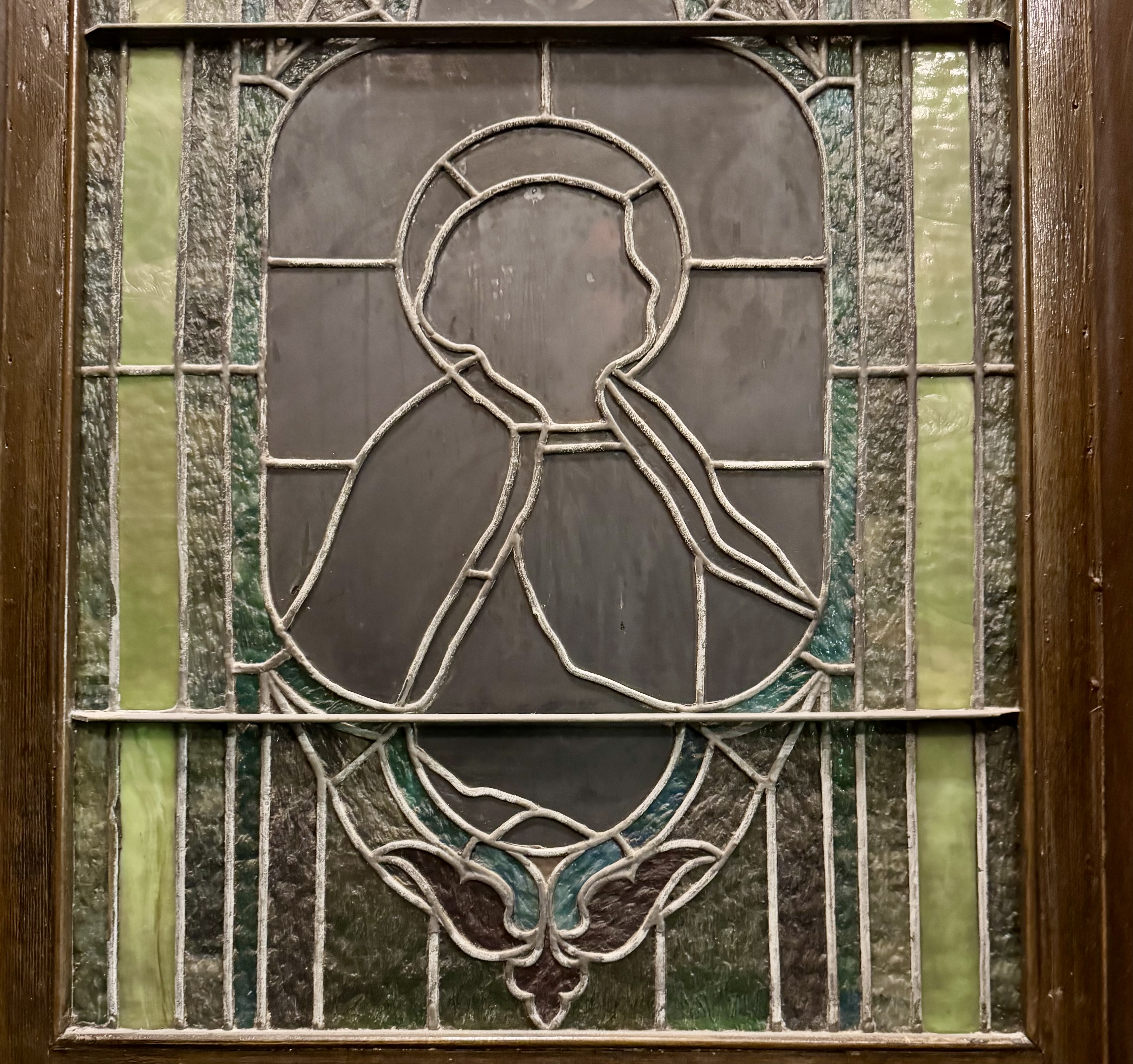
St. Cecilia, Patroness of Sacred Music
St. Cecilia is honored as the patroness of music, musicians, and singers because of her unwavering love for Christ and the joyful praise she offered Him throughout her life. A young Christian martyr of the early Church, she remained faithful to her vow of virginity and to the Gospel even in the face of persecution. According to ancient tradition, while the music of her wedding feast surrounded her, Cecilia sang in her heart to the Lord alone, dedicating her life completely to Him. Her witness has inspired centuries of sacred music that lifts hearts and minds to God.
This window honors St. Cecilia as a model for all who enrich the Church's worship through music. Whether depicted with an organ, other musical instruments, or singing in praise of God, she reminds us that sacred music is more than artistic expression—it is prayer. The Church has long taught that music is an integral part of the Sacred Liturgy, giving voice to the worship of heaven and helping the faithful enter more deeply into the mysteries celebrated at the altar.
Placed in the stair well to the choir loft, this window is a fitting reminder that those who lead the Church's song participate in a sacred ministry. Like St. Cecilia, they are called to glorify God with both voice and heart, echoing the words of the psalmist: "Sing to the Lord a new song; sing to the Lord, all the earth" (Psalm 96:1). Through her intercession, may all who offer music in the liturgy draw the faithful ever closer to Christ, whose praise resounds forever in heaven.
Note that when the elevator addition was added, this window now is an interior window with no backlight.
Pray for the Members of the Choir 1914..
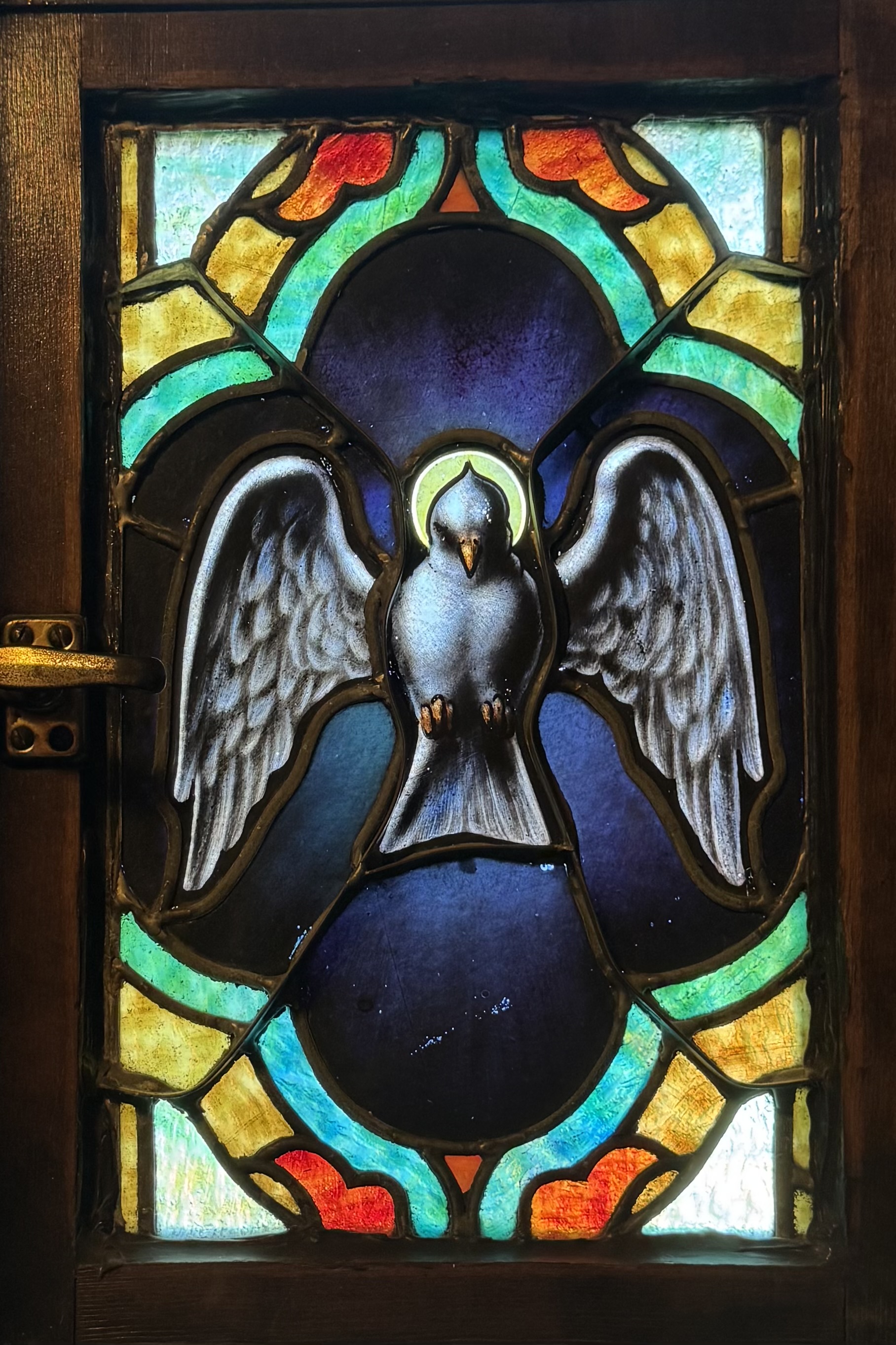
The Holy Spirit
The dove has long been the principal symbol of the Holy Spirit, recalling His descent upon Jesus at His Baptism in the Jordan River, when the heavens were opened and the Father's voice proclaimed, "This is my beloved Son" (Matthew 3:17). Throughout Sacred Scripture, the Holy Spirit is revealed as the giver of life, the source of grace, and the One who sanctifies the faithful. From the waters of creation to the waters of Baptism, the Spirit brings new life and forms God's people into the Body of Christ.
This window, originally placed in the church's baptistry depicts the Holy Spirit descending as a dove, reminding us that every Christian is reborn through water and the Holy Spirit in the Sacrament of Baptism. Through this sacrament we become adopted sons and daughters of the Father, are freed from sin, and are incorporated into Christ and His Church. Although this area now serves as the confessional and cry room, the image of the Holy Spirit continues to proclaim God's saving work through the sacraments. The same Spirit who gives new life in Baptism also grants forgiveness and renewal through the Sacrament of Reconciliation, restoring those who have fallen and strengthening them to live as faithful disciples.
The dove reminds us that the Holy Spirit is continually at work in the life of the Church, guiding, sanctifying, and comforting God's people. Whether welcoming a child into the family of God through Baptism, extending Christ's mercy in Confession, or helping families raise children in the faith, the Spirit remains the unseen source of every grace. As St. Paul teaches, "The love of God has been poured out into our hearts through the Holy Spirit who has been given to us" (Romans 5:5).
South Window: Pray for Mary McMahon RIP.
North Window: Pray for Frank McMahon RIP